Amaryllis
Waxed Amaryllis Care: Watering, Flowers and What Comes Next
The short answer
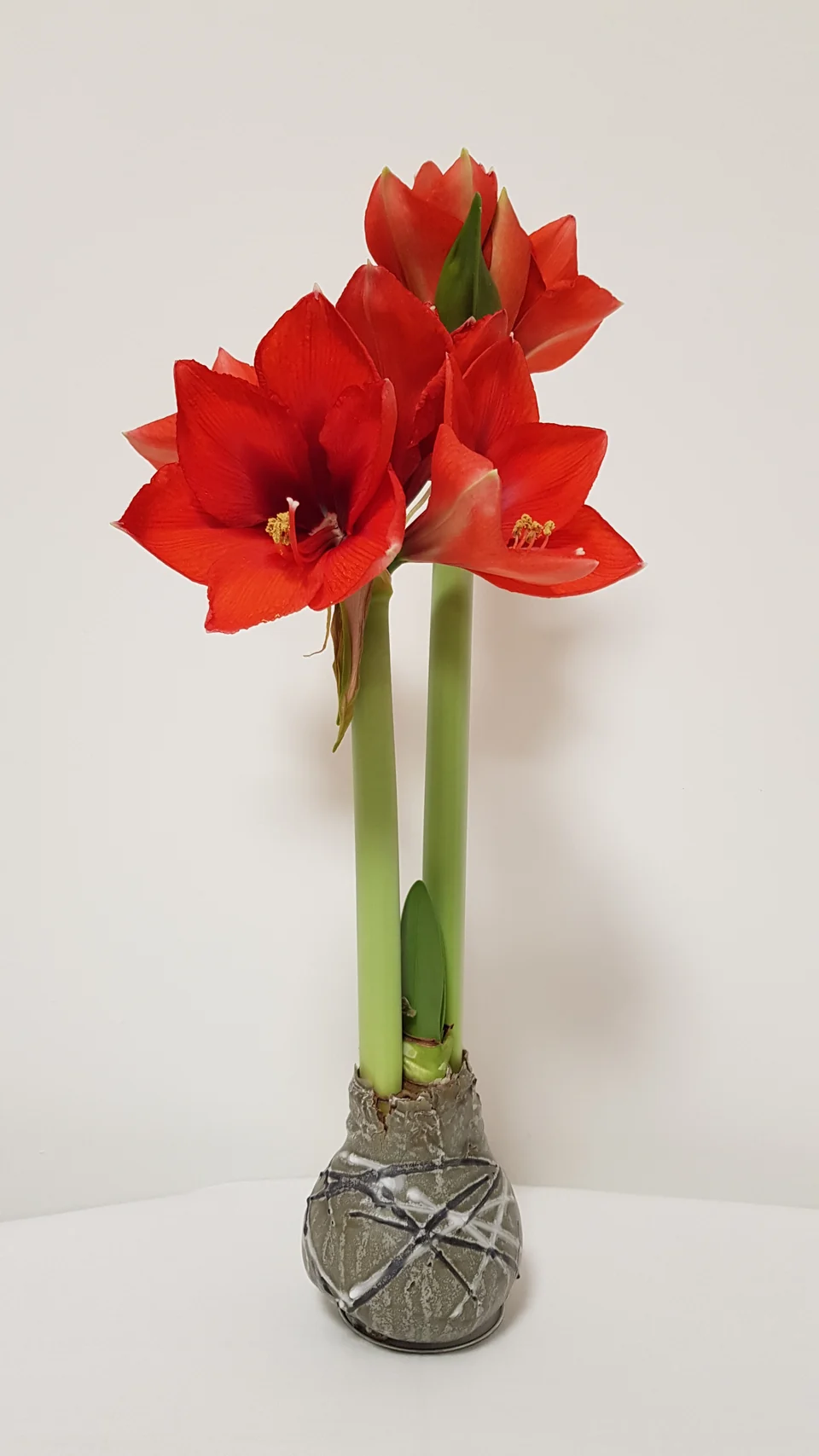
Do not water an intact waxed amaryllis bulb. It flowers using moisture and energy already stored inside the bulb. Stand it securely in bright indirect light and turn it gently if the stem leans. Once its final flower stalk has finished, you can assess whether to attempt removing the wax and growing new roots; survival and another flowering are uncertain.
A bulb standing in a decorative wax shell is a different starting point from an amaryllis rooted in potting mix. Identify which product you have before adding water or trying to save it for another year.
Diagnostic snapshot
What to check before you act
What you are seeing
- Intact wax shell, no potting mix
- Firm bulb after the final display
Check first
Check the packaging and base without cutting into the bulb. A decorative outer pot around a rooted plant is not a wax coating; a pot-grown bulb still needs moisture-based watering.
Hold off for now
Do not water the wax shell, immerse the intact bulb or remove wax during flowering just because a potted amaryllis needs water.
Investigate further if
Contact the supplier if a recently purchased bulb softens, develops spreading sunken tissue or fails to perform within its stated growing conditions and expected window. For a recovery attempt, an extensively damaged base or progressive decay greatly limits prospects; do not cut deeply into the bulb to test it.
Photograph this before you act
- Photograph the whole plant and its growing area so the overall pattern is visible.
- Take one close-up of the clearest symptom and one wider view that shows the surrounding area for comparison.
Next best check
Check two visible clues before you act.
This mini-check narrows the match using the same canonical diagnostic clues as this answer. It does not confirm a diagnosis from one or two clicks, and it does not make a photo-only diagnosis.
Two quick observations can tell you whether to keep reading this diagnosis closely or compare other possibilities first.
Choose the right situation
| What you see | What it may mean | Next useful step |
|---|---|---|
| Intact wax shell, no potting mix | A prepared display bulb | Keep it dry externally and stable; do not pour water into the shell |
| Firm bulb after the final display | A possible recovery candidate | Assess the base and emerging roots before carefully removing wax |
| Soft, sunken or foul-smelling tissue | Possible deterioration | Keep it apart and ask the supplier; do not seal or re-wax it |
Check before changing care
- Check the packaging and base without cutting into the bulb. A decorative outer pot around a rooted plant is not a wax coating; a pot-grown bulb still needs moisture-based watering.
- Record when the bulb arrived, what had already flowered and whether further buds remain. A spent stalk is not proof that every stalk has finished.
- After the final display, check accessible tissue and the base for firmness, sunken areas, decay or small roots. Do not peel healthy bulb scales away to look underneath.
What to do now
- Keep the intact waxed bulb indoors in bright indirect daylight, clear of direct radiator heat, cold glass and places where it could fall. Use a stable surface or the supplied support.
- Turn it gently as growth leans towards light. Remove individual faded flowers without damaging an unopened bud or a healthy leaf.
- When the final stalk has finished, decide between disposal and a recovery attempt. Remove wax and decorative additions before composting; follow local waste guidance for the coating.
- For a firm bulb worth attempting to save, remove wax slowly without tearing roots or the basal plate. If the base is badly damaged or tissue is rotting, replacement is more realistic.
- Plant a suitable recovered bulb in a draining pot with fresh, well-drained potting mix and the upper portion exposed. Begin restrained moisture-based care; do not keep a rootless bulb soaked. As leaves and roots establish, use the after-flowering guide.
GardenSolved checkpoint
Do not do this yet
- Do not water the wax shell, immerse the intact bulb or remove wax during flowering just because a potted amaryllis needs water.
- Do not cut off healthy green leaves, apply extra fertiliser to force roots or promise flowers next Christmas.
Confirm the likely cause first, then choose the treatment.
Timing and important distinctions
Waxed bulbs are sold mainly for a single display. Shrinking after flowering can reflect the use of stored reserves, but softness and a bad smell require a different assessment.
Iowa State describes saving a waxed bulb as a possible experiment rather than routine guaranteed reuse. A plant may recover leaves and still need more than one growing season before flowering.
When to ask for help
Contact the supplier if a recently purchased bulb softens, develops spreading sunken tissue or fails to perform within its stated growing conditions and expected window. For a recovery attempt, an extensively damaged base or progressive decay greatly limits prospects; do not cut deeply into the bulb to test it.
Choose your next step
Sources and linked claims
Save & recheck
Compare what changes before changing course.
Save this diagnosis only in this browser, then come back and compare the same clues. No account, reminder subscription, or server-stored diagnostic record is created.
Your baseline
- Intact wax shell, no potting mix
- Firm bulb after the final display
Check again when you return
- Check the packaging and base without cutting into the bulb. A decorative outer pot around a rooted plant is not a wax coating; a pot-grown bulb still needs moisture-based watering.
- Record when the bulb arrived, what had already flowered and whether further buds remain. A spent stalk is not proof that every stalk has finished.
Tip: photograph the same area from a similar angle so the visible pattern is easier to compare.