Poinsettia
How Often Should You Water a Poinsettia?
The short answer
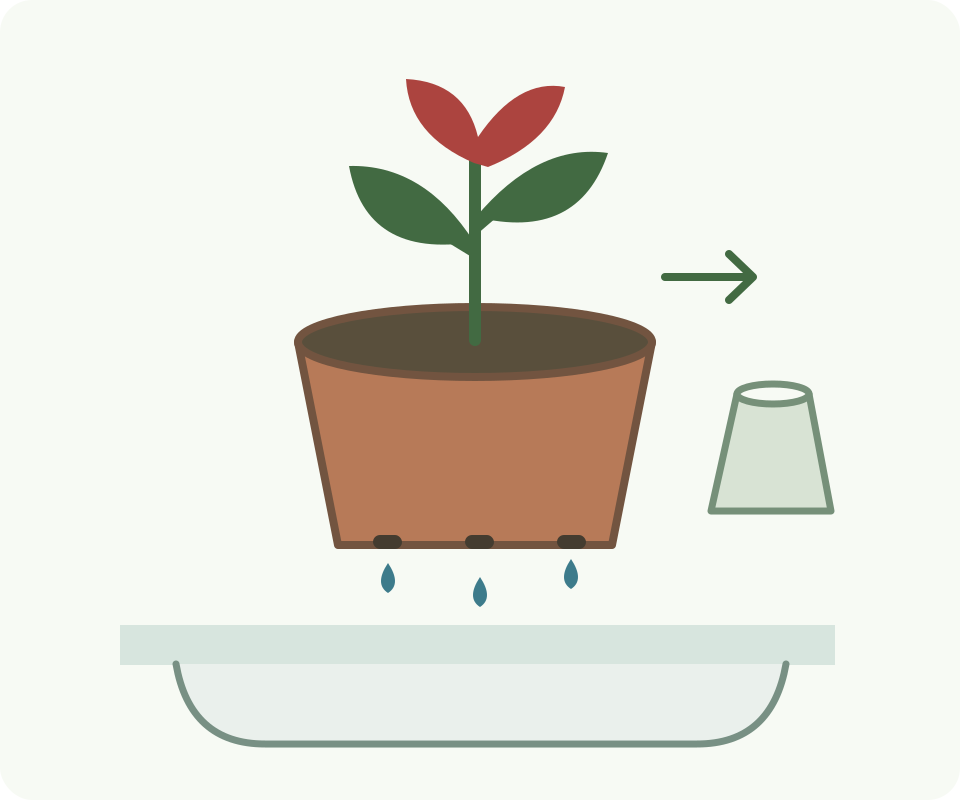
Check the mix and the relative weight of the pot rather than following fixed weekdays or a set volume. When the surface starts to dry and the accessible root ball is no longer wet, water the nursery pot thoroughly and allow excess to drain. Remove the decorative cover for the job, empty collected water and check again before the next watering.
The useful routine has two parts: checking whether water is needed, then making sure surplus water can leave. Daily checking can be sensible for a new plant while you learn its rate of drying. It does not mean watering every day, and a decorative foil sleeve must not become a reservoir around the roots.
Diagnostic snapshot
What to check before you act
What you are seeing
- The surface feels dry and the same pot is lighter; the accessible mix is not still saturated.
- The surface is dry but the pot remains heavy and accessible lower mix is wet.
Check first
Touch the surface gently and inspect accessible mix without digging through the roots. Lift the pot and compare it with its own weight after a previous watering and full drainage. Pot size, pot material and mix differ, so another plant is a poor weight standard.
Compare first
- Starting to dry
- Dry surface, wet interior
- Water bypasses a dry root ball
Hold off for now
Do not water to a fixed calendar, use ice cubes or leave the pot in a cover full of runoff.
Investigate further if
Investigate further if water cannot escape the growing pot, the mix stays persistently wet, the base softens or the plant wilts despite adequate moisture. A root ball that remains dry after attempted rewetting also needs attention; do not hide the problem by refilling its cover.
Photograph this before you act
- Photograph the soil surface and root-zone or container context; do not disturb roots just to take a photo.
- Take one close-up of the clearest symptom and one wider view that shows the surrounding area for comparison.
Next best check
Check two visible clues before you act.
This mini-check narrows the match using the same canonical diagnostic clues as this answer. It does not confirm a diagnosis from one or two clicks, and it does not make a photo-only diagnosis.
Two quick observations can tell you whether to keep reading this diagnosis closely or compare other possibilities first.
Match the situation before acting
Starting to dry
- The surface feels dry and the same pot is lighter; the accessible mix is not still saturated.
Water through the draining pot.
Dry surface, wet interior
- The surface is dry but the pot remains heavy and accessible lower mix is wet.
Wait and investigate drainage; the surface alone is misleading.
Water bypasses a dry root ball
- Water runs immediately down the pot wall while the centre remains dry.
Slow down and check whether the root ball is actually being rewetted.
Water remains in the cover
- The growing pot sits in water or its outlets are obstructed.
Empty the cover and restore a drainage route.
Safe checks before acting
- Touch the surface gently and inspect accessible mix without digging through the roots. Lift the pot and compare it with its own weight after a previous watering and full drainage. Pot size, pot material and mix differ, so another plant is a poor weight standard.
- Take the nursery pot out of foil or its cachepot. Look for drainage holes and water trapped below. A hole in the decorative foil does not help if the growing pot itself cannot drain or the saucer is never emptied.
What to do next
- Move the nursery pot to a sink or another place where runoff can drain safely. Support the brittle branches and keep the coloured bracts clear of rough handling.
- If the moisture checks justify watering, apply room-temperature water slowly to the mix. Wet the root ball evenly, allowing surplus to leave through the outlets. The amount varies with the actual pot and dryness; do not aim for a universal millilitre target.
- Let drainage finish, discard water in the saucer or cover and return the plant to its position. Do not leave the pot resting in water to keep it moist between checks.
- If a very dry ball sheds top-water around its edges, recheck the centre. As an alternative rewetting method, the RHS describes standing the pot in tepid water for 10–20 minutes, then lifting it out and letting it drain. Use this only for a genuinely dry ball in a draining pot, not as routine soaking for an already wet plant.
- Recheck before watering again. Small pots, warm positions and active growth can change the drying rate. A plant that has lost much foliage may use less water than it did while fully leafed.
GardenSolved checkpoint
Do not do this yet
- Do not water to a fixed calendar, use ice cubes or leave the pot in a cover full of runoff.
- Do not water repeatedly just because leaves hang; check whether the root ball is already wet.
Confirm the likely cause first, then choose the treatment.
What recovery can look like
- After watering, learn the feel of the evenly moistened and drained pot. That gives you a practical comparison for later checks without pretending to measure its exact water content.
- If a dry-root plant stays limp after proper rewetting and stable care, switch to the wilt assessment. More water is not a useful response to every failure to recover.
When to get more help
Investigate further if water cannot escape the growing pot, the mix stays persistently wet, the base softens or the plant wilts despite adequate moisture. A root ball that remains dry after attempted rewetting also needs attention; do not hide the problem by refilling its cover.
Important context
Checking daily and watering daily are different instructions. Use the observed condition, not the number of days since the last watering.
A cover is useful for display but makes drainage harder to see. Removing it during watering makes the water path and remaining runoff visible.
Follow the next useful clue
- The plant hangs despite recent watering: Compare dry roots with impaired uptake.Why Is My Poinsettia Wilting?
- Yellowing and leaf fall continue: Use leaf position and the exposure timeline.Why Is My Poinsettia Dropping Leaves?
- The holiday display has faded: Adjust longer-term care to current growth.What Should You Do With a Poinsettia After Christmas?
Sources and linked claims
Save & recheck
Compare what changes before changing course.
Save this diagnosis only in this browser, then come back and compare the same clues. No account, reminder subscription, or server-stored diagnostic record is created.
Your baseline
- The surface feels dry and the same pot is lighter; the accessible mix is not still saturated.
- The surface is dry but the pot remains heavy and accessible lower mix is wet.
Check again when you return
- Touch the surface gently and inspect accessible mix without digging through the roots. Lift the pot and compare it with its own weight after a previous watering and full drainage. Pot size, pot material and mix differ, so another plant is a poor weight standard.
- Take the nursery pot out of foil or its cachepot. Look for drainage holes and water trapped below. A hole in the decorative foil does not help if the growing pot itself cannot drain or the saucer is never emptied.
Tip: photograph the same area from a similar angle so the visible pattern is easier to compare.