Container gardening
How often should I water container plants?
The short answer
Check moisture below the surface and water when the root zone needs it. Water slowly enough to wet the root ball, confirm excess water can drain, and do not leave ordinary container roots standing in collected water.
Containers do not share one reliable watering calendar. Pot size, root volume, mix, plant type, weather and indoor conditions can all change how quickly the root zone dries.
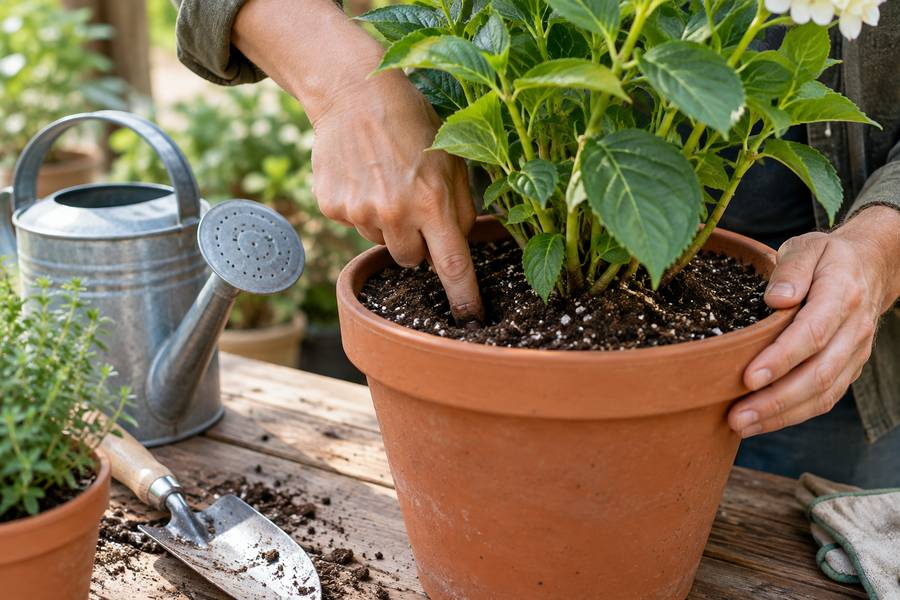
Match the pattern before acting
Root zone is beginning to dry
- Moisture is decreasing below the surface
Water slowly and evenly.
Root zone is still wet
- Mix remains moist or saturated below the surface
Wait and investigate drainage if wetness persists unusually long.
Water bypasses a dry center
- Immediate runoff but center stays dry
Use the rewetting diagnostic rather than increasing flow rate.
How to confirm what is happening
- Feel or probe below the surface before watering again.
- Water slowly and confirm the root ball is actually wet rather than relying only on immediate runoff.
- Check the saucer or outer pot after drainage and empty collected water.
What to do now
- Check each container rather than watering all pots on one calendar.
- Apply water to the root zone slowly enough to wet the medium evenly.
- Adjust monitoring after heat, wind, rapid growth or seasonal indoor changes.
GardenSolved checkpoint
Do not do this yet
- Do not publish or follow one fixed interval for every container plant.
- Do not water again just because leaves droop if the root zone is already wet.
- Do not leave drained water standing around ordinary container roots.
Confirm the likely cause first, then choose the treatment.
When to investigate further
If a plant wilts while the root zone remains wet, or stays wilted after even rewetting, investigate root or plant-specific problems rather than repeating the schedule.