Container gardening
Why does potting soil dry out so fast?
The short answer
Compare the root ball, pot size and actual wetting pattern. Rapid drying can be a rootbound clue, but runoff around a shrunken dry root ball can make the pot seem watered when the center is still dry.
Fast drying can come from a root-filled pot, a small container, hot or windy conditions, a very open mix, or a root ball that became so dry that water now bypasses it.
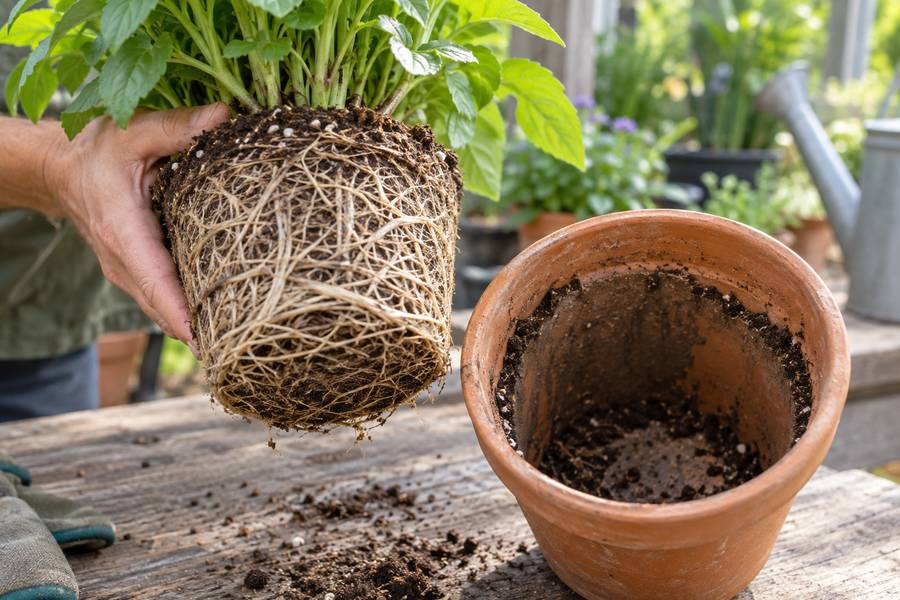
Match the pattern before acting
Root-filled pot
- Dense roots and little loose medium
Use the rootbound and pot-size checks before repotting.
Dry mix is bypassing water
- Mix shrank from the wall and runoff is immediate
Rewet slowly and confirm the center becomes moist.
Environment is drying the pot quickly
- Heat, sun or wind increased while roots look appropriately spaced
Adjust monitoring frequency without using a fixed universal schedule.
How to confirm what is happening
- Slide the root ball out only if it can be done safely and look for dense circling roots or very little remaining loose mix.
- After slow watering, check moisture in the center of the root ball rather than judging only by runoff.
- Compare drying rate with recent heat, wind, sun exposure and plant growth.
What to do now
- Rewet a very dry root ball slowly, using repeated small applications or controlled soaking when appropriate.
- Check for root crowding before changing pot size.
- Monitor moisture more often during hot, bright or windy conditions.
GardenSolved checkpoint
Do not do this yet
- Do not jump several pot sizes up solely because the surface dries fast.
- Do not assume fast runoff proves the whole root ball is wet.
- Do not compensate with constant saturation.
Confirm the likely cause first, then choose the treatment.
When to investigate further
If the plant remains wilted after the center of the root ball is evenly rewetted, inspect roots and plant-specific stress signs rather than increasing water indefinitely.