Container gardening
Why is my potting soil staying wet?
The short answer
Check the outlet, trapped water, pot size and the structure of the mix before watering again. Wet soil raises root-health risk, but wet soil by itself does not prove root rot.
Potting mix that stays wet for an unusually long time can reflect blocked drainage, dense or collapsed media, too much unused pot volume, or conditions in which the plant is using water slowly.
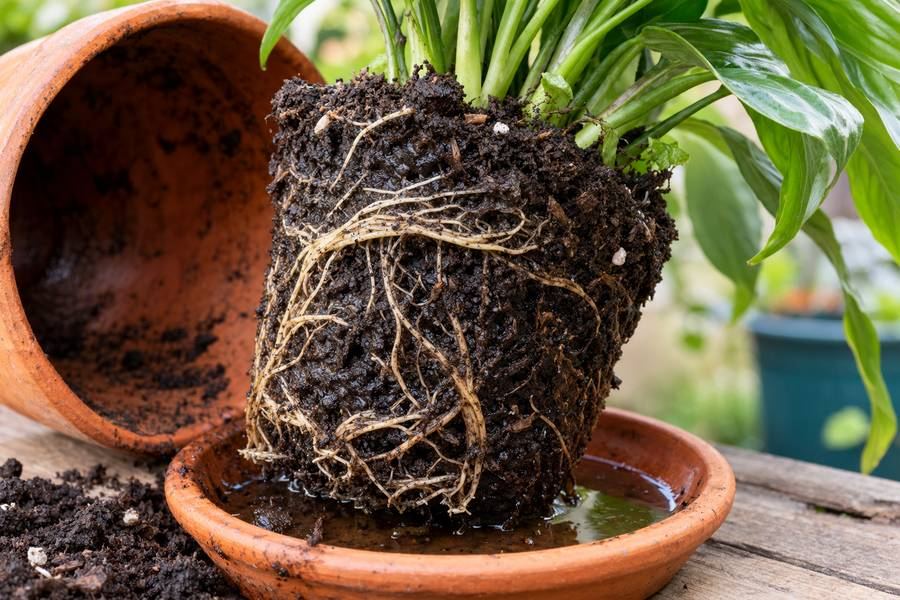
Match the pattern before acting
Drainage is blocked
- Water collects below or outlets are obstructed
Restore free drainage before changing fertilizer or watering frequency.
Pot or mix holds too much water
- Large unused media volume or dense collapsed mix
Match pot and medium more closely to the root system.
Roots show damage
- Soft dark roots, crown decline or persistent wilt
Follow a root-health diagnostic path rather than simply watering less.
How to confirm what is happening
- Check whether all outlets are open and whether water is trapped beneath the inner pot.
- Compare pot volume with the actual root ball and inspect whether the medium is dense, collapsed, or persistently saturated.
- If the plant is declining, inspect accessible roots for soft dark tissue before naming root rot.
What to do now
- Pause additional watering until the root-zone check shows it is needed.
- Restore open drainage and remove trapped water.
- If structure has broken down or the pot is badly oversized, repot only after confirming the root and pot mismatch.
GardenSolved checkpoint
Do not do this yet
- Do not fertilize a plant simply because growth slowed in wet mix.
- Do not call wet soil root rot without root or crown evidence.
- Do not keep adding water to a root zone that is already saturated.
Confirm the likely cause first, then choose the treatment.
When to investigate further
Persistent wilt in wet mix, soft dark roots, crown collapse, or continuing decline needs a plant-specific root-health assessment.