Container gardening
Why is water running straight through my pot?
The short answer
Check the center of the root ball after watering. If it is still dry while water exits immediately, rewet slowly in repeated passes or use controlled soaking rather than assuming the plant received enough water.
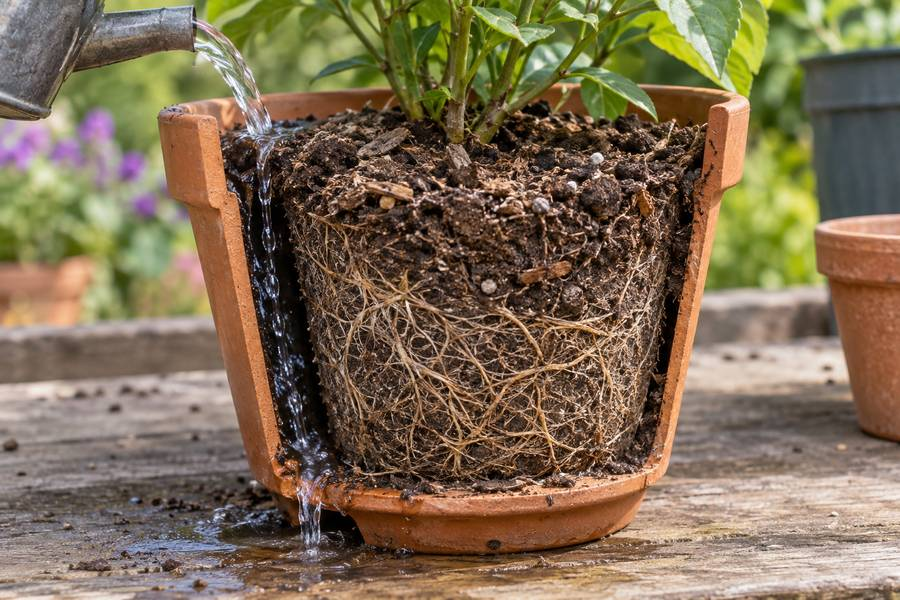
Fast runoff can mean a pot drains freely, but it can also mean water is bypassing a very dry root ball. Dry peat-based media can resist wetting, and shrunken mix can leave channels along the pot wall.
Diagnostic snapshot
What to check before you act
What you are seeing
- Water exits almost immediately
- Mix has pulled away from the pot wall
Check first
After slow watering, test moisture in the center of the root ball instead of using runoff alone.
Compare first
- Dry mix has shrunk from the wall
- Very dry peat-based mix resists wetting
- Root ball is densely crowded
Hold off for now
Do not assume fast drainage always means healthy drainage.
Investigate further if
If even slow rewetting does not restore moisture to the root ball, or the plant remains wilted afterward, inspect root crowding and root health.
Photograph this before you act
- Photograph the soil surface and root-zone or container context; do not disturb roots just to take a photo.
- Take one close-up of the clearest symptom and one wider view that shows the surrounding area for comparison.
Recommended diagnostic check
Drainage / Root-Zone Checker
What does the root zone actually show?
Separate drainage, moisture, root crowding, and actual root damage before changing care or treatment. This checker is generated from this answer’s canonical diagnostic comparison.
First check
After slow watering, test moisture in the center of the root ball instead of using runoff alone.
Do not diagnose root rot, overwatering, or poor drainage from one surface symptom alone. Inspect the actual root-zone evidence first.
Match the pattern before acting
Dry mix has shrunk from the wall
- Visible edge gap and immediate side-channel runoff
Rewet in repeated slow passes or controlled soaking.
Very dry peat-based mix resists wetting
- Water beads or rolls off the surface
Premoisten gradually until the medium accepts water.
Root ball is densely crowded
- Little loose mix remains and drying is repeatedly very fast
Use the rootbound and pot-size checks.
How to confirm what is happening
- After slow watering, test moisture in the center of the root ball instead of using runoff alone.
- Look for a gap between dry media and the pot wall or water beading on a very dry peat-based surface.
- Check whether dense roots occupy most of the pot if the problem repeats soon after rewetting.
What to do now
- Slow the application and wet the medium in stages.
- Confirm moisture in the center before stopping.
- If root crowding is confirmed, choose an appropriate next pot rather than only increasing water.
GardenSolved checkpoint
Do not do this yet
- Do not assume fast drainage always means healthy drainage.
- Do not keep pouring large volumes rapidly when water is visibly bypassing the center.
- Do not repot immediately until the root ball and medium are inspected.
Confirm the likely cause first, then choose the treatment.
When to investigate further
If even slow rewetting does not restore moisture to the root ball, or the plant remains wilted afterward, inspect root crowding and root health.
Sources
Save & recheck
Compare what changes before changing course.
Save this diagnosis only in this browser, then come back and compare the same clues. No account, reminder subscription, or server-stored diagnostic record is created.
Your baseline
- Water exits almost immediately
- Mix has pulled away from the pot wall
Check again when you return
- After slow watering, test moisture in the center of the root ball instead of using runoff alone.
- Look for a gap between dry media and the pot wall or water beading on a very dry peat-based surface.
Tip: photograph the same area from a similar angle so the visible pattern is easier to compare.
Related questions
Diagnostic Finder
Still not sure this answer fits?
Open the Diagnostic Finder with the relevant growing subject or care context preselected and compare other published GardenSolved diagnoses.
Compare other possibilities