Strawberries
How Often Should I Water Strawberry Plants?
The short answer
Water when the active root zone is beginning to dry, then wet it thoroughly and let excess water drain. Established production fields commonly use roughly 1 to 2 inches of water per week as a broad reference, but soil type, rainfall, heat, containers, and plant growth change the real need.
Strawberries have shallow root systems, so they need dependable moisture but are also vulnerable to saturated soil. A fixed calendar is less reliable than checking the root zone, weather, soil, container size, and plant stage.
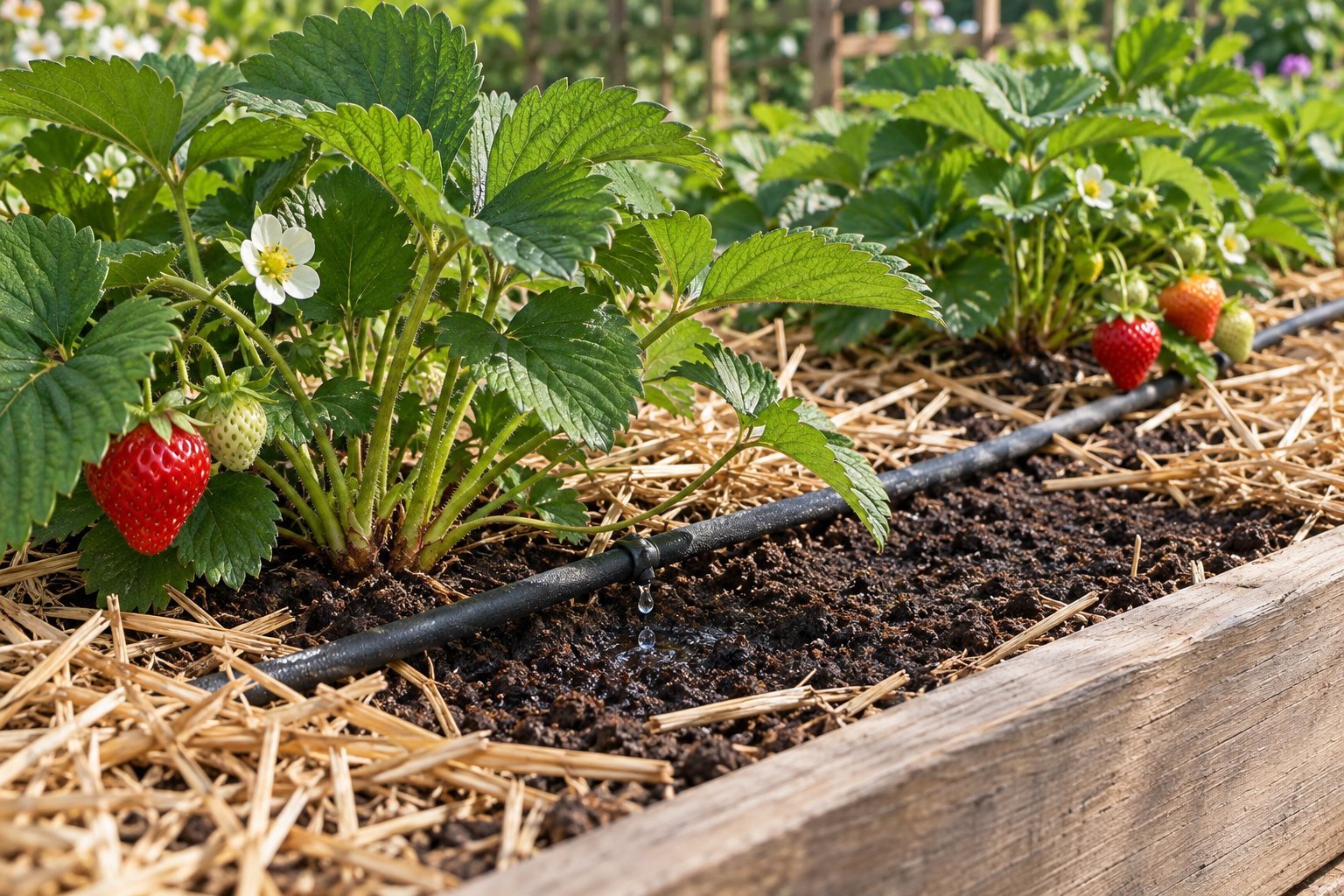
Decide whether to water today
- The root zone is beginning to dry and the plant is actively growing: Water thoroughly enough to moisten the shallow root zone, then let excess water drain.
- The root zone is already moist and weather is mild: Wait and recheck rather than watering by calendar.
- The soil is saturated or water stands after irrigation: Pause irrigation and correct drainage before adding more water.Can Strawberries Be Overwatered?
- The plant wilts despite suitable moisture: Use the wilt diagnosis rather than assuming thirst.Why Are My Strawberry Plants Wilting?
How to confirm the problem
- Check moisture in the root zone before each irrigation decision.
- Account for rainfall, heat, wind, soil texture, mulch, and container volume.
- Confirm that water infiltrates the bed and drains instead of ponding around crowns.
Build a reliable strawberry watering routine
- Check the root zone frequently because most strawberry roots are shallow.
- Water deeply enough to wet the active root zone instead of giving repeated surface splashes.
- Adjust for rainfall, temperature, wind, soil texture, mulch, and whether plants are in containers.
- Prefer root-zone irrigation when practical so flowers and fruit do not stay wet unnecessarily.
GardenSolved checkpoint
Do not do this yet
Avoid calendar watering
- Do not water every day automatically without checking the root zone.
- Do not let containers stand in collected water.
- Do not use one weekly volume as a guarantee across all soils, climates, and growing systems.
Confirm the likely cause first, then choose the treatment.
What improvement to look for
- Recheck root-zone moisture after irrigation and rainfall.
- A workable routine avoids both repeated drying and persistent saturation.
How to reduce repeat problems
- Adjust irrigation when weather, plant growth or container conditions change.
- Keep drainage outlets clear and count rainfall before adding water.
When to investigate further
Investigate drainage or root disease when plants wilt despite consistently wet soil or irrigation water remains standing around roots.