Strawberries
Why Won't My Strawberry Runners Root?
The short answer
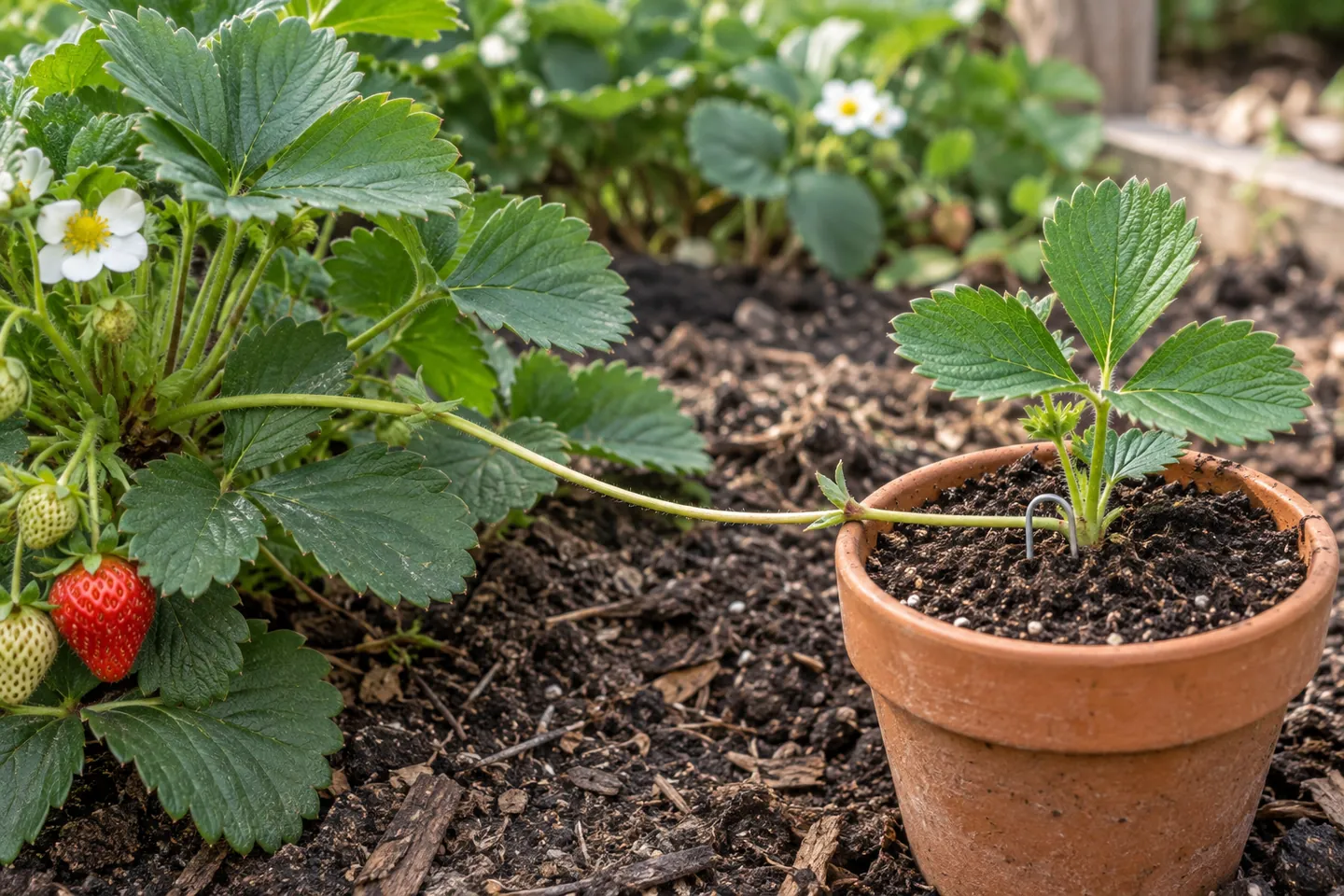
Place a healthy runner node in firm contact with moist, well-drained soil and keep it there while roots form. Do not bury the whole crown. If the runner comes from a weak or diseased mother plant, solve that problem first or use clean replacement plants.
A strawberry runner forms a daughter plant where a node contacts suitable growing media. Poor soil contact, dry media, competition, weak mother plants, or trying to root runners in a system where they are normally removed can all explain failure.
Diagnostic snapshot
What to check before you act
What you are seeing
- A runner node hangs above the soil and cannot stay in contact
- The rooting spot repeatedly dries out or stays waterlogged
Check first
Identify the node where the daughter plant is forming and confirm it can touch soil.
Hold off for now
Do not bury the daughter crown under soil.
Investigate further if
Use clean replacement plants rather than propagating when the mother bed has significant disease, root decline, or persistent pest problems.
Photograph this before you act
- Photograph the soil surface and root-zone or container context; do not disturb roots just to take a photo.
- Take one close-up of the clearest symptom and one wider view that shows the surrounding area for comparison.
Next best check
Check two visible clues before you act.
This mini-check narrows the match using the same canonical diagnostic clues as this answer. It does not confirm a diagnosis from one or two clicks, and it does not make a photo-only diagnosis.
Two quick observations can tell you whether to keep reading this diagnosis closely or compare other possibilities first.
Why a runner may fail to root
| What you see | What to change |
|---|---|
| Node is suspended above the bed | Pin or position the node so it maintains gentle soil contact. |
| Soil dries hard around the node | Keep the small rooting zone evenly moist while roots establish. |
| Node sits in saturated soil | Improve drainage; roots need both moisture and oxygen. |
| Crown is buried | Reset the crown at the soil surface while roots remain covered. |
| Mother plant is weak | Resolve mother-plant health before relying on it for propagation. |
How to confirm the problem
- Identify the node where the daughter plant is forming and confirm it can touch soil.
- Check moisture and drainage at the daughter plant, not only at the mother crown.
- Keep the daughter crown at the soil surface while roots contact the media.
- Inspect the mother plant for root, crown, pest, or disease problems.
Root a daughter plant with less disturbance
- Choose a healthy daughter node on a healthy runner.
- Set the node on loose, well-drained soil or potting mix and secure it lightly if needed.
- Keep the rooting zone evenly moist but not waterlogged.
- Leave it attached to the mother plant until it has established roots, then separate only when it can support itself.
GardenSolved checkpoint
Do not do this yet
Avoid propagation mistakes
- Do not bury the daughter crown under soil.
- Do not let a newly rooting node swing in and out of contact with the soil.
- Do not propagate disease or pest problems from an old declining bed.
Confirm the likely cause first, then choose the treatment.
What improvement to look for
- Look for new daughter growth and established roots without repeatedly pulling it up.
- Keep the connection until the daughter can support itself.
How to reduce repeat problems
- Choose a healthy mother plant and stable rooting position.
- Keep the rooting node moist while leaving the crown exposed.
Which check comes next?
- The mother produces no runners: Check strawberry type and vigor first.Why Is My Strawberry Plant Not Producing Runners?
- The rooting spot alternates wet and dry: Review moisture and drainage.How Often Should I Water Strawberry Plants?
When to investigate further
Use clean replacement plants rather than propagating when the mother bed has significant disease, root decline, or persistent pest problems.
Sources
Save & recheck
Compare what changes before changing course.
Save this diagnosis only in this browser, then come back and compare the same clues. No account, reminder subscription, or server-stored diagnostic record is created.
Your baseline
- A runner node hangs above the soil and cannot stay in contact
- The rooting spot repeatedly dries out or stays waterlogged
Check again when you return
- Identify the node where the daughter plant is forming and confirm it can touch soil.
- Check moisture and drainage at the daughter plant, not only at the mother crown.
Tip: photograph the same area from a similar angle so the visible pattern is easier to compare.
Related questions
Diagnostic Finder
Still not sure this answer fits?
Open the Diagnostic Finder with the relevant growing subject or care context preselected and compare other published GardenSolved diagnoses.
Compare other possibilities