Strawberries
Why Are My Strawberry Plants Wilting?
The short answer
Check the root zone before adding water. Dry soil can wilt shallow-rooted strawberries, but wet compacted soil and root disease can produce the same above-ground collapse. Older outer leaves that wilt and brown while inner leaves stay green are a classic verticillium clue, not proof.
Wilt in strawberries can come from dry shallow roots, saturated or damaged roots, transplant stress, crown or root disease, or verticillium wilt. The soil condition and which leaves wilt first are critical clues.
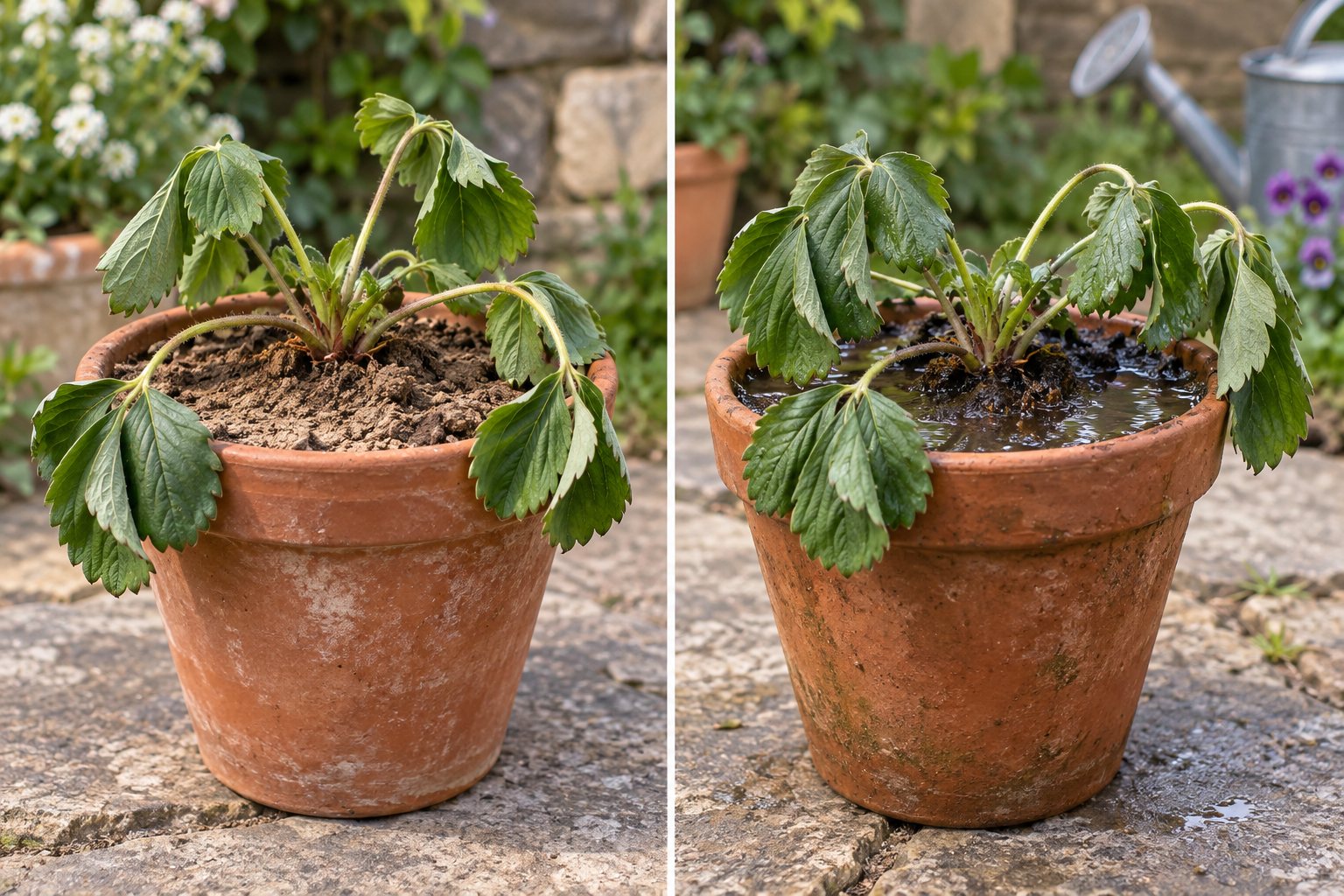
Separate dry-root wilt from root and disease problems
Dry shallow roots
- Root-zone soil is genuinely dry.
- The plant improves after one thorough watering.
Restore even moisture and use the watering guide for the routine.
Wet or damaged roots
- Soil stays saturated or drainage is poor.
- Growth stalls and wilt continues despite wet soil.
Pause extra irrigation and investigate drainage and root health.
Possible verticillium wilt
- Older outside leaves wilt and become reddish yellow to brown.
- Inner leaves can remain green and firm longer.
Use local diagnosis before replanting or treating the site.
Transplant stress
- Wilting begins soon after planting.
- The root plug is dry, damaged, or poorly connected to surrounding soil.
Rewet the root zone carefully and avoid disturbing the crown.
How to confirm the problem
- Check moisture several inches into the root zone rather than only the surface.
- Inspect the visible crown without cutting it. Check roots only when already exposed or accessible in a container; ask a diagnostic service how to sample a declining bed plant rather than uprooting healthy plants.
- Compare outer and inner leaves and note whether wilt persists during cool morning conditions.
Act on the root-zone evidence
- Water thoroughly only when the root zone is dry enough to need it.
- If soil is saturated, improve drainage and stop reflex watering.
- Keep the crown at the correct soil level and avoid burying it during mulching.
- Document persistent wilt and crown/root symptoms before removing plants.
GardenSolved checkpoint
Do not do this yet
Avoid making wilt worse
- Do not water by appearance alone.
- Do not fertilize a plant with failing roots as a first response.
- Do not assume a plant that wilts in wet soil needs more water.
Confirm the likely cause first, then choose the treatment.
What improvement to look for
- Check posture again in cool conditions after correcting confirmed moisture stress.
- Persistent wilt with damaged roots needs diagnosis, not repeated watering.
How to reduce repeat problems
- Use well-drained soil and healthy planting stock.
- Keep crowns at the soil line and avoid compaction.
Which check comes next?
- The root zone remains wet: Check saturation and drainage.Can Strawberries Be Overwatered?
- The root zone repeatedly dries: Adjust irrigation to actual moisture.How Often Should I Water Strawberry Plants?
When to investigate further
Seek plant-diagnostic help when wilt persists in suitable moisture, crowns or roots are discolored, or several plants decline in the same bed.