Strawberries
Can Strawberries Be Overwatered?
The short answer
If the root zone stays wet long after rain or irrigation, stop adding water and check drainage. Wilting in wet soil, weak growth, dark roots, and recurring fruit or root disease are stronger warning signs than one wet day.
Yes. Strawberry roots need moisture and oxygen, so continuously saturated soil can weaken roots, reduce vigor, and increase conditions favorable to root and fruit diseases. The goal is steady moisture with free drainage.
Diagnostic snapshot
What to check before you act
What you are seeing
- Soil remains saturated long after irrigation or rain
- Plants wilt even though the root zone is wet
Check first
Check drainage depth and whether water stands in the bed or container.
Compare first
- Persistently saturated root zone
- Dry-root wilt
- Root or crown disease
Hold off for now
Do not fertilize a waterlogged plant to force growth.
Investigate further if
Escalate when crowns or roots are rotting, several plants decline in wet areas, or wilt persists after drainage is corrected.
Photograph this before you act
- Photograph the soil surface and root-zone or container context; do not disturb roots just to take a photo.
- Take one close-up of the clearest symptom and one wider view that shows the surrounding area for comparison.
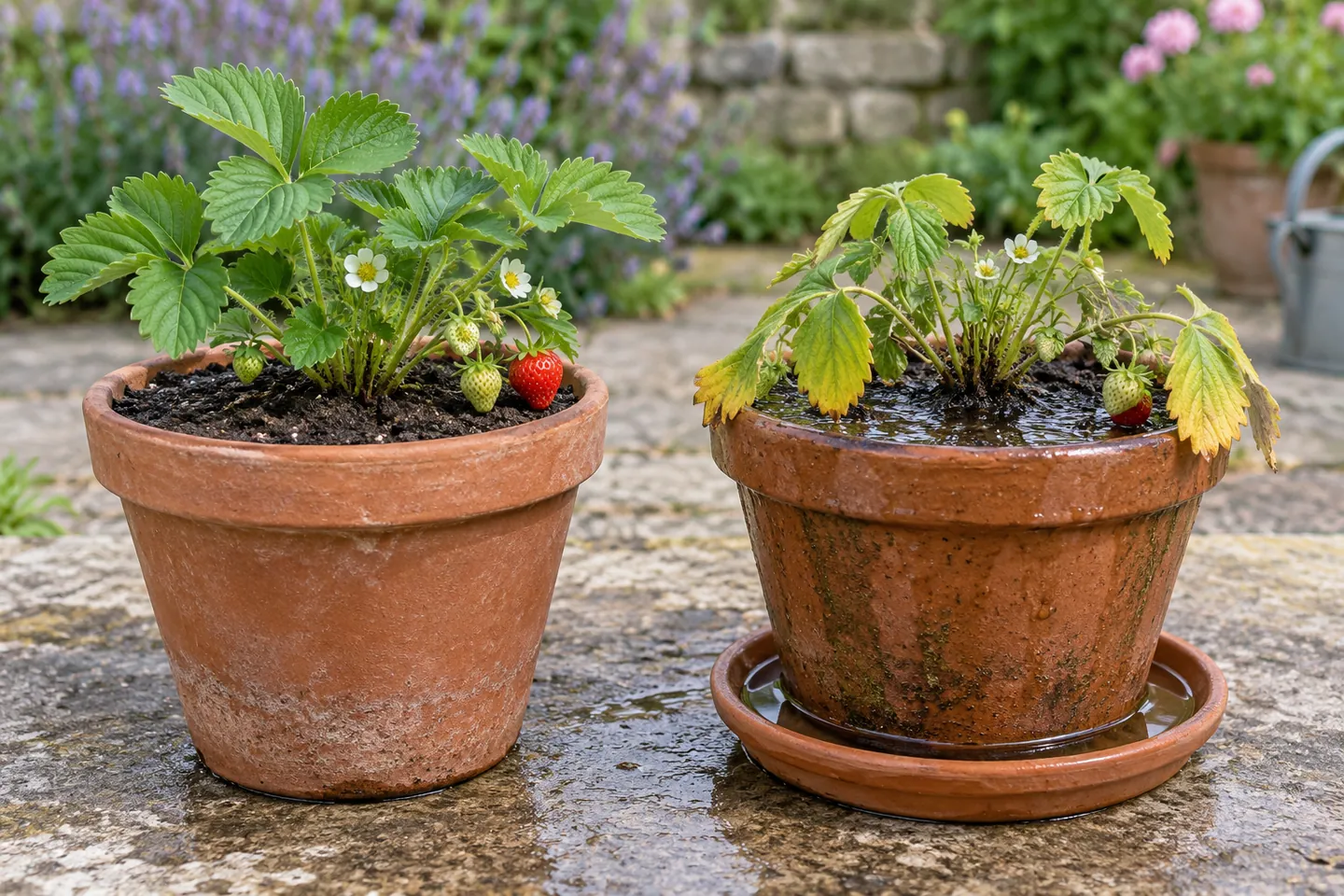
Recommended diagnostic check
Drainage / Root-Zone Checker
What does the root zone actually show?
Separate drainage, moisture, root crowding, and actual root damage before changing care or treatment. This checker is generated from this answer’s canonical diagnostic comparison.
First check
Check drainage depth and whether water stands in the bed or container.
Do not diagnose root rot, overwatering, or poor drainage from one surface symptom alone. Inspect the actual root-zone evidence first.
Separate too much water from simple wilt
Persistently saturated root zone
- Soil stays wet for long periods.
- Water drains slowly or stands around roots.
Stop extra irrigation and restore drainage.
Dry-root wilt
- Soil is actually dry below the surface.
- Plant improves after thorough watering.
Use the normal watering guide instead.
Root or crown disease
- Wilt persists in wet soil and roots or crown are discolored or weak.
- Decline is concentrated in wet or compacted areas.
Use local plant-diagnostic help before treating or replanting.
How to confirm the problem
- Check drainage depth and whether water stands in the bed or container.
- Inspect roots only when necessary and avoid tearing apart a healthy crown just to diagnose overwatering.
- Compare irrigation frequency with rainfall, soil texture, and actual root-zone moisture.
Correct excess moisture
- Pause irrigation until the root zone has drained to an appropriate moisture level.
- Open blocked drainage and correct low spots or containers that trap water.
- Resume watering from root-zone checks rather than the previous calendar.
- Remove rotten fruit and reduce unnecessary leaf and fruit wetness where disease is present.
GardenSolved checkpoint
Do not do this yet
Do not compensate with more inputs
- Do not fertilize a waterlogged plant to force growth.
- Do not keep watering because leaves remain wilted in saturated soil.
- Do not assume every root problem is caused only by irrigation; disease and soil structure can interact.
Confirm the likely cause first, then choose the treatment.
What improvement to look for
- Monitor drainage and plant posture after stopping unnecessary irrigation.
- Persistent decline with dark or weak roots warrants diagnosis.
How to reduce repeat problems
- Avoid compacted, poorly drained rooting sites.
- Recheck moisture before each irrigation instead of following a calendar.
Which check comes next?
- Wilt persists after drainage improves: Investigate roots and crown health.Why Are My Strawberry Plants Wilting?
- Moisture conditions are suitable again: Build a routine from root-zone checks.How Often Should I Water Strawberry Plants?
When to investigate further
Escalate when crowns or roots are rotting, several plants decline in wet areas, or wilt persists after drainage is corrected.
Sources
Save & recheck
Compare what changes before changing course.
Save this diagnosis only in this browser, then come back and compare the same clues. No account, reminder subscription, or server-stored diagnostic record is created.
Your baseline
- Soil remains saturated long after irrigation or rain
- Plants wilt even though the root zone is wet
Check again when you return
- Check drainage depth and whether water stands in the bed or container.
- Inspect roots only when necessary and avoid tearing apart a healthy crown just to diagnose overwatering.
Tip: photograph the same area from a similar angle so the visible pattern is easier to compare.
Related questions
Diagnostic Finder
Still not sure this answer fits?
Open the Diagnostic Finder with the relevant growing subject or care context preselected and compare other published GardenSolved diagnoses.
Compare other possibilities