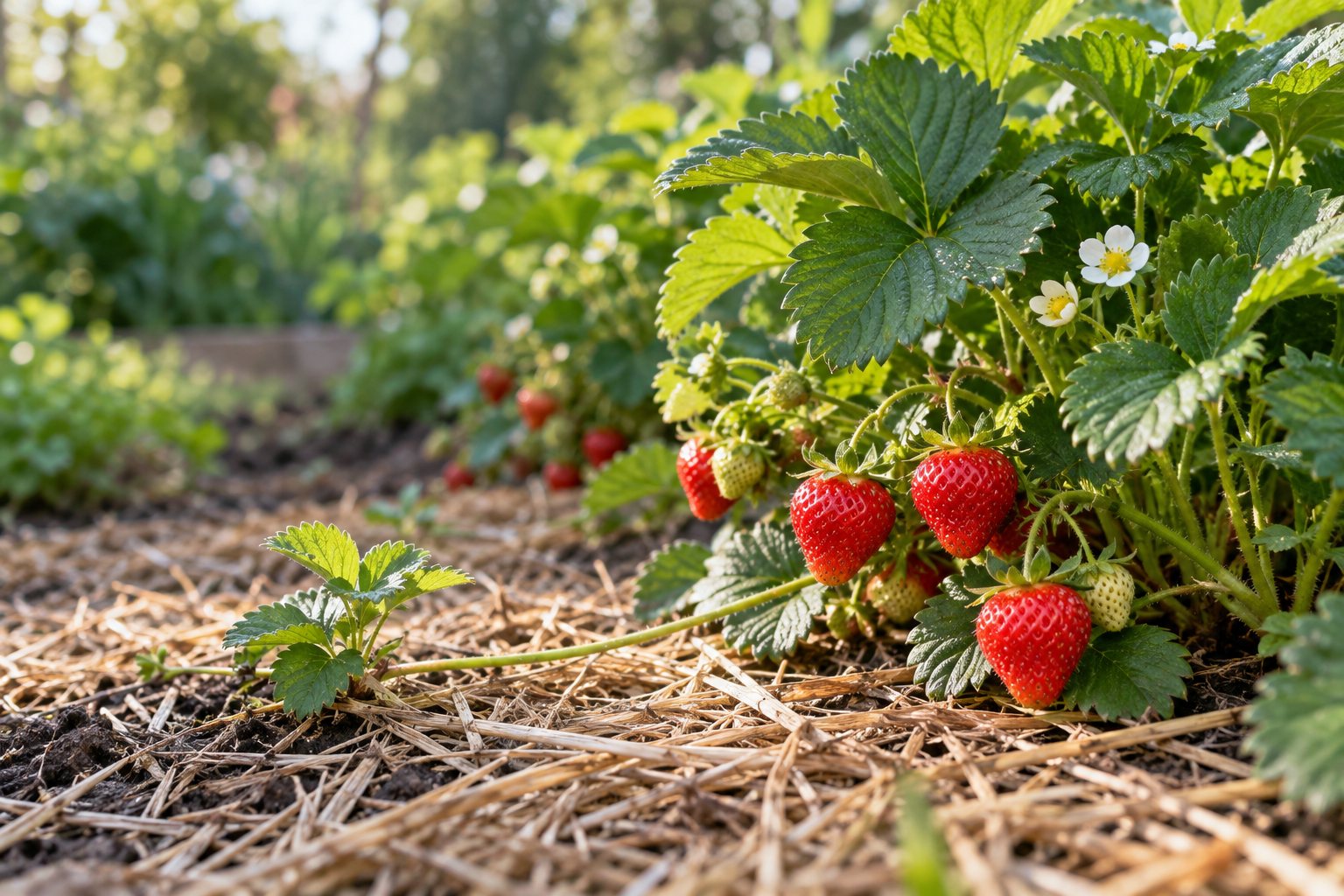
Strawberry growing
Strawberry growing and problems
Start with what you can see. Compare the clues, check the likely cause, then choose a practical next step for your strawberry plants.
Find my problemAI-generated educational illustration · GardenSolved.com. Overview for navigation, not diagnostic evidence.
Before you treat
Three checks that make the next step clearer
1. Check the root zone
Feel below the surface and check drainage. Dry and saturated roots can both accompany wilt.
Check watering2. Record the pattern
Note whether old or new leaves are affected, and inspect both leaf surfaces, flowers and fruit.
Compare leaf clues3. Know your strawberry type
Cultivar, harvest stage and June-bearing or day-neutral growth affect berry and runner expectations.
Check runner expectationsBrowse problems by symptom
Start with what you can see.
Browse by problem
15 practical strawberry answers
Leaves · flowers · fruit · runners · pests
Leaf & plant symptoms
Start with the strongest visible symptom, then use moisture, leaf pattern, pests, and disease signs to narrow the cause.
Why Are My Strawberry Leaves Turning Yellow?
Use leaf age, moisture, drainage, and companion symptoms to diagnose yellow strawberry leaves.
Read the answerWhy Are My Strawberry Leaves Turning Red?
Red strawberry leaves need pattern-based diagnosis, especially for scorch, mildew, cold injury, and aging.
Read the answerWhy Are My Strawberry Leaves Turning Brown?
Separate weather and water stress from leaf disease, pests, and wilt when strawberry leaves turn brown.
Read the answerWhy Are My Strawberry Leaves Curling?
Use curl direction, lower-leaf signs, distortion, and pests to diagnose strawberry leaf curl.
Read the answerWhy Are My Strawberry Plants Wilting?
Check soil, roots, crown, and leaf pattern before watering a wilted strawberry plant.
Read the answerFlowering & fruit development
Separate flower failure, incomplete pollination, normal berry-size variation, and pest or weather injury.
Why Are My Strawberry Plants Flowering but Not Fruiting?
Check flower health, pollination, frost, and plant stress when strawberries bloom without setting fruit.
Read the answerWhy Are My Strawberries So Small?
Separate naturally smaller later berries from pollination, water, root, pest, and vigor problems.
Read the answerWhy Are My Strawberries Misshapen?
Use flower history, seed pattern, frost, and pest clues to diagnose misshapen strawberries.
Read the answerFruit quality & rot
Use ripeness, cultivar, moisture, and the actual rot pattern before changing nutrition or applying a treatment.
Why Are My Strawberries Not Sweet?
Start with cultivar and full on-plant ripeness when strawberries taste less sweet than expected.
Read the answerWhy Are My Strawberries Rotting Before They Ripen?
Use the rot pattern and moisture conditions to distinguish gray mold from other strawberry fruit rots.
Read the answerRunners & propagation
Runner expectations depend on strawberry type and growing system; rooting also needs stable soil contact and a healthy mother plant.
Pests
Confirm the pest from feeding pattern, activity, and physical evidence before choosing control.
Water & root-zone care
Strawberries have shallow roots: they need dependable moisture, but persistent saturation can damage roots and increase disease pressure.
How Often Should I Water Strawberry Plants?
Use root-zone moisture and drainage, not a universal schedule, to water strawberries.
Read the answerCan Strawberries Be Overwatered?
Strawberries need steady moisture, but persistently saturated soil can damage roots and increase disease pressure.
Read the answer