Lawn & Grass
Why is moss growing in my lawn?
The short answer
Start by comparing mossy and healthy parts of the lawn for light, moisture, drainage, and soil firmness. Improve the limiting conditions first; only then decide whether moss removal and reseeding are worthwhile.
Moss usually becomes conspicuous where turf is weak enough to leave space for it. Shade, persistent moisture, poor drainage, compaction, and unsuitable soil conditions can overlap, so killing visible moss without fixing the site often gives only temporary results.
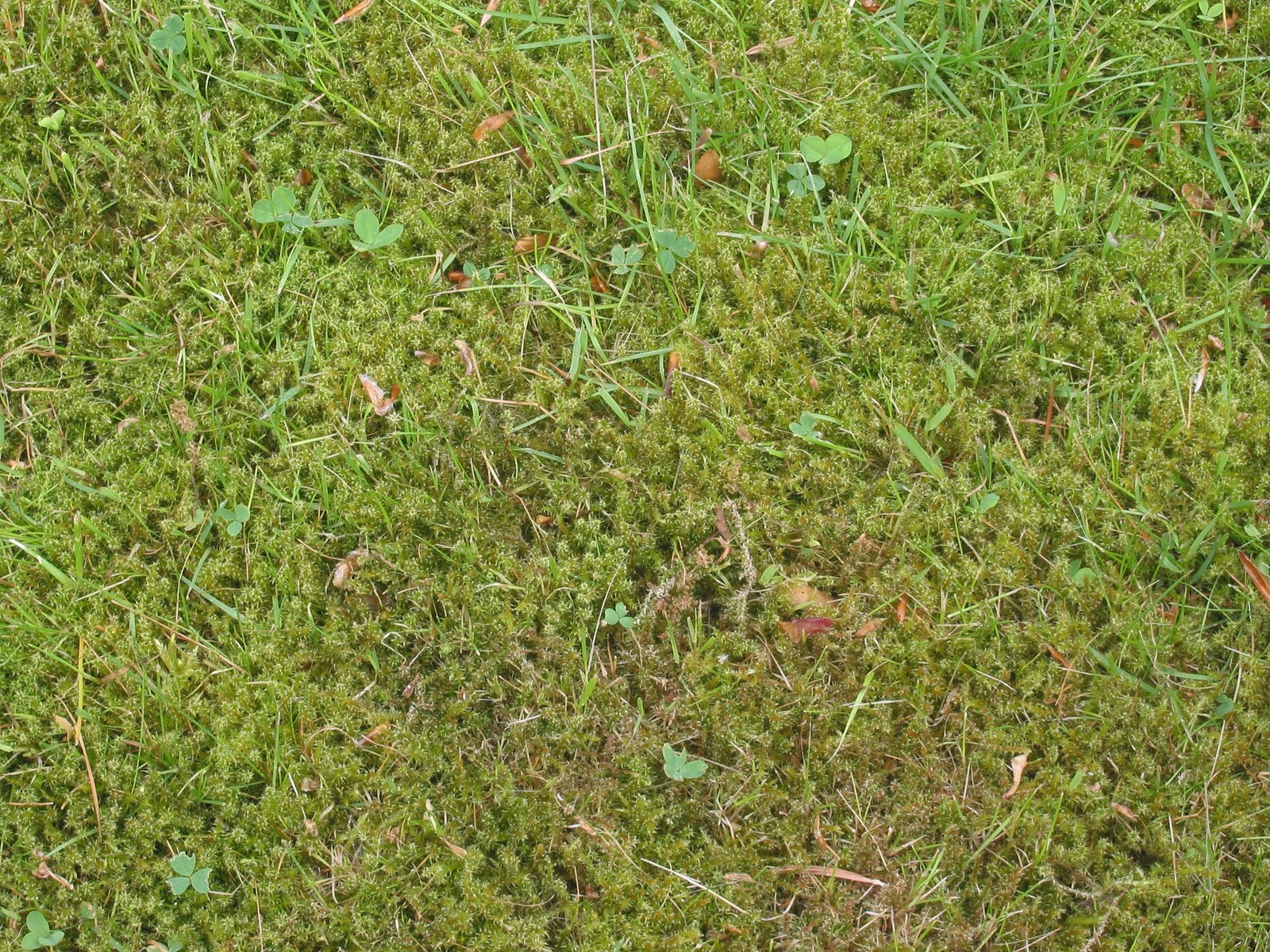
Start with the visible pattern
| What you see | What it suggests checking |
|---|---|
| Moss under dense shade | Check whether the grass receives enough light to persist. |
| Moss in wet low spots | Check drainage and irrigation before adding more water. |
| Moss with hard compacted soil | Confirm compaction and correct it when turf can recover. |
| Moss returns after treatment | The underlying site limitation probably remains. |
Compare the most useful branches
Shade-limited turf
- Grass is sparse and pale where light is lowest.
- Moss is strongest beneath trees or structures.
More likely if
- The same pattern persists despite otherwise reasonable care.
Less likely if
- Moss is equally strong in full-sun, freely drained turf.
Improve light where appropriate or use turf/groundcover adapted to the site.
Wet, compacted, or poorly drained soil
- The surface stays damp and roots are shallow.
More likely if
- Water ponds or infiltration is slow.
Less likely if
- The root zone dries normally and soil is open.
Correct drainage or confirmed compaction before moss control.
Weak turf from broader soil/care issues
- Grass density is low beyond the mossiest spots.
More likely if
- Soil testing or management history shows a correctable limitation.
Less likely if
- Dense healthy turf surrounds only a tiny wet patch.
Use site-specific soil and turf guidance rather than assuming acidity from moss alone.
Checks before treatment
- Compare hours of useful light in mossy and healthy turf.
- Check whether soil remains wet, puddles, or resists a probe after normal rainfall.
- Assess turf density and soil condition before assuming low pH is the cause.
What to do now
- Correct confirmed shade, drainage, or compaction limitations first.
- Remove excess moss mechanically only when the remaining turf can recover.
- Reseed with turf suited to the site's light and moisture conditions where lawn remains a realistic use.
GardenSolved checkpoint
Do not do this yet
Avoid these shortcuts
- Do not treat moss as proof that soil pH is low.
- Do not repeatedly apply moss killer without changing the conditions favoring moss.
- Do not aerate saturated soil or aggressively rake severely stressed turf.
Confirm the likely cause first, then choose the treatment.
Reduce repeat problems
- Maintain turf density with appropriate mowing and site-matched grass.
- Avoid chronic overwatering and improve poor drainage.
- Reduce repeated traffic on wet soil.
When to investigate further
If moss repeatedly returns after light, drainage, and compaction are addressed, reassess whether the site is suitable for turf or use a local soil/turf diagnosis before repeated chemical treatment.