Lawn & Grass
How often should I water my lawn?
The short answer
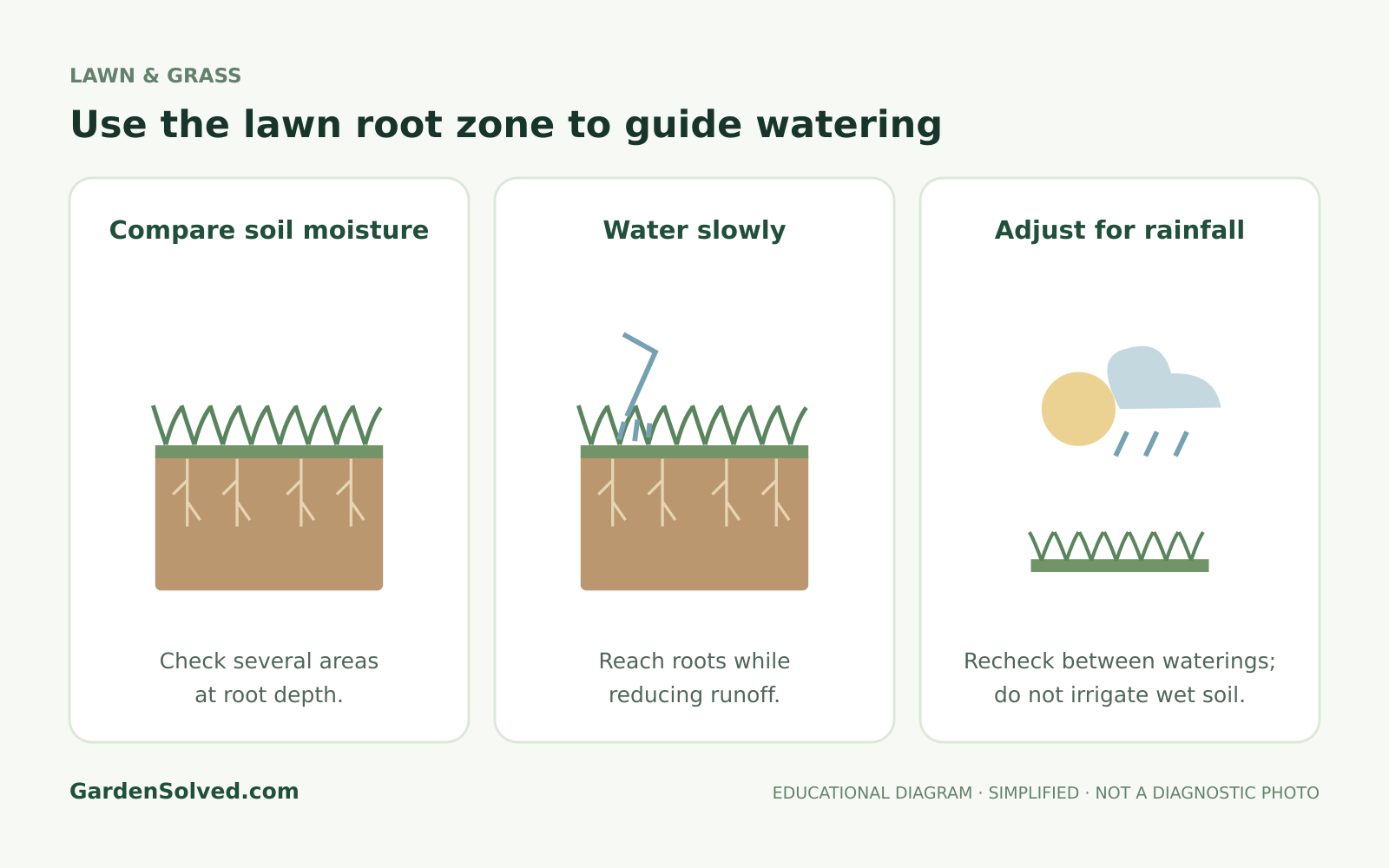
Check moisture below the surface before watering. When irrigation is needed, apply it slowly enough to wet the active root zone without prolonged ponding or runoff, then adjust the next watering for rainfall, soil, weather, and how the turf responds.
There is no universal number of watering days that fits every lawn. Soil texture, grass type, root depth, rainfall, heat, wind, shade, slope, and irrigation coverage all change how quickly the root zone dries.
Start with the site conditions
| Observation | What it changes |
|---|---|
| Soil is dry at root depth | Irrigation may be useful if the lawn is being kept actively growing. |
| Surface is dry but deeper soil is moist | Delay watering and recheck rather than following the timer. |
| Water puddles or runs off | Slow the application and address infiltration or compaction. |
| Some zones dry much faster | Check sun, slope, soil and sprinkler coverage separately. |
Compare the most useful branches
Actively growing turf needs water
- Root-zone soil is dry and turf shows loss of turgor or slow footprint recovery.
More likely if
- Rainfall has been limited and weather is hot, windy, or sunny.
Less likely if
- Soil remains moist at root depth.
Water slowly and deeply enough for the local root zone, then recheck before the next cycle.
Dormancy or reduced growth
- Cool-season turf has browned during sustained heat/drought but crowns remain viable.
More likely if
- The lawn is being intentionally allowed to go dormant.
Less likely if
- The lawn is actively used or species/site conditions require continued growth.
Choose a consistent drought strategy rather than alternating between severe drying and frequent shallow watering.
Overwatering or poor infiltration
- Soil stays saturated, water ponds, or runoff begins quickly.
More likely if
- Irrigation is frequent regardless of rainfall.
Less likely if
- Root-zone soil dries normally between cycles.
Reduce unnecessary irrigation and correct drainage, compaction, or application-rate problems.
Checks before acting
- Probe several lawn areas to compare moisture below the surface, not just at the thatch line.
- Check irrigation coverage with straight-sided containers if some zones dry faster.
- Account for recent rainfall, heat, wind, shade, slope, and local watering restrictions.
What to do
- Check root-zone moisture before the next irrigation cycle.
- Water early in the day when practical and apply slowly enough to limit runoff.
- Adjust automated schedules after meaningful rain and by season rather than leaving one setting all year.
GardenSolved checkpoint
Do not do this yet
Avoid these shortcuts
- Do not water every day simply because the surface looks dry.
- Do not increase irrigation when soil is already saturated.
- Do not use a universal weekly volume without considering soil, climate, and grass type.
Confirm the likely cause first, then choose the treatment.
What to expect next
- Drought-stressed turf may regain color as moisture and favorable temperatures return if crowns remain alive.
- Overwatered areas need time for oxygen to return to the root zone after drainage improves.
- Judge success from new growth and root-zone conditions, not one day of color change.
Build a more reliable routine
- Use suitable mowing height to support deeper, more resilient turf.
- Improve infiltration and reduce compaction where confirmed.
- Group irrigation zones by similar sun, slope, soil, and plant demand where possible.
When to investigate further
If turf wilts while soil is wet, smells sour, stays soft, or develops expanding patches under frequent irrigation, stop increasing water and investigate drainage, root, or disease problems.