Lawn & Grass
Why is my grass turning brown?
The short answer
First check soil moisture, season, and the shape of the damage. Broad dry browning during hot weather can fit drought stress or dormancy; wet, soft turf, sharply localized spots, loose roots, lesions, or damage that follows a recent treatment points to a different branch.
Brown grass is a symptom, not a diagnosis. Heat and drought can push some turf into dormancy, but localized traffic, mowing injury, saturated soil, pests, disease, pet damage, or a recent lawn product can create a similar color change.
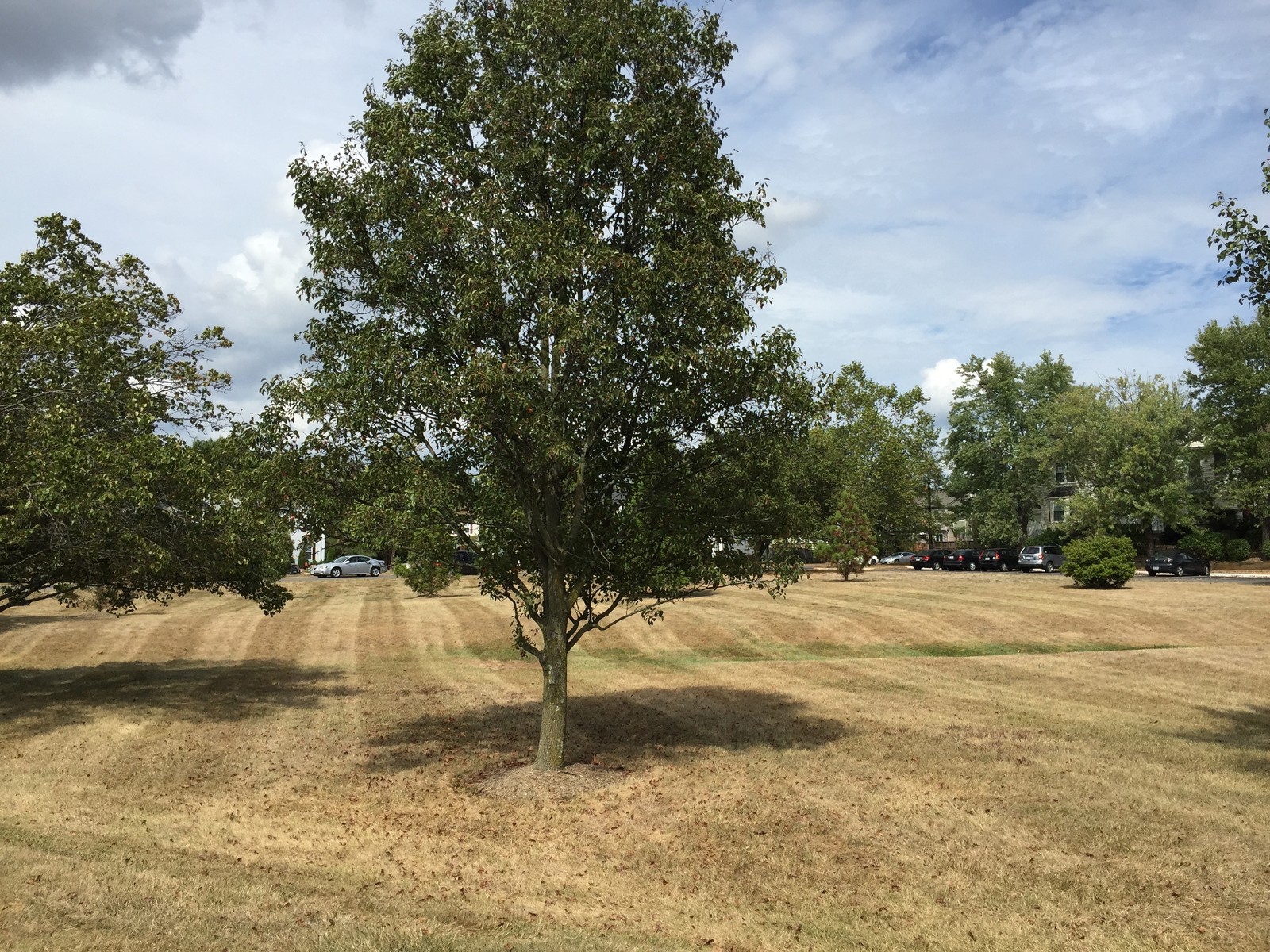
Start with the pattern
| What you see | What to check next |
|---|---|
| Broad, even straw color in hot dry weather | Check root-zone moisture and whether the grass species commonly enters summer dormancy. |
| Small isolated brown spots | Check pet routes, spills, mower scalping, compaction, and localized irrigation gaps. |
| Wet, soft, dark turf | Stop adding water and investigate drainage, flooding, or root/crown decline. |
| Expanding patches with blade or root symptoms | Use a turf disease or pest diagnosis rather than assuming drought. |
Compare the most likely branches
Drought stress or dormancy
- Soil is dry below the surface.
- Browning is broad rather than sharply spotty.
More likely if
- Hot, dry weather preceded the change and crowns remain firm.
Less likely if
- Soil is saturated or damage follows a spill or pet route.
Reduce extra stress and water only if the lawn is being maintained actively rather than allowed to remain dormant.
Localized physical or chemical injury
- Damage follows traffic, mower turns, pet use, edges, or a treatment pattern.
More likely if
- The boundary matches a route or application.
Less likely if
- Browning is uniform across similar exposures.
Remove the confirmed stressor and allow recovery before reseeding.
Drainage, disease, or pests
- Turf is wet, soft, loose, spotted, or continuing to expand.
More likely if
- Roots, crowns, blades, insects, or fungal structures provide direct evidence.
Less likely if
- Dry dormant turf greens after moisture and cooler conditions return.
Identify the specific problem before fungicide, insecticide, or additional irrigation.
Checks before treatment
- Compare soil moisture several centimeters below the surface in brown and green areas.
- Inspect crowns, roots, and blades at the healthy-to-brown edge rather than only the center of a dead patch.
- Review recent heat, rainfall, irrigation, mowing, pet activity, fertilizer, herbicide, and traffic.
What to do now
- Reduce mowing and traffic on heat- or drought-stressed turf.
- Correct a confirmed irrigation or drainage problem rather than watering by color alone.
- Photograph the advancing edge and inspect roots/blades if patches keep spreading.
GardenSolved checkpoint
Do not do this yet
Avoid these shortcuts
- Do not fertilize drought-dormant turf as a rescue treatment.
- Do not keep watering brown turf when the soil is already saturated.
- Do not assume every brown patch is fungal or every brown lawn is dead.
Confirm the likely cause first, then choose the treatment.
Reduce the chance of recurrence
- Mow at an appropriate height with a sharp blade.
- Adjust irrigation to soil, weather, and turf response.
- Reduce compaction and repeated traffic, especially during stress.
When to investigate further
Seek local turf diagnosis when patches expand despite suitable moisture, roots or crowns are damaged, the turf is wet and foul-smelling, or disease and insect evidence overlap.