Lawn & Grass
Why is my grass turning yellow?
The short answer
Check whether the yellowing is uniform, patchy, shade-associated, wet-soil-associated, or accompanied by blade lesions or colored spores. Use soil testing before making nutrient corrections, and do not add water to already-wet ground.
Yellow turf can result from several different stresses. Shade, excessive moisture, mowing injury, nutrient limitations, and disease can all look yellow from a distance, so the useful clues are where the change starts and what the blades and soil show up close.
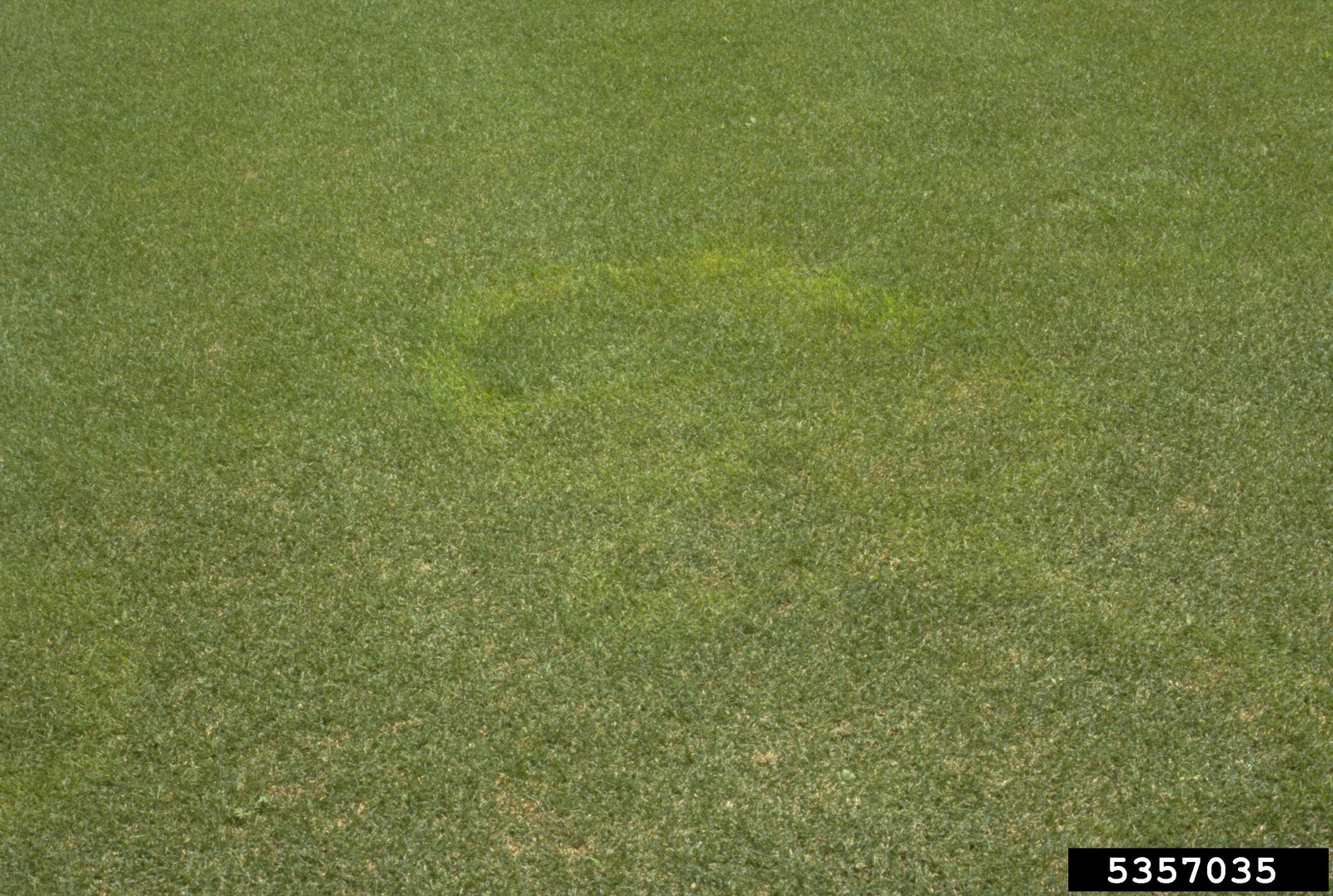
Start with the pattern
| What you see | What to check next |
|---|---|
| Thin pale turf under trees or beside structures | Check usable light and competition rather than assuming a fertilizer deficiency. |
| Yellow turf in persistently damp soil | Check drainage, compaction, and irrigation frequency. |
| Ragged pale blade tips after mowing | Sharpen the mower and avoid removing too much leaf at once. |
| Uniform pale growth | Review fertility history and use a soil test before adding nutrients. |
Compare the most likely branches
Shade or weak turf vigor
- Turf is thinner and paler where light is limited.
More likely if
- The same area also has reduced density and more moss or bare soil.
Less likely if
- Yellowing crosses sun and shade equally with distinct lesions.
Improve site fit or use shade-tolerant turf rather than feeding for a light problem.
Excess moisture or drainage stress
- Soil stays wet and roots remain shallow.
More likely if
- Low spots or compacted areas are affected first.
Less likely if
- Root zone dries normally and blade symptoms point elsewhere.
Reduce unnecessary irrigation and correct drainage or compaction.
Nutrition, mowing, or disease
- Pale color is broad, blade tips are ragged, or repeatable lesions/spores are present.
More likely if
- A soil test, mowing evidence, or characteristic disease sign supports the branch.
Less likely if
- Only shaded saturated areas are affected.
Act only on the branch supported by direct evidence.
Checks before treatment
- Compare light exposure and soil moisture between yellow and healthy turf.
- Inspect fresh-cut blade tips and both surfaces of affected leaves for lesions, dust, or spores.
- Use a soil test before correcting a suspected nutrient or pH problem.
What to do now
- Correct a confirmed drainage or irrigation problem first.
- Sharpen mower blades and maintain a suitable mowing height.
- Use soil-test recommendations for fertility rather than applying a guessed nutrient.
GardenSolved checkpoint
Do not do this yet
Avoid these shortcuts
- Do not diagnose nitrogen deficiency from color alone.
- Do not increase irrigation when the root zone is already wet.
- Do not apply fungicide without a disease pattern or local diagnosis.
Confirm the likely cause first, then choose the treatment.
Reduce the chance of recurrence
- Match turf to available light.
- Keep mowing equipment sharp and avoid scalping.
- Base fertility and pH changes on soil evidence.
When to investigate further
Get a local turf diagnosis if yellowing spreads rapidly, has a repeatable lesion or spore pattern, or persists after drainage, mowing, and soil-based nutrition issues are addressed.