Cucumbers
Why Are Cucumbers Small or Stunted?
The short answer
Compare the fruit with the variety description and inspect several fruits over time. If fruit is genuinely stalled or misshapen, check whether female flowers were pollinated, whether the root zone has steady moisture, and whether the vine is stressed or carrying more fruit than it can support.
First decide whether the fruit is simply young or naturally small for its variety. A cucumber that has stopped enlarging, stays narrow, or develops an uneven shape needs a closer check of pollination, moisture, plant vigor, and crop load.
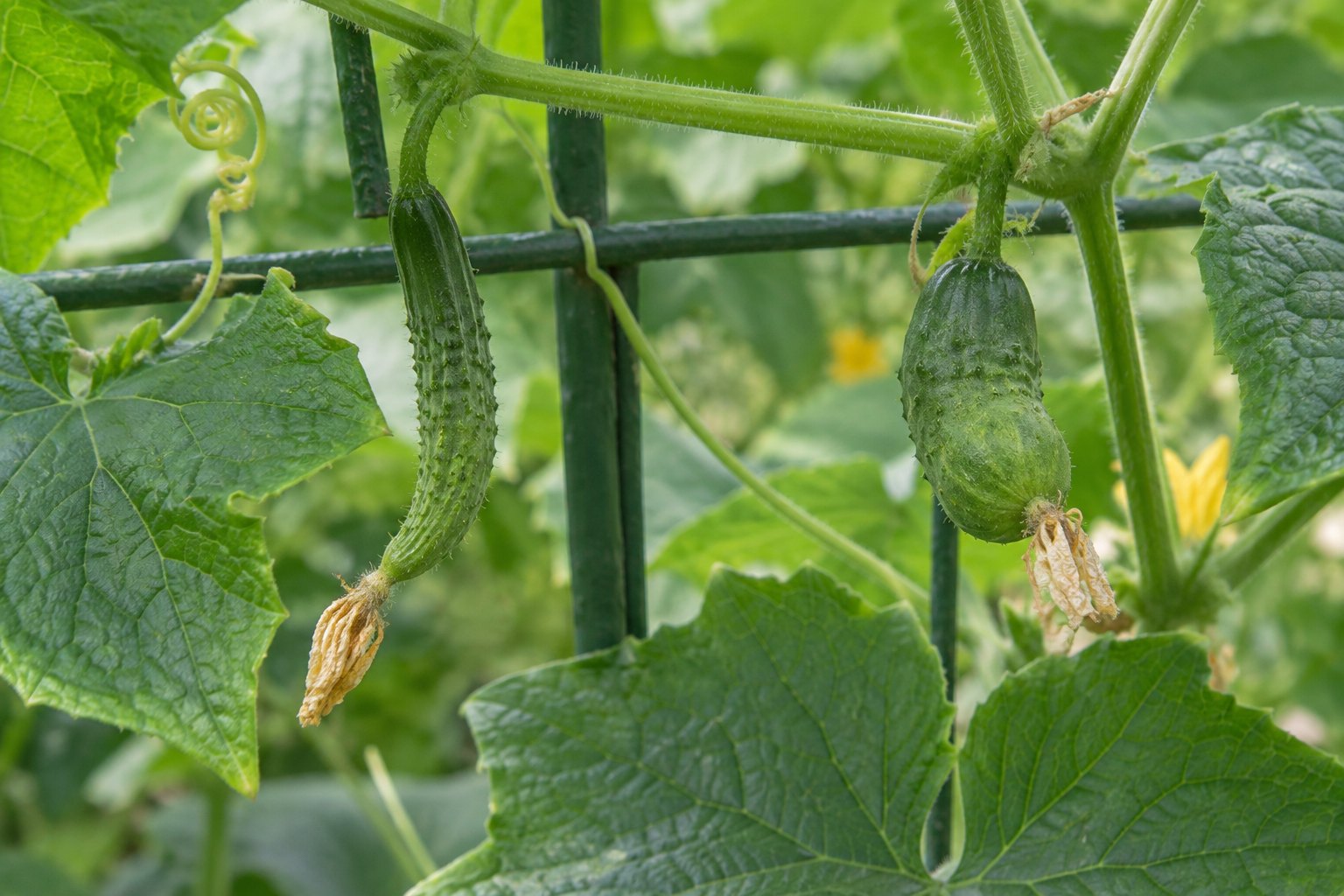
First decide: young, naturally small, or stalled?
Young fruit still developing
- The fruit is firm and continuing to enlarge when compared with an earlier observation.
- Its shape and color fit the variety.
Less likely if
- It has stopped changing, shriveled, or repeatedly fails at the same stage.
Keep observations and check the plant conditions rather than treating normal early growth.
Naturally small cultivar or type
- The fruit matches the variety description or other healthy fruits on the same vine.
- The plant is vigorous and fruit is developing evenly.
Less likely if
- Only some fruit is stalled or the shape is newly distorted.
Use the variety description as the size reference; do not label expected size as stunting.
Post-set fruit has stalled
- A female flower formed a fruit, but it remains narrow, stops enlarging, or begins to shrivel.
- Several fruits show the same failure after set.
More likely if
- Female flowers opened with limited pollen transfer, or the vine shows moisture or stress clues.
Check pollination history, moisture, root vigor, crop load, and plant-health clues in that order.
No fruit has formed
- The vine has no female flowers or no fruit at any stage.
- There is no formed fruit to diagnose for enlargement.
Use the broad no-fruit diagnosis instead of treating this as a small-fruit problem.
Checks that separate the main branches
- Look at several fruits, not one, and compare their change over time with the variety's expected type.
- Inspect the flower history: confirm that the fruit followed a female flower and note whether flowers were open when pollinators were absent or weather was disruptive.
- Check whether fruit is evenly shaped or narrow and curved, and whether the vine is still producing healthy new growth.
- Feel the root-zone soil and look for dry swings, standing water, damaged roots, or a vine that is generally weak.
- Count the visible developing fruits as a crop-load clue, then inspect leaves and stems for pest feeding, lesions, distortion, or disease patterns.
- Review fertilizer history and only pursue a nutrient explanation when plant symptoms or a soil/media test support it.
Take the action that matches what you found
- If fruit is young or naturally small, keep care steady and use the variety description as the reference.
- If fruit formed after questionable pollen transfer and the plant otherwise has suitable flowers, use the cucumber hand-pollination procedure for a fresh receptive female flower.
- If moisture or drainage is the supported issue, correct the root zone gradually and use the cucumber watering guide for routine care.
- If the vine is weak, overloaded, or showing pests or disease, address the confirmed plant-health issue and avoid adding fertilizer or water by guesswork.
- If fruit has been left past the variety's intended harvest stage, use harvest guidance only when that is the decision changing the outcome.
Route the next decision
- There is no formed fruit at all: Use the broad no-fruit diagnosis.Why Are Cucumber Plants Not Producing Fruit?
- Fruit formed but pollination is the supported next check: Use the cucumber-specific hand-pollination procedure.How to Hand-Pollinate Cucumbers
- Fruit is developing normally and the remaining decision is when or how to pick it: Use the cultivar-aware harvest guide.When and How to Harvest Cucumbers
Keep this diagnosis narrow
Small fruit can share causes with poor fruit set, yellowing, routine moisture care, or bitterness, but those are different decisions. This page is for fruit that has formed and then fails to enlarge normally.
One small or misshapen cucumber does not prove a single cause. Use the pattern across several fruits and the plant's accompanying clues before changing care.
When another assessment is needed
Seek a local diagnosis when stalled fruit appears with sudden wilt, spreading leaf or stem symptoms, severe pest damage, or repeated failure despite stable care.
GardenSolved checkpoint
Do not do this yet
Avoid unsupported shortcuts
- Do not call a naturally small cultivar stunted without checking its expected size.
- Do not add fertilizer or remove fruit before checking pollination, vine health and root-zone conditions.
Confirm the likely cause first, then choose the treatment.