Cucumbers
How Often and How Much Should Cucumbers Be Watered?
The short answer
Check moisture in the active root zone before watering. If it is drying, water the soil thoroughly and evenly while keeping foliage dry where practical; if it is still wet, wait and inspect drainage. Containers, sandy soil, heat, wind, larger vines, heavy fruiting, and trellising can change how quickly the root zone dries.
Water cucumbers according to root-zone moisture and current conditions, not the same calendar interval for every plant. Check below the surface first, then adjust for the growing system, weather, plant size, fruiting load, soil or potting mix, drainage, and recent rainfall.
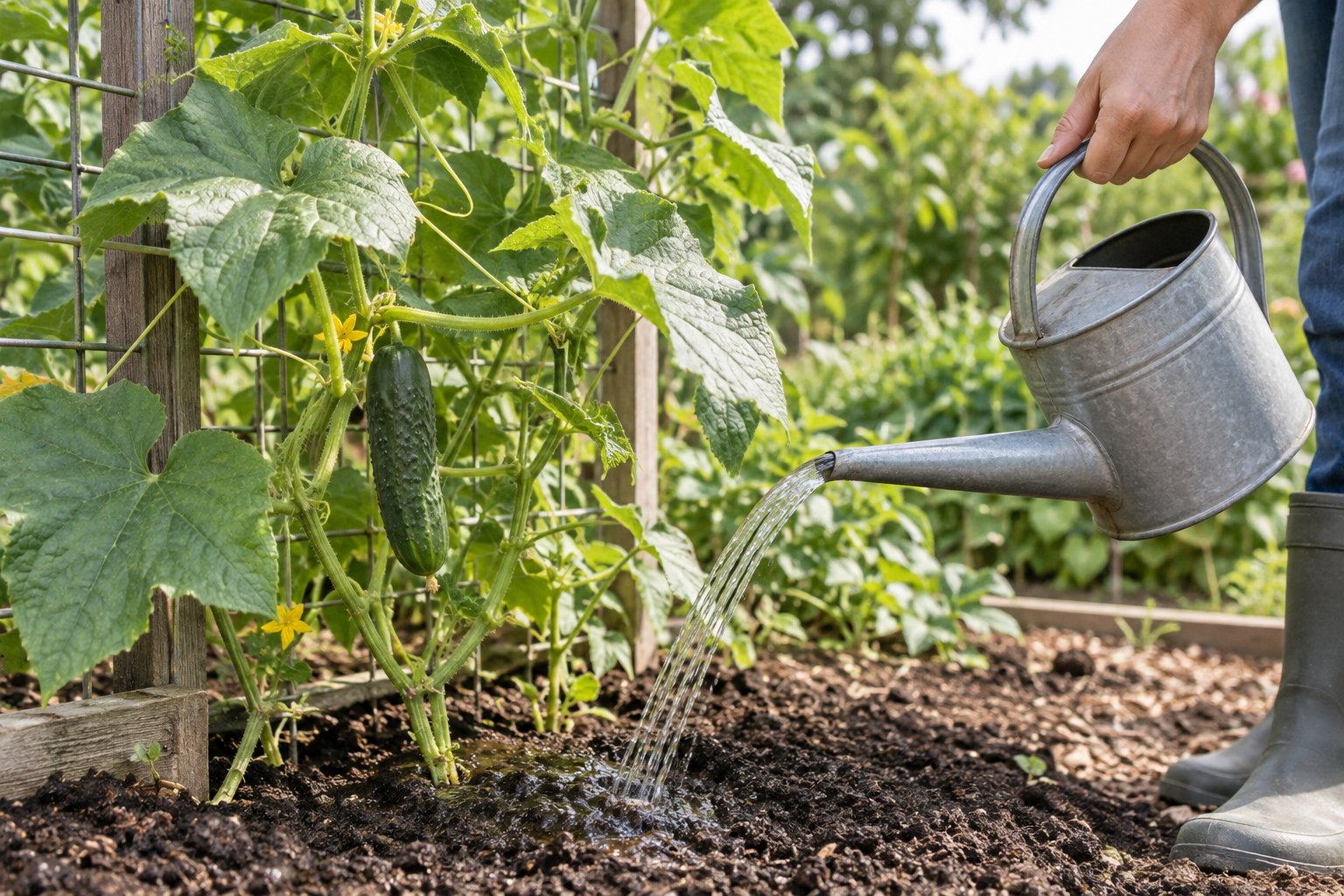
Let the root zone decide
- The root zone is beginning to dry and drains freely: Water the soil thoroughly and evenly, then recheck before the next irrigation.
- The root zone is still moist: Wait rather than watering by the calendar; check again as conditions change.
- Soil is saturated, smells sour, ponds, or drains slowly: Pause irrigation and correct the drainage problem instead of adding more water.
Adjust the next check to actual conditions
| Condition | Adjustment |
|---|---|
| In-ground, moisture-retentive soil | Check below the surface and water only as drying develops; confirm that the bed still drains freely. |
| Container or sandy soil | Expect faster or less even drying and check more often, but do not assume every container needs daily water. |
| Heat, wind, large vines, trellising, or heavy fruit load | Shorten the observation interval because demand and evaporation may increase. |
| Cool, cloudy weather or recent rain | Recheck before irrigating because the root zone may remain wet longer. |
| Poor drainage or compacted media | Restore drainage and root-zone aeration; more water is not the correction. |
Checks before deciding what to do
- Check moisture below the surface in more than one spot and confirm that excess water can leave the root zone.
- Review recent rainfall or irrigation, weather, soil or media, container size, plant stage, and drainage before deciding when or how much to add.
Water the root zone effectively
- Check moisture below the surface in the area occupied by roots rather than judging from a dry-looking crust.
- Apply water slowly to the soil around the root zone so it soaks in evenly instead of running away.
- Keep leaves dry where practical by using soil-level delivery such as a careful hose, drip line, or soaker hose.
- Confirm drainage after watering and empty saucers or correct blocked outlets for container plants.
- Recheck moisture after weather, plant size, fruiting load, or the growing system changes; do not lock the plant to a fixed interval.
When watering symptoms need their own diagnosis
- Yellow leaves are the main visible problem: Use the yellow-leaf owner because moisture is only one possible cause.Why Are Cucumber Leaves Turning Yellow?
- Fruit tastes bitter: Use the fruit-quality owner; moisture inconsistency is supporting context, not a complete diagnosis.Why Are Cucumbers Bitter?
- Fruit stays small, narrow, or stops enlarging: Use the small-fruit owner to compare pollination, moisture, plant vigor, and crop load.Why Are Cucumbers Small or Stunted?
- The watering question is part of a pot, tub, or balcony setup: Use the container-system owner for drainage, medium, stability, support, and placement around this watering decision.How to Grow Cucumbers in Containers
GardenSolved checkpoint
Do not do this yet
Avoid universal watering rules
- Do not water every day or every fixed number of days without checking the root zone.
- Do not use a universal litres-per-plant amount, moisture threshold, or guaranteed-yield formula.
- Do not diagnose overwatering, underwatering, root rot, or a nutrient problem from wilt or yellowing alone.
- Do not make overhead foliage watering the default when soil-level delivery is practical.
Confirm the likely cause first, then choose the treatment.
Keep moisture easier to manage
- Use a moisture-retentive but well-drained soil or growing medium.
- Use mulch where appropriate to moderate evaporation while preserving drainage and avoiding contact with the stem.
- Check emitters and irrigation coverage so each plant receives water at the root zone.
- Inspect containers and trellised vines more often because their root zones may dry differently from in-ground vines.
When another assessment is needed
Use the matching symptom diagnosis or local help when a vine stays wilted in moist soil, roots or the stem base are damaged, drainage remains blocked, or decline continues after moisture is stabilized.