Cucumbers
When and How to Harvest Cucumbers
The short answer
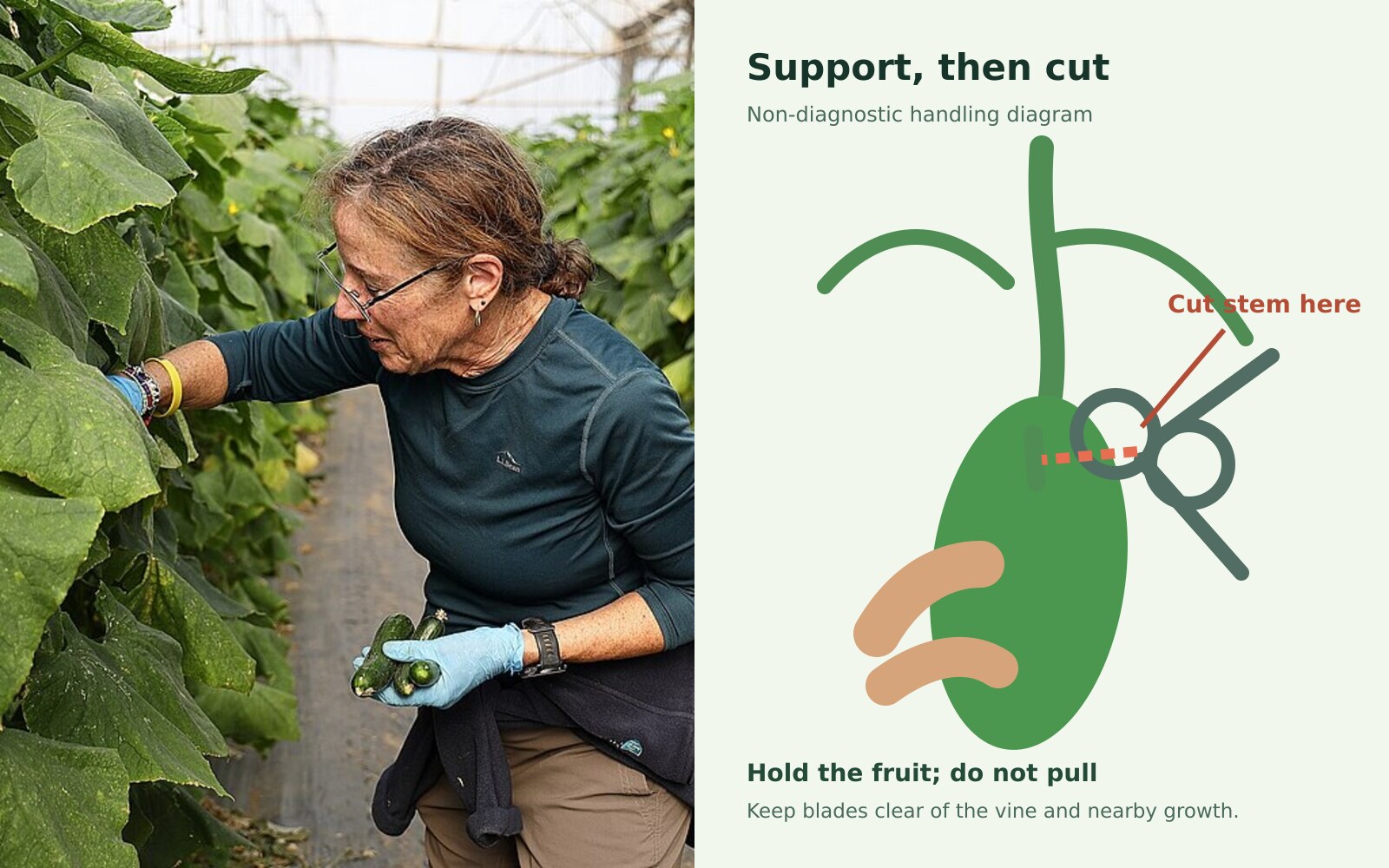
A ready cucumber matches its cultivar's intended use and expected size, color, firmness, shape, and surface before it becomes overmature. Support the fruit, cut its stem with clean sharp snips without pulling the vine, avoid nearby growth, and inspect plants regularly because fruit can change quickly in active harvest weather.
Harvest at the expected stage for the cucumber type and cultivar, not at one universal size or color. Use the supplier's maturity expectation together with size, color, firmness, shape, surface, and how the fruit is changing.

Use several readiness cues together
| Cue | How to read it |
|---|---|
| Type and cultivar | Start with the intended use and supplier description; pickling, slicing, specialty, and yellow-skinned cultivars do not share one universal appearance. |
| Size | University of Illinois Extension gives 6–8 inches for slicing cucumbers and 3–4 inches for pickling cucumbers as common examples, not universal cultivar rules. |
| Color | Many green slicers are harvested before yellowing, but a yellow-skinned cultivar may be normal; compare with the named cultivar rather than color alone. |
| Firmness and surface | Look for the firm texture, shape, gloss, and surface expected for the type; softening, coarse seed development, or color drift can indicate overmaturity. |
| Inspection frequency | Illinois Extension recommends checking vines daily during active harvest; use that as a practical high-growth-season check, not a production guarantee. |
Checks before deciding what to do
- Compare several cues with the seed packet or breeder description; one fruit length or color cannot define every cucumber type.
- Check the stem route and support the fruit before cutting so the main vine, leaf petioles, flowers, and nearby young fruit stay intact.
Cut cucumbers without tearing the vine
- Trace the fruit stem to the vine and move leaves only enough to see nearby flowers, fruit, and growing points.
- Support the cucumber with one hand so its weight does not pull on the vine.
- Use clean sharp snips or pruners to cut the fruit stem; do not twist, yank, or tear the vine.
- Lower the fruit clear of leaves and supports, then inspect the cut and nearby growth for accidental damage.
- Move harvested fruit out of direct sun and handle it gently; use current food-safety guidance for washing, cooling, and storage decisions.
When the fruit needs diagnosis instead of a harvest rule
- Fruit tastes bitter or repeated bitterness is the concern: Use the bitterness owner; harvest timing is only one possible contributor.Why Are Cucumbers Bitter?
- Fruit is small, narrow, misshapen, or has stopped enlarging: Use the small-or-stunted fruit owner.Why Are Cucumbers Small or Stunted?
- A young fruit turns yellow prematurely or color is abnormal for the cultivar: Use the yellow-fruit owner.Why Are Cucumber Fruits Turning Yellow?
- Drying, wilt, or moisture swings are the next issue: Use the root-zone watering owner.How Often and How Much Should Cucumbers Be Watered?
- The plant is part of a pot or balcony system: Return to the container-growing journey for system care.How to Grow Cucumbers in Containers
Oversized or yellow fruit is context, not an automatic safety verdict
An oversized cucumber may be overmature for its intended use, and many green types become yellowish as seeds enlarge. That does not make every large or yellow cucumber automatically unsafe, because cultivar, condition, and the actual food-safety question matter.
Remove overmature fruit without damaging the vine and use the specialist yellow-fruit or bitterness route when abnormal color or taste needs diagnosis. Harvesting regularly supports timely picking, but it does not guarantee production or eliminate bitterness.
GardenSolved checkpoint
Do not do this yet
Avoid universal harvest rules
- Do not call one size or one green color ready for every cucumber.
- Do not label yellow or large fruit automatically unsafe.
- Do not pull, twist hard, or tear a fruit from the vine.
- Do not promise that frequent harvest guarantees more fruit or prevents bitterness.
- Do not turn this harvest guide into a long-term storage or preservation article.
Confirm the likely cause first, then choose the treatment.
When another assessment is needed
Use the bitterness, small-fruit, yellow-fruit, or watering owner when abnormal quality or development—not ordinary harvest timing—is the real decision.