Cucumbers
Why Are Cucumber Leaves Turning Yellow?
The short answer
Cucumber leaves may turn yellow because of root-zone moisture or drainage problems, limited nutrient availability, pests, disease, or normal aging of older leaves. Start by mapping which leaves changed and how, then check moisture below the surface and drainage before adding fertilizer or applying a treatment.
Yellow cucumber leaves are a symptom, not a single diagnosis. Where the yellowing starts, whether veins or spots remain visible, and what is happening in the root zone will narrow the cause more safely than treating by colour alone.
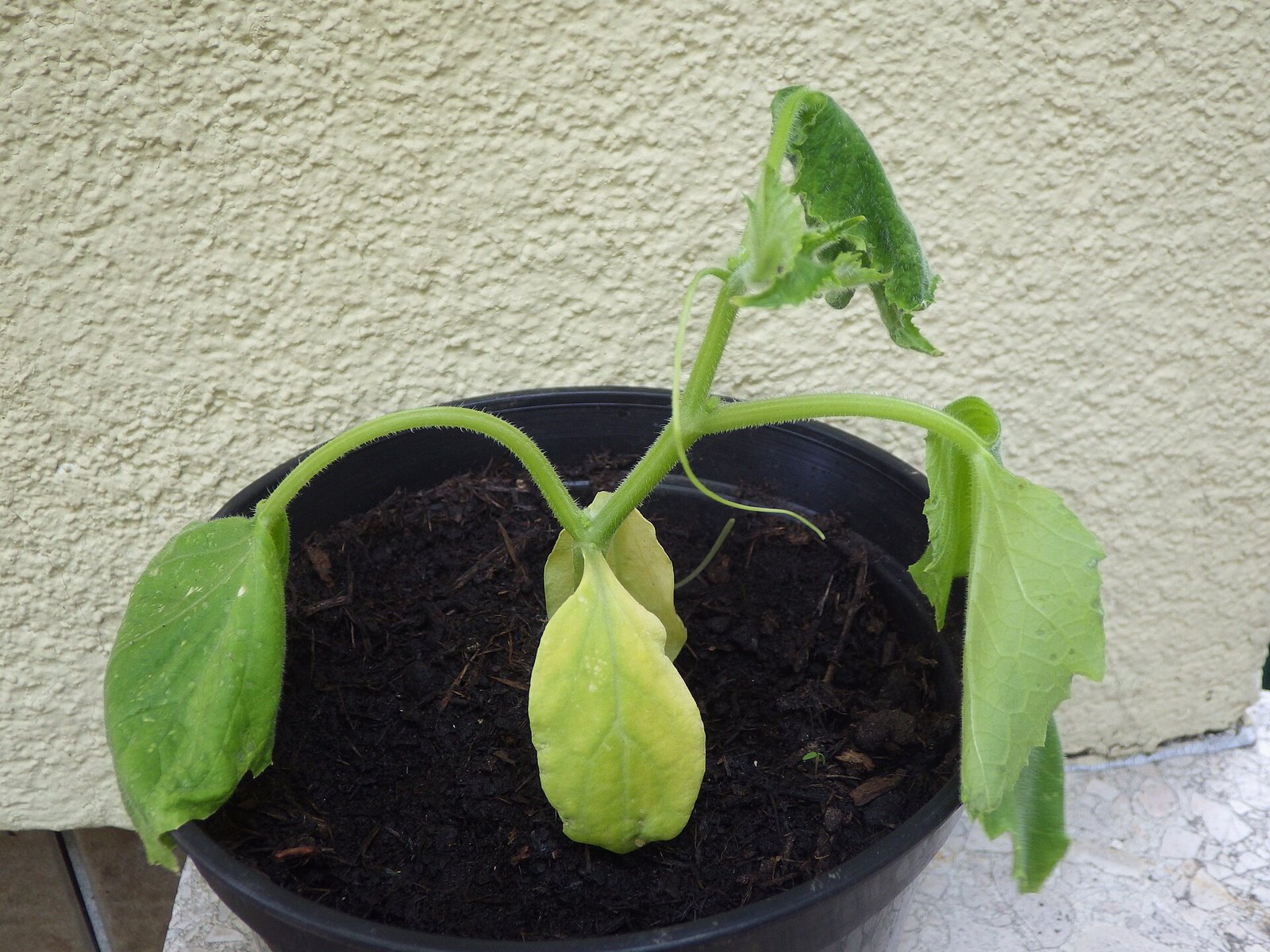

Start with the pattern you can see
| Observation | First check |
|---|---|
| Oldest lower leaves fade slowly | Check whether the rest of the vine is healthy before treating natural aging as a problem. |
| Most of the plant looks pale | Check root-zone moisture, drainage, root condition, and recent feeding history. |
| Yellowing stays between veins or follows margins | Treat this as a pattern that needs soil, root, and nutrient evidence—not an automatic deficiency diagnosis. |
| Yellow spots, angular patches, white growth, stippling, or webbing | Inspect both leaf surfaces and follow the strongest pest or disease clue. |
| Yellowing comes with twisting or cupping | Use the leaf-curl pathway when distortion is the main symptom. |
Compare the most useful branches
Moisture, drainage, or root stress
- The soil below the surface is very dry or stays saturated.
- Yellowing is accompanied by droop, weak growth, or a stressed stem base.
More likely if
- Drainage is blocked, roots were disturbed, or care has swung between dry and wet.
Less likely if
- The root zone is evenly moist and drains freely while a distinct leaf lesion or pest pattern is developing.
Correct only the moisture or drainage problem you can confirm, then watch the next leaves.
Possible nutrient-availability pattern
- Several leaves show a repeatable pale or interveinal pattern without clear pest or lesion evidence.
- Growth may be weak across the plant rather than damaged in isolated patches.
More likely if
- A soil or growing-media test, root assessment, or verified feeding history supports limited availability.
Less likely if
- The root zone is saturated, pests are present, or spots and lesions provide a stronger explanation.
Test or obtain local soil guidance before changing pH or adding a specific nutrient.
Pest feeding
- Fine pale dots merge into yellow or bronze areas.
- Leaf undersides may show mites, aphids, cast skins, sticky residue, or fine webbing.
More likely if
- A hand lens reveals the pest or its characteristic evidence where fresh damage is forming.
Less likely if
- Repeated close inspection finds no insects, stippling, webbing, or residue.
Identify the pest before choosing a control.
Disease-pattern warning
- Yellow areas form angular, vein-bounded patches, dead centres, halos, mottling, or powdery growth.
- Symptoms spread through the canopy despite suitable root-zone conditions.
More likely if
- The companion signs match an authoritative cucumber disease description.
Less likely if
- Only old leaves fade gradually while the rest of the plant remains vigorous.
Keep foliage dry where practical, document both leaf surfaces, and use the matching disease pathway or local diagnostic service.
Checks to make before treatment
- Map the symptom from the bottom of the plant to the growing tip and note whether the veins, margins, or spots differ from the surrounding tissue.
- Check soil moisture below the surface away from the stem, then confirm that water can move through the root zone rather than ponding.
- Inspect leaf undersides with a hand lens for mites, aphids, webbing, sticky residue, spores, or discoloured growth.
- Review recent rain, irrigation, root disturbance, fertilizer, and plant age; do not infer a cause from leaf colour alone.
- Use a soil or growing-media test before correcting a suspected nutrient or pH problem.
Choose the next useful page
- Curling, cupping, or twisted new growth is more prominent than colour change: Switch to the distortion-first diagnosis.Why Are Cucumber Leaves Curling?
- The root zone is dry, wet, or care timing is the main uncertainty: Use the cucumber watering guide to adjust routine care from actual soil conditions.How Often and How Much Should Cucumbers Be Watered?
- White powdery growth is the defining sign: Use the cucumber powdery-mildew diagnosis rather than treating general yellowing.Powdery Mildew on Cucumbers
- Yellow or pale lesions are angular and bounded by veins, especially with discoloured growth beneath: Compare both leaf surfaces in the cucumber downy-mildew guide.Downy Mildew on Cucumbers
What to do now
- Stabilize a confirmed root-zone problem: water a dry root zone slowly, or pause irrigation and restore drainage when it is saturated.
- Remove only leaves that are fully dead or clearly diseased when removal can be done without stripping the vine; clean tools between suspect plants.
- If pests are present, identify them and use the least disruptive label-compliant response suited to that pest.
- If no branch is supported, keep care steady, photograph the plant, and compare the next growth before adding fertilizer or spraying.
GardenSolved checkpoint
Do not do this yet
Avoid symptom-based shortcuts
- Do not water on schedule without checking below the surface.
- Do not diagnose a named deficiency from one yellow leaf or add fertilizer as a test.
- Do not call every angular yellow patch downy mildew or every pale leaf overwatering.
- Do not apply a pesticide or fungicide until the target and product label support that use.
Confirm the likely cause first, then choose the treatment.
Reduce repeat yellowing
- Maintain free drainage and check root-zone moisture rather than alternating heavy watering with long dry periods.
- Inspect lower leaves and undersides regularly so pest or lesion patterns are noticed early.
- Base fertilizer and pH changes on the growing system, crop stage, and soil or media evidence.
- Allow enough airflow and avoid wetting leaves unnecessarily when disease pressure is present.
When another diagnosis is needed
Use a disease-specific owner or local plant-diagnostic service when angular lesions, powdery growth, rapid spread, mosaic and distortion, or progressive wilt becomes the stronger problem. Persistent yellowing with damaged roots or uncertain nutrient patterns also warrants local soil or diagnostic evidence rather than another general treatment.