Cucumbers
Why Are My Cucumbers Misshapen or Crooked?
The short answer
First identify whether the cultivar needs pollination or is parthenocarpic. For standard cucumbers, uneven pollination can produce curved or poorly filled fruit; for parthenocarpic greenhouse types, unwanted pollination can itself make fruit misshapen. Then check recent moisture, temperature, physical damage, and the leaves before deciding what to change.
A crooked, tapered, bulbous, or uneven cucumber is a fruit-shape symptom, not a diagnosis. In ordinary bee-pollinated cucumbers, incomplete pollination is a common cause, but variety type, moisture stress, cool conditions, mechanical injury, and virus-like plant symptoms can change the interpretation.
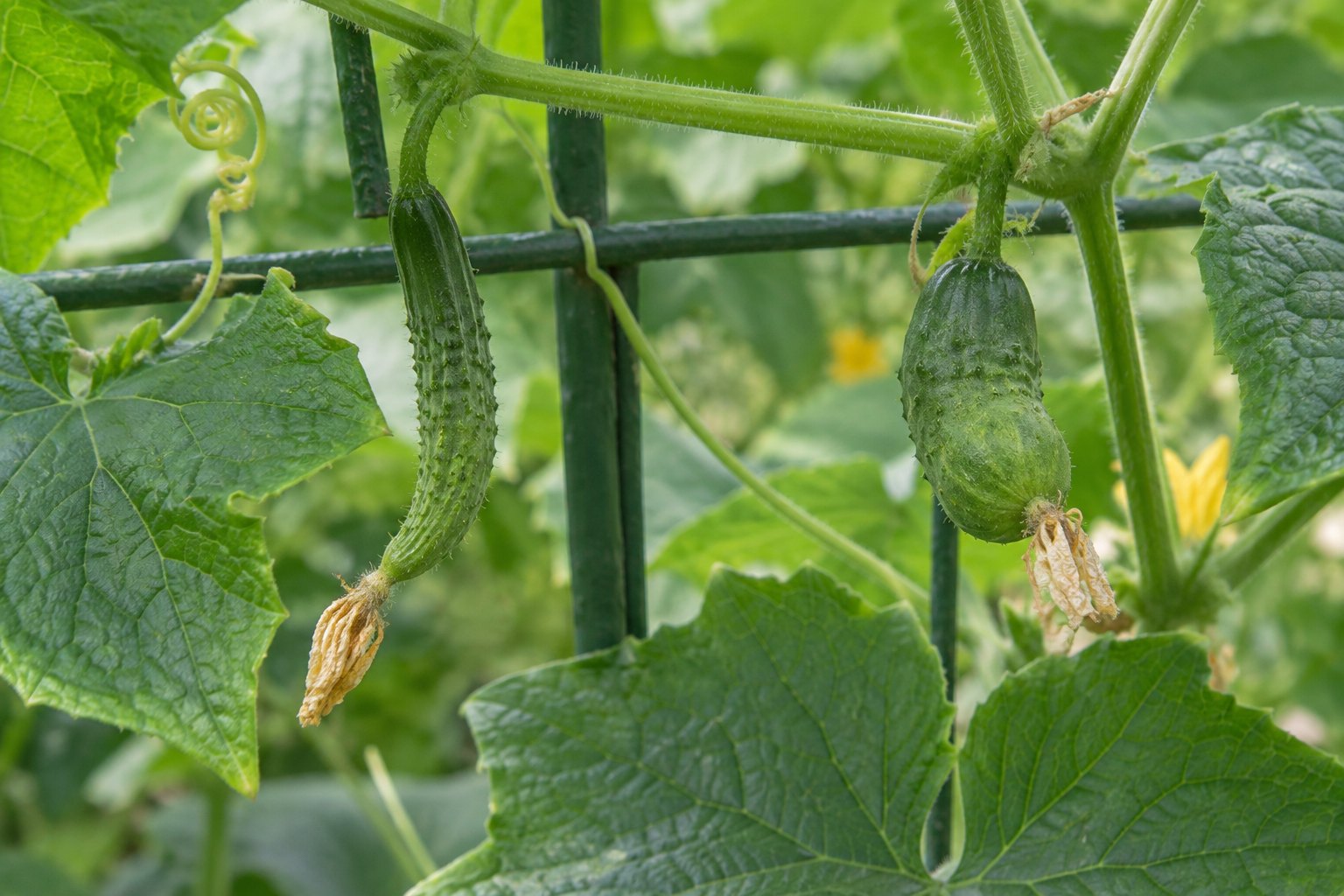
Read the fruit shape with the plant context
| Pattern | What it can suggest |
|---|---|
| Curved, narrow-ended, or unevenly filled fruit on a standard cucumber | Incomplete pollination becomes more plausible when flowering coincided with weak pollinator activity or unfavorable weather. |
| Misshapen fruit on a parthenocarpic greenhouse or tunnel cultivar | Some parthenocarpic cucumbers are intended to set without pollination; insect pollination can produce seeded, misshapen fruit. |
| Odd shape after moisture swings, cool weather, or physical contact | Fruit development can be disrupted without pollination being the only problem. |
| Fruit distortion plus mottled or distorted leaves and weak growth | A virus-like whole-plant pattern needs a different diagnostic path than isolated pollination trouble. |
Compare the main branches before acting
Incomplete pollination on a standard cucumber
- Fruit is crooked, tapered, or poorly filled and the cultivar normally relies on pollinators.
More likely if
- Bee activity has been low during bloom
- Cool, rainy, cloudy, or very hot conditions overlapped flowering
- Fruit from several flowers shows uneven development
Less likely if
- The cultivar is parthenocarpic and normally sets fruit without pollination
- Leaves show a strong mosaic or distortion pattern
Protect pollinators, observe flower visits, and use the hand-pollination guide only when the cultivar actually benefits from pollination.
A parthenocarpic cultivar was pollinated
- The seed or cultivar description says fruit sets without pollination.
More likely if
- A greenhouse or tunnel type is being grown where bees can reach the flowers
- Misshapen fruit contains more developed seeds than expected for that cultivar
Less likely if
- The variety is a conventional seeded cucumber that depends on bee pollination
Follow the cultivar's production guidance rather than hand-pollinating automatically; some parthenocarpic types need pollinators excluded.
Moisture, temperature, or physical stress
- Shape problems began after irrigation swings, cool conditions, or fruit was constrained or injured.
More likely if
- Soil alternated between very dry and wet
- Fruit rests against a support or shows a clear injured area
- The rest of the foliage lacks a distinctive mosaic pattern
Less likely if
- Fruit distortion consistently tracks weak pollination during bloom
Stabilize root-zone moisture and remove obvious physical interference, then judge the next set of fruit rather than expecting the existing fruit to straighten.
Virus-like whole-plant distortion
- Misshapen fruit occurs with unusual yellow-green patterns, wrinkling, curling, or stunted growth.
More likely if
- New leaves are distorted as well as the fruit
- Color patterns are irregular or mosaic-like across multiple leaves
Less likely if
- The vine is otherwise healthy and only one fruit is oddly shaped
Do not diagnose a virus from fruit shape alone. Compare the full plant pattern and use local Extension or diagnostic support before deciding on management.
Checks before you act
- Identify the cultivar and whether it requires pollination.
- Review pollinator activity and weather during the flowers that produced the affected fruit.
- Check recent soil-moisture swings, cool periods, and physical contact with supports.
- Inspect new leaves for mosaic-like color, wrinkling, curling, or stunting.
Route the strongest clue
- A standard cultivar appears pollination-limited: Use the cucumber hand-pollination guide after confirming the variety needs pollination.How to Hand-Pollinate Cucumbers
- Fruit is mainly undersized or stalled rather than deformed: Use the small-or-stunted cucumber diagnosis.Why Are Cucumbers Small or Stunted?
- Flowers are present but fruit is not forming: Use the no-fruit-set diagnosis.Why Are Cucumber Plants Not Producing Fruit?
- Leaf distortion or curling is a major companion symptom: Continue with the cucumber leaf-curl diagnosis.Why Are Cucumber Leaves Curling?
What to do now
- Confirm the cultivar type before changing pollination. Standard cucumbers may benefit from stronger pollination, while some parthenocarpic types can become misshapen when pollinated.
- For a standard cultivar, protect bee activity during flowering and use hand pollination only when weak pollination is a credible match.
- Keep root-zone moisture more even and prevent young fruit from being trapped, rubbed, or pressed against supports.
- Judge improvement by newly developing fruit. Existing crooked fruit will not become straight after the underlying condition changes.
GardenSolved checkpoint
Do not do this yet
- Do not hand-pollinate until you know whether the cultivar actually requires pollination.
- Do not assume every crooked cucumber proves poor pollination; moisture, temperature, injury, and virus-like patterns can also distort fruit.
- Do not apply fertilizer because fruit shape looks abnormal without evidence of a nutrient problem.
- Do not spray insecticides around open cucumber flowers without checking the label, timing, and pollinator risk.
Confirm the likely cause first, then choose the treatment.
What improvement looks like
- New fruit fills more evenly after the matched pollination or growing-condition problem is corrected.
- A standard cultivar produces better-shaped fruit as pollination improves.
- A parthenocarpic crop produces more typical fruit after unwanted pollination is reduced according to cultivar guidance.
- If new fruit remains distorted while leaf symptoms spread, the problem needs a broader whole-plant diagnosis.
Reduce repeat problems
- Know whether the cultivar is bee-pollinated or parthenocarpic before flowering begins.
- Protect pollinators on varieties that need them and avoid unnecessary insecticide exposure during bloom.
- Keep irrigation consistent enough to avoid repeated severe moisture swings.
- Train fruit where it can develop without being wedged tightly against trellis material or other obstacles.
When to investigate further
If distorted fruit is accompanied by spreading mosaic-like leaf color, severe curling, stunting, or repeated abnormal growth across the vine, seek a local Extension diagnosis before treating or moving plant material.