Garlic
Can I grow garlic in pots successfully?
The short answer
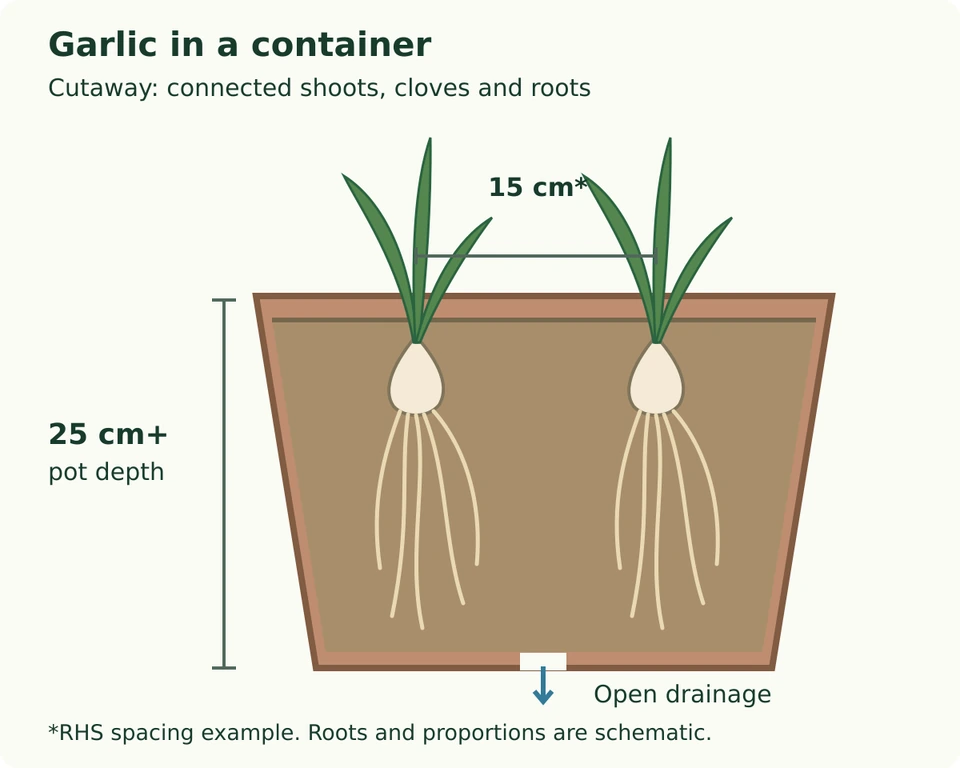
Yes: use a draining container with enough depth and width for spaced cloves, suitable potting mix and a sunny position. RHS recommends at least 25 cm depth. Check moisture regularly because pots behave differently from beds. Full bulbs need an appropriate cultivar and season; a warm indoor pot of cut greens is not the same production system.
A pot can provide a workable site where garden soil drains poorly. It still needs enough growing space, suitable planting stock and a realistic outdoor seasonal plan.
Diagnostic snapshot
What to check before you act
What you are seeing
- Limited ground space or a poorly draining garden bed
- Proposed pot must hold several cloves through an outdoor growing season
Check first
Measure usable depth and width, check drainage outlets and calculate how many cloves fit at the chosen spacing. Include any outer cachepot or saucer in the drainage check.
Compare first
- Suitable bulb-growing setup
- Crowded greens pot
- Drainage failure
Hold off for now
Do not plant in a sealed container or add a gravel layer as a substitute for drainage holes.
Investigate further if
Ask a local adviser about severe-winter container protection or a warm climate where cultivar chilling is uncertain. Persistent wetness, soft necks or repeated failure needs a root-zone investigation before another planting.
Photograph this before you act
- Photograph the soil surface and root-zone or container context; do not disturb roots just to take a photo.
- Take one close-up of the clearest symptom and one wider view that shows the surrounding area for comparison.
Next best check
Check two visible clues before you act.
This mini-check narrows the match using the same canonical diagnostic clues as this answer. It does not confirm a diagnosis from one or two clicks, and it does not make a photo-only diagnosis.
Two quick observations can tell you whether to keep reading this diagnosis closely or compare other possibilities first.
Match the situation before acting
Suitable bulb-growing setup
- Adequate depth, spaced cloves, draining mix and open outlets
Match the cultivar and season to the local site.
Crowded greens pot
- Cloves packed closely for repeated leaf cutting
Do not expect the same mature-bulb outcome.
Drainage failure
- Sealed outer pot, blocked holes or standing saucer water
Fix the system before planting.
Exposed winter container
- Small root-zone volume in a severe cold location
Obtain a local overwintering plan rather than copying in-ground protection.
Safe checks before acting
- Measure usable depth and width, check drainage outlets and calculate how many cloves fit at the chosen spacing. Include any outer cachepot or saucer in the drainage check.
- Observe the actual site for sunlight, wind and rain exposure. Check the planting-stock recommendation and local winter conditions before deciding where the pot will stay.
What to do next
- Choose a container intended for growing food plants, at least the RHS garlic depth recommendation and wide enough to maintain suitable spacing. Large pots are not a substitute for open drainage.
- Use suitable container growing media rather than packing a pot with heavy poorly draining bed soil. Set it so excess water can escape and the pot remains stable.
- Plant sound locally suitable cloves in their appropriate season. For the RHS example, space cloves about 15 cm apart and set their tips about 2.5 cm below the mix surface. Allow room around the pot edge as well as between cloves; do not calculate capacity from depth alone or pack cloves densely for decoration.
- Check moisture below the surface and adjust to weather, pot material and growth. Water when needed, allow drainage and avoid leaving a saucer full.
- Plan winter protection locally and monitor the container after severe weather. Preserve appropriate cold exposure without assuming that an exposed balcony pot behaves like a garden bed.
GardenSolved checkpoint
Do not do this yet
- Do not plant in a sealed container or add a gravel layer as a substitute for drainage holes.
- Do not move garlic into a heated room or repeatedly cut its leaves while still expecting the same bulb crop. Decide whether you are growing greens or mature bulbs.
Confirm the likely cause first, then choose the treatment.
Scope and follow-up
The cutaway illustration explains spacing, rooting depth and an open drainage route; it is schematic, not a photograph of roots or a universal winter insulation specification.
Before filling the pot, mark the intended clove positions on its surface at the chosen spacing. If they do not fit without crowding the sides, use fewer cloves or a wider pot. Decide where it will overwinter before planting.
When to get more help
Ask a local adviser about severe-winter container protection or a warm climate where cultivar chilling is uncertain. Persistent wetness, soft necks or repeated failure needs a root-zone investigation before another planting.
Follow the next useful clue
- You have the pot but need a planting date: Choose the cultivar's local planting window.When should I plant garlic?
- Cloves remain below the surface: Check establishment before digging them up.Why is my garlic not sprouting?
- The harvest has small bulbs: Review spacing and the growing season.Why are my garlic bulbs small?
Consulted horticultural sources
Save & recheck
Compare what changes before changing course.
Save this diagnosis only in this browser, then come back and compare the same clues. No account, reminder subscription, or server-stored diagnostic record is created.
Your baseline
- Limited ground space or a poorly draining garden bed
- Proposed pot must hold several cloves through an outdoor growing season
Check again when you return
- Measure usable depth and width, check drainage outlets and calculate how many cloves fit at the chosen spacing. Include any outer cachepot or saucer in the drainage check.
- Observe the actual site for sunlight, wind and rain exposure. Check the planting-stock recommendation and local winter conditions before deciding where the pot will stay.
Tip: photograph the same area from a similar angle so the visible pattern is easier to compare.
Related questions
Diagnostic Finder
Still not sure this answer fits?
Open the Diagnostic Finder with the relevant growing subject or care context preselected and compare other published GardenSolved diagnoses.
Compare other possibilities