English
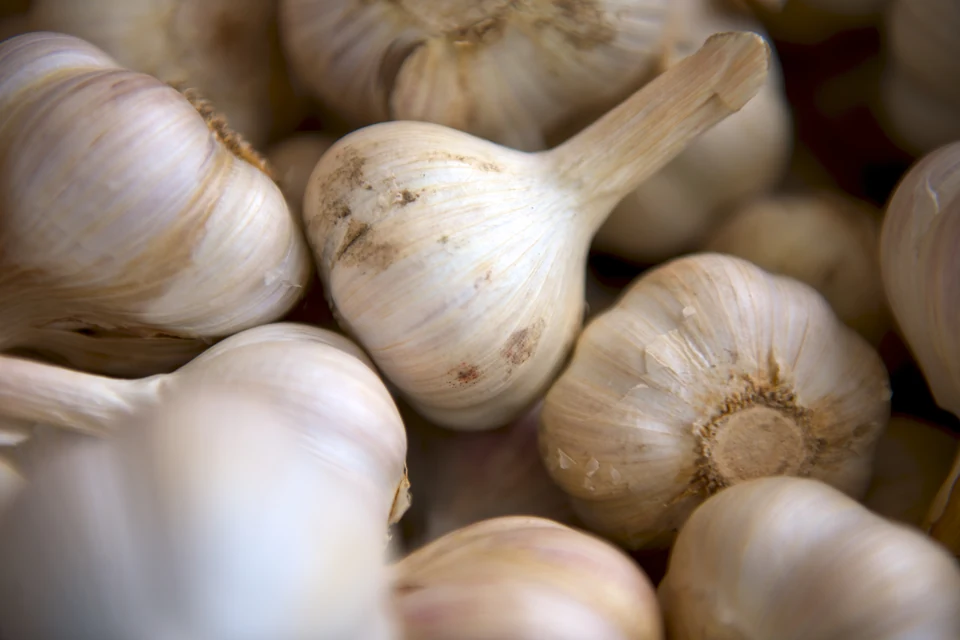
Garlic growing
Garlic problems, one clear next check.
Start with the stage: planted clove, growing leaves, developing bulb or stored harvest. Match the signs before changing care or choosing a treatment.
Find my garlic questionPhoto: Matthew Pilachowski, via Wikimedia Commons · CC0 1.0 (https://creativecommons.org/publicdomain/zero/1.0/). Resized and converted to WebP; navigation photograph, not diagnostic evidence.
Before you act
Match stage, soil and the extra clue
1. Establish the season and variety
True garlic, elephant garlic and aerial bulbils are different starting points. Match the local climate and cultivar before using a planting or harvest calendar.
Check planting timing2. Check moisture and the neck
Dry roots and saturated ground can both accompany wilt. Inspect below the surface beside the plant and look for a firm or soft collar before watering.
Check wilt safely3. Look beyond leaf color
Record leaf age and look for raised pustules, puncture lines or basal growth. A single yellow tip does not identify a disease or nutrient deficiency.
Compare yellowing patternsBrowse problems by symptom
Start with what you can see.
Questions & answers
Browse garlic
15 published answers
Planting and emergence
Choose a local window, separate delayed emergence from failed cloves, and protect healthy autumn shoots. Container growing includes its own drainage and winter decisions.
When should I plant garlic?
Plant a locally suitable garlic variety in its recommended autumn or spring window. In cold-winter areas, autumn planting usually lets roots establish before sustained freezing. Some varieties suit spring planting. Check the supplier's guidance and your soil before using a calendar date; warm climates and the southern hemisphere need their own local schedule.
Open answerWhy is my garlic not sprouting?
No visible garlic shoot does not automatically mean the clove has failed. Autumn-planted garlic may establish below ground and emerge later. Compare planting date, soil temperature and drainage with nearby cloves of the same variety. Rotten cloves, persistent gaps after comparable plants emerge, or weak yellow seedlings need a closer establishment check.
Open answerMy garlic sprouted before winter: is that a problem?
Short green garlic shoots before winter can be normal. Leave healthy shoots attached and follow winter protection suited to your region. Check drainage and whether cloves are still covered after frost heave. Early growth alone is not a reason to cut leaves, dig up cloves or move the crop into a warm room.
Open answerCan I grow garlic in pots successfully?
Yes: use a draining container with enough depth and width for spaced cloves, suitable potting mix and a sunny position. RHS recommends at least 25 cm depth. Check moisture regularly because pots behave differently from beds. Full bulbs need an appropriate cultivar and season; a warm indoor pot of cut greens is not the same production system.
Open answerLeaves, wilt, pests and diseases
Begin with the visible clue. These comparisons explain what supports suspicion, what remains uncertain and when a local diagnostic service should investigate.
Why are my garlic leaves turning yellow?
Check the garlic's stage, which leaves changed first and the root-zone moisture. Gradual lower-leaf decline near maturity may be normal; early widespread yellowing, weak growth, pustules or a soft neck need different checks. Confirm the pattern before adding fertilizer or assuming the crop is ready to harvest.
Open answerWhy is my garlic wilting or collapsing?
Compare moisture below the surface with the condition of the garlic neck. Dry soil, saturated soil, collar decay and feeding damage can all accompany wilt. If a firm plant wilts in dry conditions, correct moisture; if it is soft at the base, rotting or declining in a spreading patch, isolate the problem and seek a diagnosis.
Open answerDoes my garlic have rust?
Garlic rust can begin as small pale flecks that later become raised orange pustules. Flecks alone are not diagnostic; the developing pustules are a stronger clue. Compare them with flat brown damage, inspect several leaves and record progression. Severe rust can reduce usable leaf area and bulb growth, but a photograph cannot establish every leaf disease or justify a fungicide choice.
Open answerIs white growth at my garlic bulb base white rot?
Suspect white rot when basal decay and lost roots occur with white fungal growth and tiny black seed-like structures. Black structures may develop later, so their absence does not rule out an early infection. White growth alone is insufficient: Fusarium and secondary decay can look similar. Keep suspect bulbs and attached soil separate, photograph the signs and arrange local confirmation before making a long-term planting decision.
Open answerIs allium leafminer damaging my garlic?
Look for lines of pale feeding punctures, mines and legless larvae or brown pupae in affected garlic tissue. Allium leafminer is a regional risk, not the explanation for every damaged leaf. Leek moth larvae have a distinct head and legs; surface silvering may instead suggest thrips. Pale marks alone do not establish the insect species. Confirm signs and local activity before choosing protection.
Open answerBulb development and scapes
Keep size, clove division and flower-stalk management separate. A small bulb, an undivided round and a normal hardneck scape need different decisions.
Why are my garlic bulbs small?
Check whether the garlic is actually mature, then review planting-stock size, planting date, spacing, leaf health, water and light. Small bulbs can follow a shortened growing season or stressed foliage. A single undivided round needs a different check. There is no universal bulb diameter that makes every variety a failed crop. Compare the actual bulb with the same cultivar, not with the illustrative sizes in an image.
Open answerWhy did my garlic form one round instead of cloves?
A true-garlic bulb may remain an undivided round after insufficient winter cold, small planting cloves, poor seasonal growth or use of an unsuitable cultivar. Confirm maturity, cultivar and planting history before drawing that conclusion. Elephant garlic is a leek relative, and plants started from bulbils need a different developmental comparison from full-size cloves.
Open answerShould I remove garlic scapes, and when?
If your hardneck garlic produces a central round flower stalk and your aim is bulb production, remove the scape while it is young and identifiable. UMN describes cutting just after it begins curling. Preserve the flat leaves. A missing scape on softneck garlic is usually normal, not a flowering failure that needs treatment.
Open answerHarvest and storage
Use foliage and a representative bulb together. Sort opening wrappers and damaged bulbs before curing, and investigate deterioration instead of assuming drying cures disease.
When is garlic ready to harvest?
Start checking garlic as lower leaves dry while some upper foliage remains green. Gently lift a representative bulb and check that cloves have filled out inside intact wrappers. Use cultivar and local season as context, not a universal month. Early collapse or rot calls for diagnosis, not an assumption that the crop matured early.
Open answerWhy are my garlic bulbs splitting open?
Opening garlic wrappers and separating cloves often follow a late harvest. Check maturity, whether splitting happened before or during lifting, and whether tissue is firm or decaying. Lift mature bulbs carefully, sort split ones away from sound storage stock and investigate any softness or mold separately.
Open answerWhy is stored garlic going soft or mouldy?
Separate soft, moldy or damaged garlic from sound bulbs. Review whether necks and wrappers dried fully, whether bulbs were injured and whether storage is dry and ventilated. Some decay begins in the field and appears later, so do not assume every storage problem is only humidity. Discard visibly spoiled cloves rather than trying to cure them back to health.
Open answer