Container gardening
Do containers need drainage holes?
The short answer
Usually yes. Use a container that lets excess water leave the root zone, or keep the plant in a draining inner pot. Do not treat gravel in the bottom as a substitute for a functional outlet.
For most ordinary terrestrial container plants, a functional outlet for excess water is a basic root-zone safeguard. Decorative pots can still work when a draining inner pot is used and trapped water is emptied.
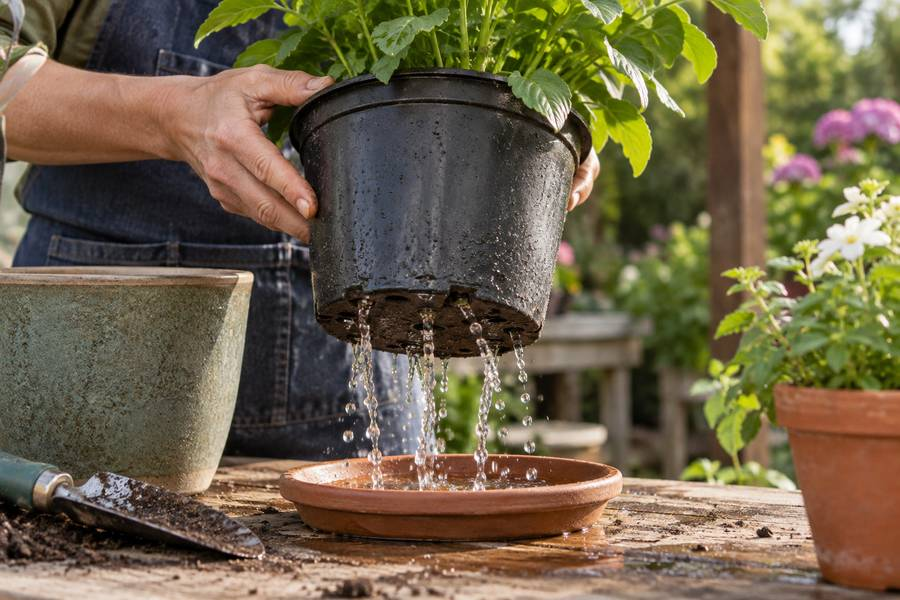
Match the pattern before acting
Open draining pot
- Water can leave through unobstructed holes
Keep the outlet open and empty collected water.
Decorative cachepot
- Inner nursery pot drains but outer vessel has no hole
Remove or empty trapped water after watering.
No functional outlet
- Water cannot escape the planted root zone
Provide drainage or move the plant to a draining inner container.
How to confirm what is happening
- Confirm whether the planted inner pot has open holes, even if the decorative outer pot does not.
- After normal watering, check whether excess water can leave and whether any collected water is emptied rather than left around the root ball.
What to do now
- Keep drainage holes unobstructed.
- Empty water from saucers or decorative outer pots after drainage.
- Use a stable potting mix that maintains air space as well as moisture.
GardenSolved checkpoint
Do not do this yet
- Do not use a gravel layer as a substitute for a functional outlet.
- Do not keep ordinary terrestrial container roots standing in collected water.
- Do not diagnose root rot from a no-hole pot alone; inspect the roots if decline is present.
Confirm the likely cause first, then choose the treatment.
When to investigate further
If roots are already soft, dark, collapsing, or the plant stays wilted in wet mix, move from drainage setup to a root-health diagnosis.