Container gardening
What size pot does my plant need?
The short answer
Choose a modest next size that fits the current root ball and the plant's needs. Avoid an unnecessarily large jump, because excess unused medium can stay wet longer around a small root system.
A bigger pot is not automatically safer. The useful question is how much healthy root mass the plant has and whether the next container gives it enough room without surrounding a small root ball with a large volume of slowly drying mix.
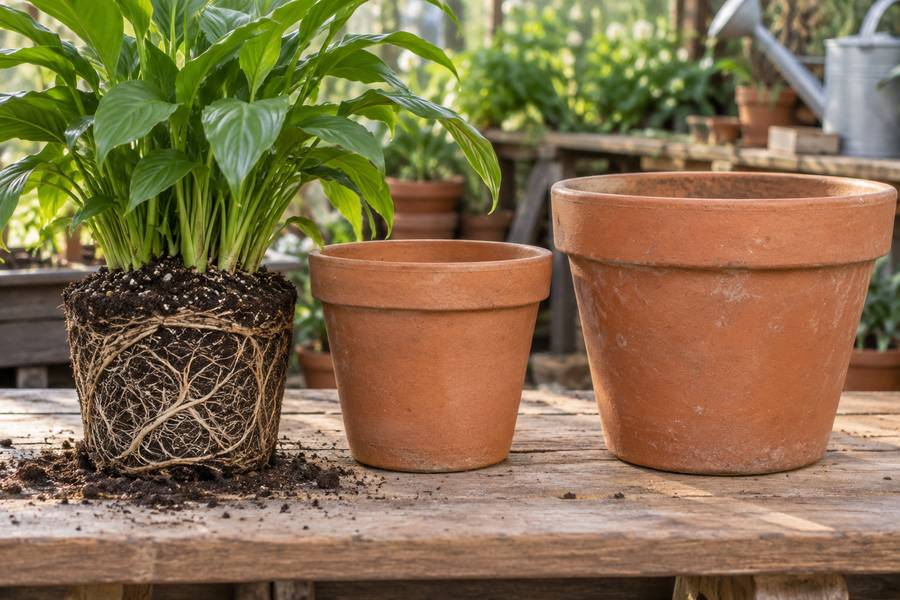
Match the pattern before acting
Current pot still fits
- Usable mix remains and roots are not densely circling
Keep the current size and monitor.
Root ball is crowded
- Dense roots occupy most of the pot
Move up modestly to a suitable draining container.
Candidate pot is much larger
- Large volume of unused medium would surround a small root ball
Choose a closer fit to reduce prolonged wetness risk.
How to confirm what is happening
- Inspect the current root ball before choosing the next container.
- Compare the root-ball diameter and depth with the candidate pot rather than choosing only by the top growth.
- Confirm the new pot has a functional drainage setup.
What to do now
- Base the next pot on actual root mass.
- Use a functional drainage setup and compatible potting mix.
- Recheck watering after repotting because drying rate can change.
GardenSolved checkpoint
Do not do this yet
- Do not choose a huge pot so the plant can grow into it.
- Do not use one universal diameter increase for every species.
- Do not repot a declining plant until root health has been checked.
Confirm the likely cause first, then choose the treatment.
When to investigate further
If roots are soft, dark or collapsing, solve the root-health issue before treating pot size as the main problem.