Container gardening
Is my plant rootbound?
The short answer
Inspect the root ball before repotting. A dense mass of circling roots with little free mix, repeated rapid drying, and slowed growth supports root crowding more strongly than one visible root alone.
Roots at a drainage hole can be a clue, but rootbound diagnosis should use the whole root ball and the plant's behavior. Dense circling roots, very little loose mix, rapid drying and slowed growth together are more meaningful.
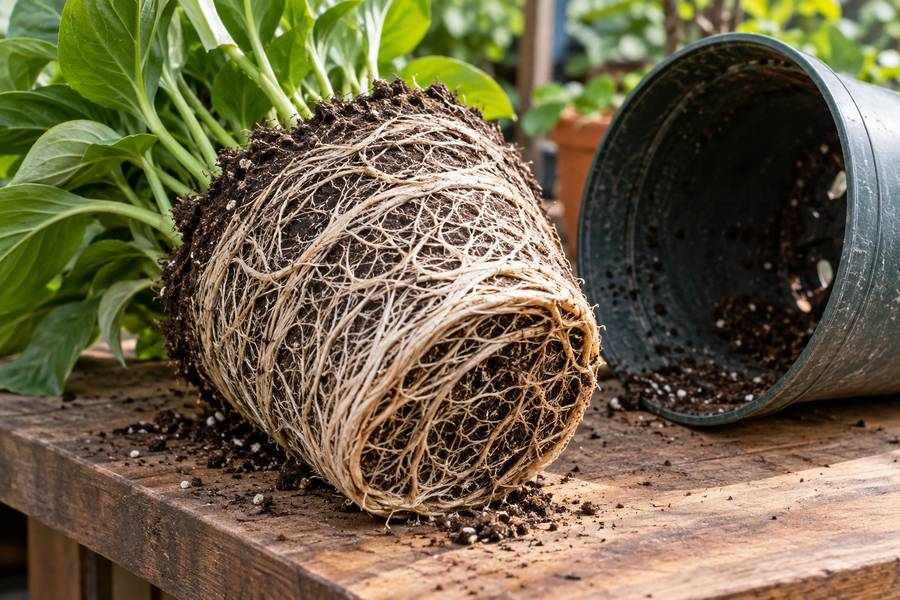
Match the pattern before acting
Likely root crowded
- Dense circling roots with little loose mix
Choose a modestly larger suitable pot and address circling roots carefully.
One or two visible roots only
- Most of the root ball still has usable mix and growth is normal
Monitor rather than repot automatically.
Roots look diseased rather than crowded
- Soft, dark, collapsing tissue
Use a root-health diagnostic path before repotting.
How to confirm what is happening
- Inspect the root ball and estimate how much of it is roots versus loose medium.
- Compare current drying speed and growth with the plant's earlier behavior.
- Check for soft dark roots; crowding and root rot are different problems.
What to do now
- Repot only when the root-ball pattern supports a root-space problem.
- Choose the next pot based on root mass and plant needs, not decorative size.
- Keep the new medium compatible with the plant and drainage setup.
GardenSolved checkpoint
Do not do this yet
- Do not repot solely because one root is visible at a drainage hole.
- Do not jump several pot sizes up without checking the root ball.
- Do not confuse root crowding with root rot.
Confirm the likely cause first, then choose the treatment.
When to investigate further
Soft dark roots, crown collapse, persistent wilt in wet mix, or severe decline needs root-health diagnosis rather than a simple size-up.