Container gardening
Why does my pot smell bad?
The short answer
Check for trapped water, saturated mix and decaying material, then inspect roots if the plant is declining. A rotten odor can accompany severe tissue decay, but smell alone does not prove root rot.
A bad or sour smell from a pot is a reason to inspect the root zone, not a shortcut diagnosis. Trapped water, decaying debris, persistently saturated media and severely rotted tissue can smell, but the roots and crown decide the diagnosis.
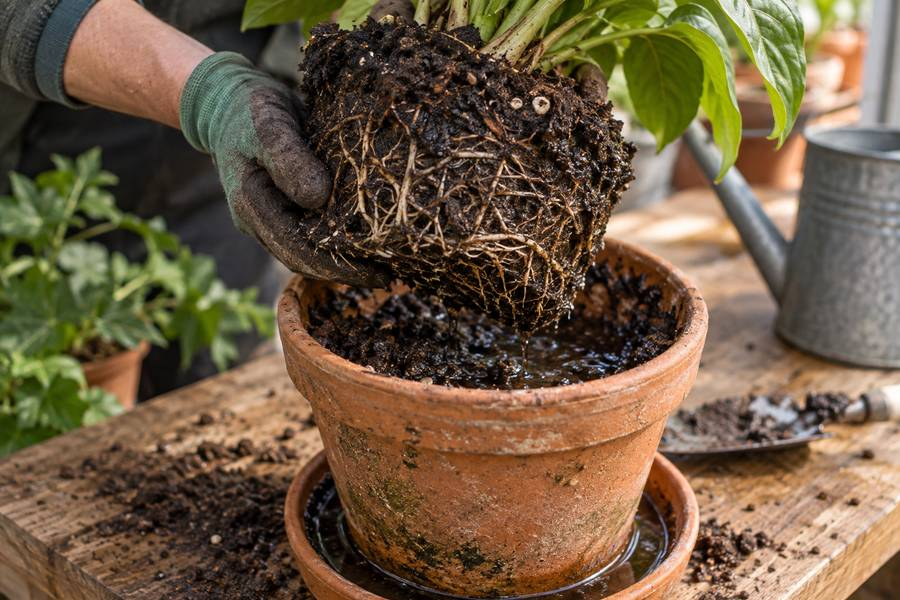
Match the pattern before acting
Trapped or stagnant water
- Water remains beneath the inner pot
Empty the water and restore free drainage.
Decaying debris
- Dead organic material is decomposing near the surface
Remove debris and reassess the root zone.
Root or crown tissue is damaged
- Soft dark collapsing tissue accompanies odor and decline
Follow a root/crown diagnostic path.
How to confirm what is happening
- Remove the inner pot and check for water trapped in the saucer or cachepot.
- Inspect the surface and mix for decaying debris and confirm whether the medium is persistently saturated.
- If the plant is declining, inspect accessible roots and crown tissue for soft, dark or collapsing areas.
What to do now
- Empty trapped water and restore drainage.
- Remove decaying surface debris without disturbing healthy roots unnecessarily.
- Inspect roots before deciding whether repotting or disease management is justified.
GardenSolved checkpoint
Do not do this yet
- Do not apply fungicide because the pot smells bad.
- Do not diagnose root rot from odor alone.
- Do not keep the root zone saturated while trying to wash the smell away.
Confirm the likely cause first, then choose the treatment.
When to investigate further
Soft dark roots, crown collapse, spreading decay or rapid decline needs a plant-specific root/crown diagnosis; do not rely on odor alone.