Container gardening
Why Are My Winter-Sown Seeds Not Germinating?
The short answer
First check whether germination should have happened yet for that species and the temperatures it has actually experienced. Then inspect seed-zone moisture, drainage, ventilation and sowing instructions. An empty-looking container during cold weather does not prove failure. Seeds that germinated and then died need a different investigation from seeds that have not emerged.
Separate normal delay from unmet seed requirements, moisture problems and loss after emergence.
Diagnostic snapshot
What to check before you act
What you are seeing
- No shoots, conditions still colder than the species needs
- Seed requires cold-moist treatment but has had insufficient suitable exposure
Check first
Find the seed label and packet. Confirm the species, treatment, depth and whether light is needed. Indoor “days to germination” guidance may assume a temperature your outdoor container has never reached.
Hold off for now
Do not discard every unsprouted container because another species emerged first.
Investigate further if
If the species' expected requirements have been met and its germination window has passed, contact the supplier or a local horticultural adviser with the seed identity, lot, dates and conditions. A germination check, replacement seed or different method may be appropriate. No visible shoots alone cannot establish whether buried seed is alive, dormant, displaced or decayed.
Photograph this before you act
- Photograph the soil surface and root-zone or container context; do not disturb roots just to take a photo.
- Take one close-up of the clearest symptom and one wider view that shows the surrounding area for comparison.
Next best check
Check two visible clues before you act.
This mini-check narrows the match using the same canonical diagnostic clues as this answer. It does not confirm a diagnosis from one or two clicks, and it does not make a photo-only diagnosis.
Two quick observations can tell you whether to keep reading this diagnosis closely or compare other possibilities first.
Match the history to the likely branch
| What you observe | Possible explanation | Safe next check |
|---|---|---|
| No shoots, conditions still colder than the species needs | Expected delay | Compare conditions with reliable species instructions |
| Seed requires cold-moist treatment but has had insufficient suitable exposure | Dormancy may not be broken | Review sowing date and moisture/temperature history |
| Dry seed zone despite droplets on the lid | Insufficient moisture | Check accessible medium beside the labeled sowing area |
| Standing water or blocked outlets | Poor aeration and possible deterioration | Restore drainage and inspect the medium |
| Shoots appeared, then disappeared or collapsed | Germination occurred; subsequent loss is the problem | Review cold, heat, drying, disturbance and seedling symptoms |
| One species has emerged while another has not | Different requirements or timing | Compare each batch against its own instructions |
Why these distinctions matter
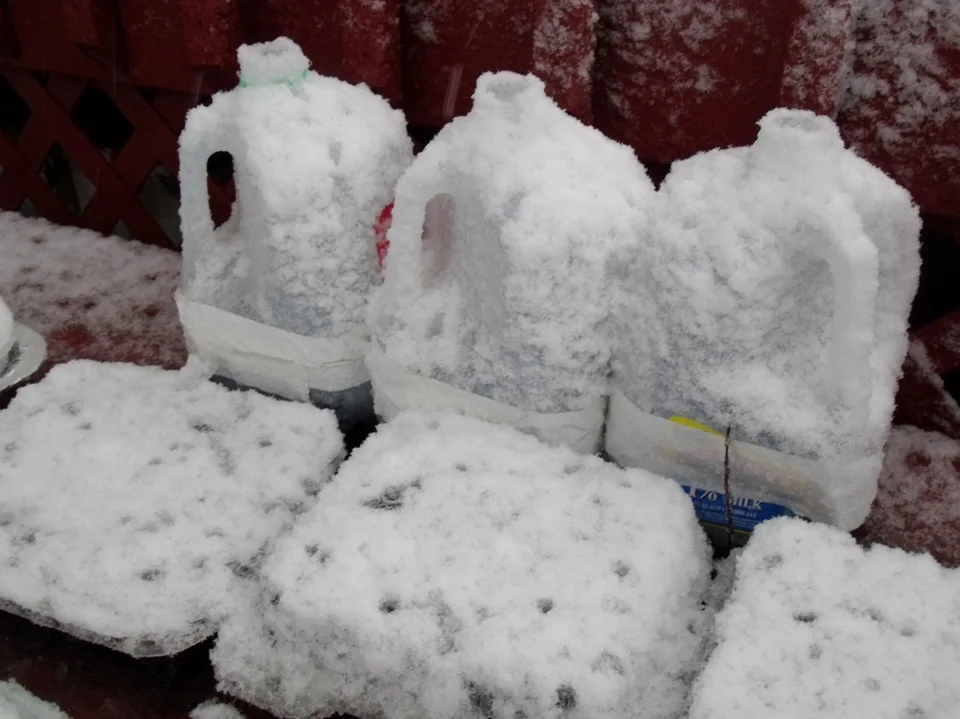
RBG explains why species can require different temperature sequences. Cornell also notes that some seed requires warm conditions or substantially longer treatment. A neighboring jug is therefore not a reliable germination clock.
Four checks before re-sowing
- Find the seed label and packet. Confirm the species, treatment, depth and whether light is needed. Indoor “days to germination” guidance may assume a temperature your outdoor container has never reached.
- Reconstruct the timeline: sowing date, cold exposure, drying episodes, warm spells and any time the container was brought indoors.
- Check moisture in an accessible edge of the seed zone without excavating the whole batch. A wet lid and a wet growing medium are different observations.
- Inspect drainage holes, upper vents and placement. Roof runoff can flood a container; an overhead shelter can prevent rain from reaching it.
What to do for each branch
- Conditions are not suitable yet: keep the label, maintain appropriate moisture and wait for the species' expected window. Set a review point based on local temperatures and the actual instructions, not an arbitrary number of days after sowing.
- Cold treatment is incomplete: check the required treatment with the seed supplier. Do not repeatedly move the container between a warm room and outdoors as an improvised fix. Some species have more complex needs than one cold spell.
- The medium has dried: moisten gently so water reaches the seed zone without displacing seed. Restore regular observation; avoid leaving the container in standing water afterward.
- The medium is saturated: unblock drainage and stop further flooding. Check whether the medium remains structurally suitable. If seed is visibly soft or decayed, document it and seek species-specific advice; do not assume adding fertilizer or a chemical will restore viability.
- Seedlings were present: investigate what happened after emergence. Increase attention to ventilation and forecast cold, and distinguish drying or cold collapse from a constricted, decaying stem base. Illinois and Minnesota guidance both emphasize care changes as outdoor conditions warm.
- The history is uncertain: keep a record and, if sufficient seed remains, ask the supplier about a small separate germination check under the correct conditions. Do not dig through the entire original sowing to count seeds.
GardenSolved checkpoint
Do not do this yet
- Do not discard every unsprouted container because another species emerged first.
- Do not flood the medium or add fertilizer to trigger germination.
- Do not close ventilation to force heat without monitoring the seed zone.
- Do not re-sow the same container blindly and lose track of which batch emerges.
- Do not spray fungicide for “no shoots” without a supported diagnosis and appropriate local label.
Confirm the likely cause first, then choose the treatment.
When to investigate further
If the species' expected requirements have been met and its germination window has passed, contact the supplier or a local horticultural adviser with the seed identity, lot, dates and conditions. A germination check, replacement seed or different method may be appropriate. No visible shoots alone cannot establish whether buried seed is alive, dormant, displaced or decayed.
Choose your next step
Sources
Save & recheck
Compare what changes before changing course.
Save this diagnosis only in this browser, then come back and compare the same clues. No account, reminder subscription, or server-stored diagnostic record is created.
Your baseline
- No shoots, conditions still colder than the species needs
- Seed requires cold-moist treatment but has had insufficient suitable exposure
Check again when you return
- Find the seed label and packet. Confirm the species, treatment, depth and whether light is needed. Indoor “days to germination” guidance may assume a temperature your outdoor container has never reached.
- Reconstruct the timeline: sowing date, cold exposure, drying episodes, warm spells and any time the container was brought indoors.
Tip: photograph the same area from a similar angle so the visible pattern is easier to compare.