Hydrangeas
How often should I water hydrangeas?
The short answer
Check soil moisture below the surface rather than watering by the calendar. Water thoroughly when the root zone is becoming dry, then allow excess water to drain. Newly planted hydrangeas need more frequent checks while roots establish, and hot or sunny sites may dry faster. If soil stays wet or the plant wilts despite moisture, do not add more water until drainage and root health are checked.
Hydrangeas prefer consistent moisture, but there is no safe fixed watering schedule. Soil texture, rainfall, heat, wind, sun exposure, plant age, and drainage all change how fast the root zone dries.
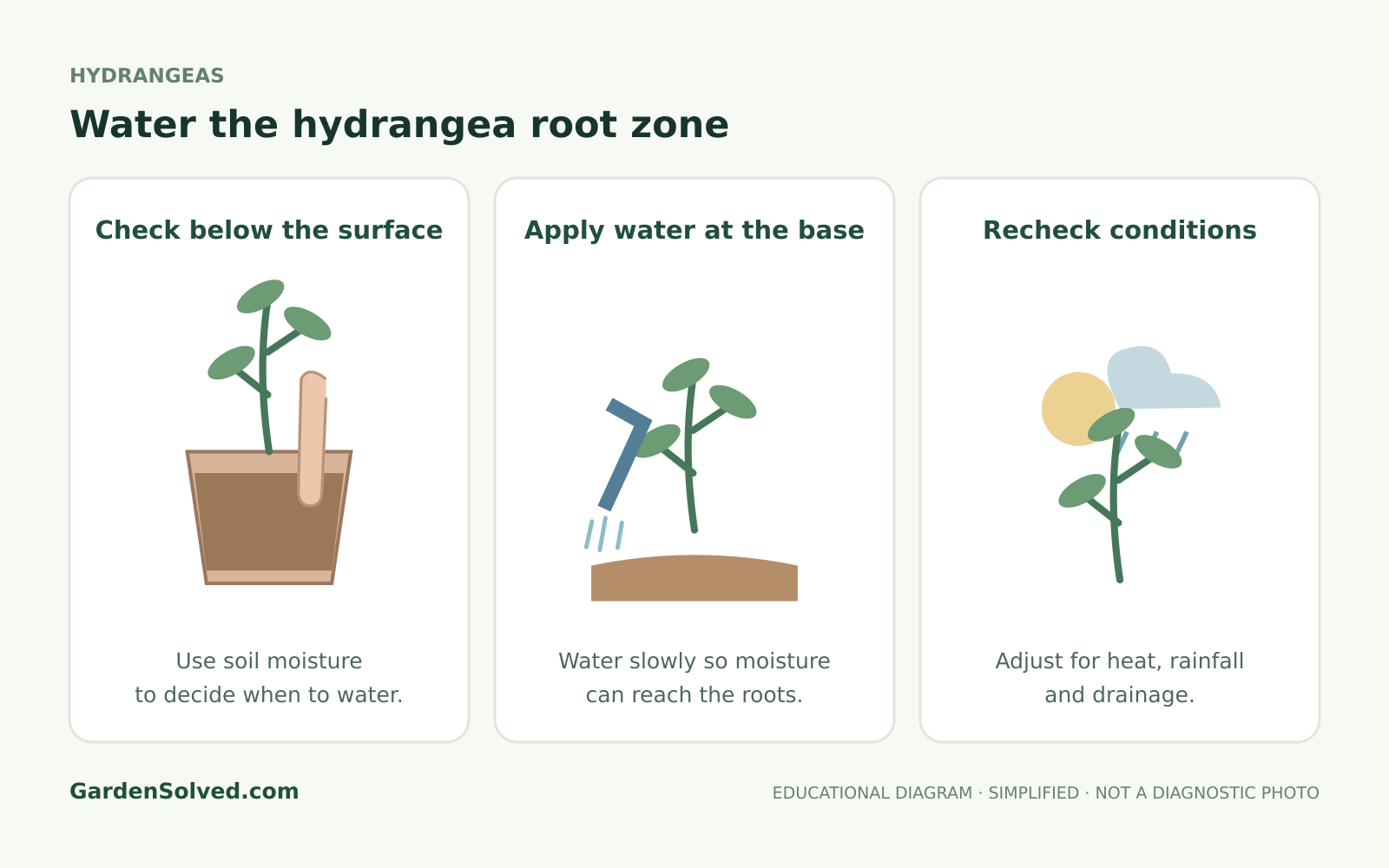
Let the root zone set the schedule
| Condition | Watering implication |
|---|---|
| Soil is dry several inches down | A thorough watering is appropriate. |
| Surface looks dry but deeper soil is still moist | Wait and recheck instead of watering automatically. |
| New planting, hot sun, wind, or sandy soil | Check moisture more frequently. |
| Heavy soil or poor drainage stays wet | Water less often and address drainage. |
| Afternoon droop with moist soil and overnight recovery | Heat stress may not require extra irrigation. |
Dry roots, heat wilt, or too much water?
Root zone drying
- Soil is dry below the surface.
- Wilt persists beyond the hottest part of the day.
More likely if
- Weather is hot, windy, or rainfall has been limited.
Less likely if
- Soil remains damp or saturated.
Water slowly and deeply over the root area, then monitor how long the soil takes to dry.
Temporary heat wilt
- Leaves and blooms droop in afternoon heat.
- The plant recovers later while soil remains moist.
More likely if
- The shrub receives strong sun or temperatures are high.
Less likely if
- Wilt persists overnight.
Maintain even moisture without reflex extra watering.
Wet-root stress
- Soil stays wet for days or water pools.
- Yellowing or wilt continues despite moisture.
More likely if
- Drainage is slow or irrigation is frequent.
Less likely if
- The root zone is truly dry.
Pause unnecessary watering and address drainage or root health.
Checks before watering
- Probe soil below the surface near the root zone.
- Review recent rainfall.
- Observe drainage after the last thorough watering.
- Consider soil texture and whether the shrub is newly planted.
- Check whether wilt resolves overnight.
- Inspect roots or crown indirectly through broader symptoms if wet-soil decline continues.
Route overlapping symptoms
- Leaves are visibly wilting: Use the wilting pathway to distinguish heat, drought, and wet-root stress.Why are my hydrangea leaves wilting?
- Leaves are browning or scorched: Use the brown-leaf pathway.Why are my hydrangea leaves turning brown?
- Flower heads are drooping while foliage remains firm: Use the drooping-flower pathway to check stem mechanics.Why are my hydrangea flowers drooping?
How to water now
- When soil is becoming dry below the surface, apply water slowly and thoroughly over the root area.
- Favor deep watering over frequent shallow splashes.
- Water the soil rather than routinely wetting foliage and flowers.
- Check newly planted hydrangeas more often while roots establish.
- Adjust the next watering from actual drying rate, rainfall, weather, and soil texture.
GardenSolved checkpoint
Do not do this yet
Avoid watering shortcuts
- Do not water every day by calendar without checking soil.
- Do not add more water to a hydrangea wilting in saturated soil.
- Do not judge the root zone from a dry surface crust alone.
- Do not use brief afternoon wilt as the only reason to irrigate.
- Do not keep the crown or root zone standing in water.
Confirm the likely cause first, then choose the treatment.
What balanced watering looks like
- New growth remains firm through normal weather cycles.
- The root zone dries gradually between thorough waterings without staying saturated.
- Drought wilt resolves after the root zone is properly moistened.
- Heat wilt may still occur briefly but the shrub recovers in cooler hours.
- Yellowing or persistent wilt in wet soil declines only after drainage and root function improve.
Build a reliable hydrangea watering routine
- Learn how quickly the specific soil dries after rain or irrigation.
- Use mulch to reduce evaporation while keeping it away from stems.
- Provide well-drained soil and avoid sites where water stands.
- Check new plantings more frequently during establishment.
- Use drip, soaker, or slow soil-level watering where practical.
When watering is not the whole problem
Investigate roots, drainage, or disease when the hydrangea remains wilted or yellow in moist soil, water pools for long periods, or repeated appropriate watering does not restore normal growth.