Hydrangeas
Why are my hydrangea leaves curling?
The short answer
Inspect the newest growth and leaf undersides before watering or spraying. Twisted or cupped young leaves after nearby weed treatment fit chemical injury; curled leaves with aphids or sticky honeydew point toward sap-feeding pests; powdery white growth supports powdery mildew. Mottled yellow-green leaves with persistent curling on bigleaf hydrangea need local diagnosis because a virus is one possible cause.
Curling hydrangea leaves can come from distorted new growth rather than simple thirst. Chemical injury, aphids, powdery mildew, spider mites, and hydrangea chlorotic mottle virus can all curl or pucker leaves, while heat and water stress may roll margins temporarily.
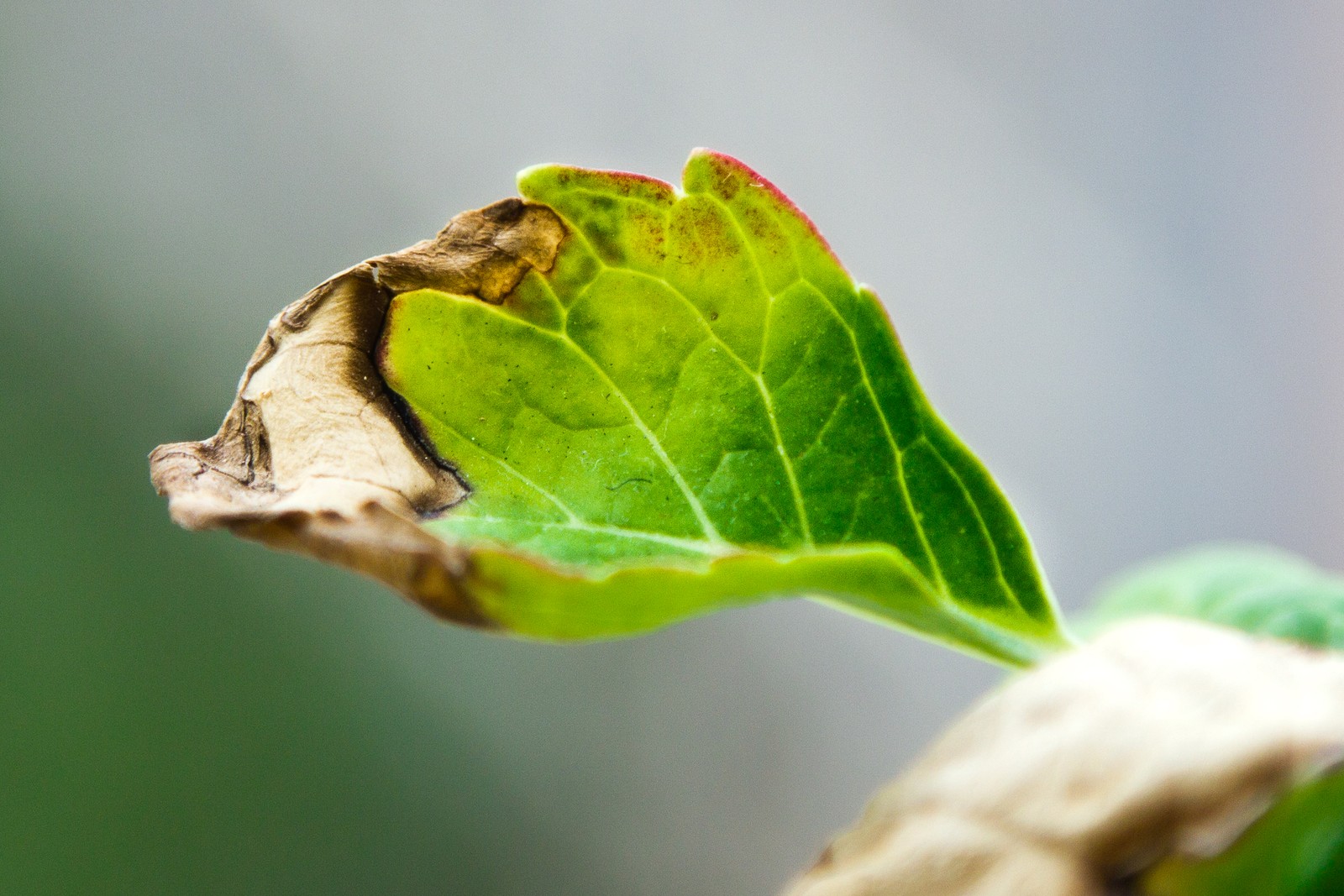
Read the curl pattern
| Pattern | What it suggests |
|---|---|
| Young leaves twisted, cupped, or leathery after a nearby spray event | Chemical injury is a strong possibility. |
| Curled tender leaves with aphids or sticky honeydew | Aphid feeding is likely contributing. |
| Fine pale stippling, bronzing, and webbing | Check spider mites. |
| White powder plus curled or puckered foliage | Powdery mildew becomes more likely. |
| Yellow-green mottling plus curling or deformation on bigleaf hydrangea | A virus is a possible diagnosis requiring confirmation. |
Compare the main curl branches
Chemical injury
- Newest tissue is twisted, cupped, narrow, or leathery.
- Several growing tips may be similarly distorted.
More likely if
- Nearby weed-control or other spray products were recently used.
Less likely if
- Insects or powdery growth are clearly present.
Document exposure, avoid further chemical stress, and seek local diagnosis for severe injury.
Aphids
- Small soft-bodied insects cluster on new growth.
- Leaves curl and sticky honeydew may coat foliage.
More likely if
- Ants or sooty mold accompany the sticky residue.
Less likely if
- No insects or honeydew are present.
Use low-disruption aphid management only if populations are actually damaging the plant.
Spider mites
- Leaves show pale stippling or bronzing.
- Fine webbing may develop in heavy infestations.
More likely if
- Weather is hot and dry.
Less likely if
- Curling is confined to distorted new shoots after a spray event.
Confirm mites with magnification before treatment.
Powdery mildew or virus
- Powdery mildew creates white surface growth and puckering; viral disease can create mottling with curling on bigleaf hydrangea.
- These patterns involve more than simple edge roll.
More likely if
- The companion signs match.
Less likely if
- Leaves simply roll during heat and recover later.
Use local diagnosis for persistent mottling or uncertain disease symptoms.
Checks before treatment
- Inspect shoot tips and the youngest leaves first.
- Check leaf undersides for aphids and mites.
- Look for honeydew, stippling, or webbing.
- Check for powdery white fungal growth.
- Review recent nearby spray applications.
- Note whether mottling and deformation persist on new growth.
Route overlapping symptoms
- Curling comes with yellow mottling: Use the yellow-leaf pathway and seek local diagnosis if deformation persists.Why are my hydrangea leaves turning yellow?
- Leaves are also limp or drooping: Use the wilting pathway to check moisture and heat.Why are my hydrangea leaves wilting?
- Edges are brown and crisp: Use the brown-leaf pathway.Why are my hydrangea leaves turning brown?
What to do now
- If aphids are confirmed, dislodge light infestations with water or use a labeled low-risk option if needed.
- If mites are confirmed, use mite-specific integrated management rather than a general spray.
- If powdery mildew is present, improve airflow and use disease-specific management only if severity warrants it.
- If chemical injury is plausible, stop further exposure and avoid adding more treatments as a reflex.
- Keep root-zone moisture even while judging recovery from healthy new growth.
GardenSolved checkpoint
Do not do this yet
Avoid leaf-curl shortcuts
- Do not assume every curled leaf is drought stress.
- Do not spray for insects without finding a pest.
- Do not expose a plant showing possible spray injury to more unnecessary treatments.
- Do not diagnose a virus from curling alone.
- Do not prune away all distorted growth before documenting the pattern.
Confirm the likely cause first, then choose the treatment.
What recovery looks like
- Existing distorted leaves may stay curled.
- Aphid or mite damage stops expanding after the pest is controlled.
- Powdery mildew pressure falls and new foliage emerges cleaner.
- Chemical injury is judged by normal later growth after exposure stops.
- Persistent mottling and deformation on new leaves needs further diagnosis.
Reduce future curling
- Scout tender shoot tips and leaf undersides regularly.
- Maintain even root-zone moisture through heat.
- Prevent spray drift by following labels and avoiding windy application conditions.
- Promote airflow without excessive pruning.
- Avoid unnecessary broad-spectrum pest treatments that disrupt beneficial insects.
When curling needs local help
Seek local extension or plant-clinic help when severe distortion recurs on every flush, multiple plants show suspected spray injury, or bigleaf hydrangea develops persistent yellow-green mottling and deformation.