Hydrangeas
Why are my hydrangea flowers drooping?
The short answer
Check the leaves, stems, and soil together. If foliage also wilts and the root zone is dry, water deeply. If the foliage is healthy but flower-heavy stems bend, the weight of large heads or cultivar habit is more likely. If both leaves and flowers droop while soil stays wet, do not add more water—check drainage and root health.
Drooping hydrangea flower heads can reflect either water stress or simple stem mechanics. Large smooth-hydrangea flower clusters are well known for flopping under their own weight, while heat and dry soil can make both leaves and flowers droop. Persistent droop in wet soil points toward root stress instead.
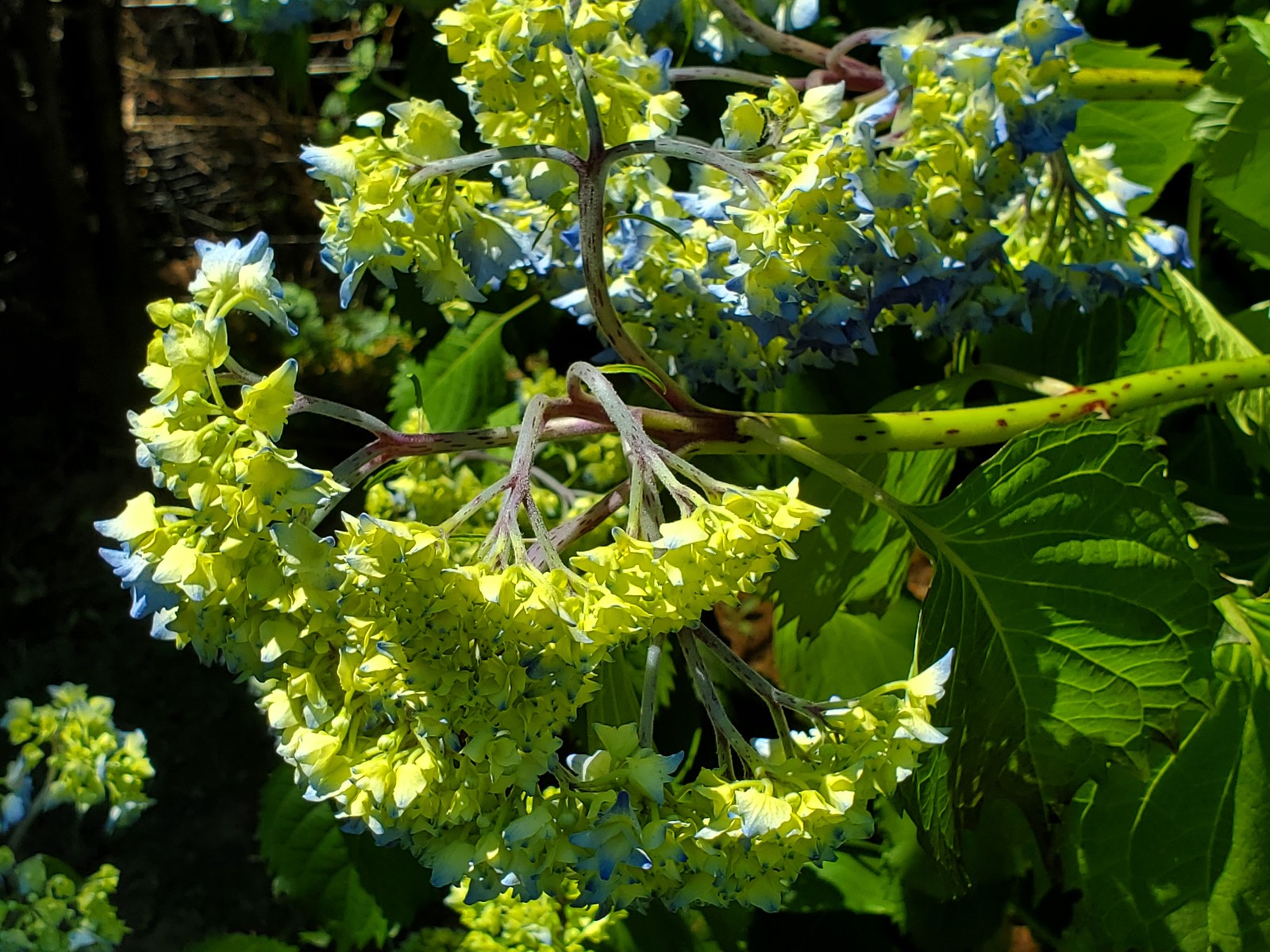
What is actually drooping?
| Pattern | What it suggests |
|---|---|
| Leaves and flowers droop; soil is dry | Drought stress is likely contributing. |
| Only bloom-heavy stems bend; foliage is firm | Flower-head weight or cultivar habit is more likely. |
| Large smooth-hydrangea heads flop as flowers enlarge | Structural flopping is common in some cultivars. |
| Afternoon droop with moist soil and overnight recovery | Temporary heat stress may be involved. |
| Leaves and flowers stay limp in wet soil | Check drainage and root health before watering again. |
Water stress or heavy flower heads?
Drought or heat stress
- Leaves and flower heads droop together.
- Root-zone soil is dry or weather is extremely hot.
More likely if
- The plant regains firmness after appropriate watering or cooler conditions.
Less likely if
- Foliage is firm and only flower-bearing stems bend.
Water deeply when soil is dry and maintain even root-zone moisture.
Heavy flower-head flopping
- Stems bend under large flower clusters.
- Leaves remain otherwise healthy.
More likely if
- The plant is a smooth hydrangea with large mophead blooms such as Annabelle-type forms.
Less likely if
- The whole shrub is wilted.
Support stems if desired, avoid unnecessary nitrogen, and choose sturdier cultivars for future planting.
Wet-root stress
- The plant remains limp even though soil is wet.
- Drainage is slow or water pools.
More likely if
- Irrigation is frequent or the site is poorly drained.
Less likely if
- The root zone is genuinely dry.
Pause unnecessary watering and investigate drainage/root health.
Checks before changing care
- Check soil moisture below the surface.
- Compare leaf firmness with stem bending.
- Inspect flower-bearing stems for kinks or breakage.
- Observe recovery after the hottest part of the day.
- Check drainage if the soil stays wet.
Route overlapping symptoms
- Leaves are also wilting: Use the hydrangea wilting pathway.Why are my hydrangea leaves wilting?
- Flower heads are browning or decaying: Use the brown-flower pathway.Why are my hydrangea flowers turning brown?
- Watering frequency is unclear: Use the hydrangea watering guide.How often should I water hydrangeas?
What to do now
- If the root zone is dry and foliage is wilted, water slowly and deeply at the base.
- If foliage is healthy and stems are simply bending under large heads, use discreet support if desired rather than repeated irrigation.
- If soil is already wet, pause unnecessary watering and improve drainage.
- Avoid heavy nitrogen feeding that can produce soft growth.
- Remove only broken stems or spent heads using pruning timing appropriate to the hydrangea type.
GardenSolved checkpoint
Do not do this yet
Avoid drooping-flower shortcuts
- Do not water automatically just because flower heads hang low.
- Do not hard-prune an old-wood hydrangea during bloom to solve flopping.
- Do not add more water to saturated soil.
- Do not assume a naturally arching or flower-heavy cultivar is diseased.
- Do not remove most healthy foliage or stems for cosmetic droop.
Confirm the likely cause first, then choose the treatment.
What improvement looks like
- Drought-stressed foliage and blooms regain firmness after deep watering.
- Temporary heat droop resolves in cooler conditions.
- Structurally heavy flower heads may continue to arch even when the plant is healthy.
- Wet-root stress improves only after root-zone conditions recover.
Reduce future drooping
- Maintain even root-zone moisture and mulch to slow drying.
- Avoid excessive nitrogen that encourages soft growth.
- Choose cultivars bred for sturdier stems if flopping is a recurring concern.
- Site hydrangeas where heat and sun exposure match the cultivar.
- Use support early for especially heavy flower heads if appearance matters.
When drooping needs diagnosis
Seek local help when the shrub stays wilted in moist soil, stems or crown tissue soften or discolor, or appropriate watering does not restore normal leaf firmness.