Hydrangeas
Why are my hydrangea leaves wilting?
The short answer
If the root zone is dry and the shrub stays wilted into cooler hours, water deeply at the base. If the soil is moist and the hydrangea wilts only during afternoon heat but recovers later, temporary heat stress may be involved. Persistent wilt in wet soil needs a drainage or root-health check, not more water.
Hydrangeas wilt readily in heat, but wilt does not automatically mean the roots are dry. A plant can also wilt in saturated soil when roots are stressed. The decisive checks are root-zone moisture, time of day, and whether the plant recovers overnight.
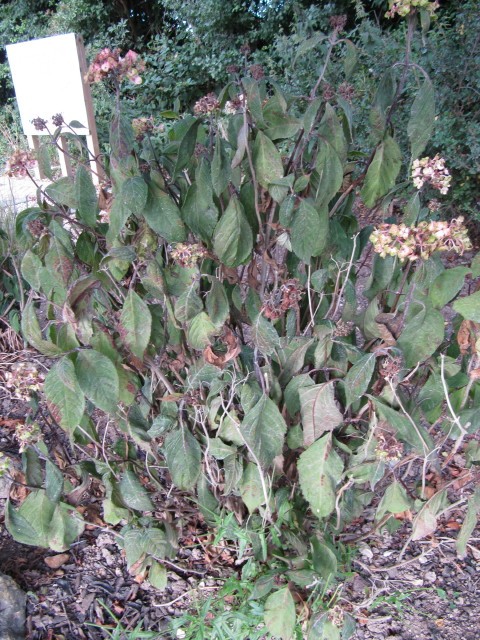
Use timing and soil moisture together
| Pattern | What it suggests |
|---|---|
| Afternoon wilt, moist soil, recovery by evening | Temporary heat stress may be involved. |
| Dry soil and wilt persists into cooler hours | Drought stress is more likely. |
| Wet soil and persistent wilt | Check drainage and root health. |
| New transplant wilts faster than established shrubs | Limited root establishment can increase water stress. |
| Wilt plus stem decline or widespread spotting | Investigate a broader root, crown, or disease problem. |
Thirst or stress in wet soil?
Drought wilt
- Root-zone soil is dry.
- Leaves stay limp beyond the hottest hours.
More likely if
- Weather is hot, windy, or rainfall has been low.
Less likely if
- Soil is evenly moist.
Water slowly and deeply at the root zone, then monitor recovery.
Temporary heat wilt
- Leaves droop in afternoon heat but recover later.
- Soil remains adequately moist.
More likely if
- The plant is in strong sun or extreme heat.
Less likely if
- Wilt continues overnight.
Avoid reflex watering; maintain even moisture and consider site exposure.
Wet-root stress
- Soil remains saturated or drains poorly.
- Wilt and yellowing continue despite moisture.
More likely if
- Irrigation is frequent or the planting site collects water.
Less likely if
- Root-zone soil is clearly dry.
Pause unnecessary irrigation and correct drainage or root-zone conditions.
Checks before watering again
- Feel soil below the surface near the root zone.
- Observe whether the shrub recovers by evening or the next morning.
- Check drainage after a thorough irrigation or rain.
- Review transplant date, heat, wind, and sun exposure.
- Inspect stems and leaves for disease signs.
Route the strongest clue
- Leaf margins are also brown and crisp: Use the brown-leaf pathway.Why are my hydrangea leaves turning brown?
- Leaves are yellow and soil stays wet: Use the yellow-leaf pathway.Why are my hydrangea leaves turning yellow?
- You are unsure how often to irrigate: Use the hydrangea watering guide.How often should I water hydrangeas?
What to do now
- If the root zone is dry, water slowly and deeply at the base.
- If soil is moist and the plant recovers after heat, keep moisture even rather than adding repeated extra water.
- If soil is saturated, pause irrigation and improve drainage.
- Mulch the root zone to reduce rapid drying, keeping mulch away from stems.
- Monitor new growth if wilt does not resolve with appropriate root-zone care.
GardenSolved checkpoint
Do not do this yet
Avoid wilt shortcuts
- Do not water based on leaf droop alone.
- Do not keep adding water to saturated soil.
- Do not assume afternoon heat wilt means permanent drought stress.
- Do not fertilize a severely wilted shrub before the root problem is understood.
- Do not ignore persistent wilt with stem or crown decline.
Confirm the likely cause first, then choose the treatment.
What recovery looks like
- A drought-stressed plant regains firmness after the root zone is thoroughly moistened.
- Temporary heat wilt resolves during cooler hours while new growth remains healthy.
- Wet-root stress improves only after drainage and root function recover.
- Persistent failure to recover points toward a broader root, crown, or disease issue.
Reduce future wilting
- Maintain even moisture rather than alternating drought and saturation.
- Mulch the root area to slow evaporation.
- Protect sensitive hydrangeas from excessive afternoon heat where appropriate.
- Check newly planted and container hydrangeas more frequently.
- Avoid planting where water stands around roots.
When wilt needs diagnosis
Get local help when the shrub stays wilted overnight in moist soil, stems or crown tissue decline, or repeated irrigation changes do not explain the pattern.