Hydrangeas
Why are my hydrangea flowers turning brown?
The short answer
If older flower heads are evenly fading, drying, and becoming papery while the plant stays healthy, normal aging is most likely. If fresh petals turn tan or gray in cool wet weather and develop fuzzy gray spores, check Botrytis. Brown ringed lesions on petals can fit anthracnose. Also check recent frost, strong heat, and root-zone dryness before treating.
Brown hydrangea flower heads are often normal aging, especially when older blooms become papery while leaves and stems remain healthy. Sudden tan-to-gray browning on fresh flowers, fuzzy gray growth, or brown lesions on petals can instead point to Botrytis or anthracnose, while heat, drought, and frost can also damage blooms.
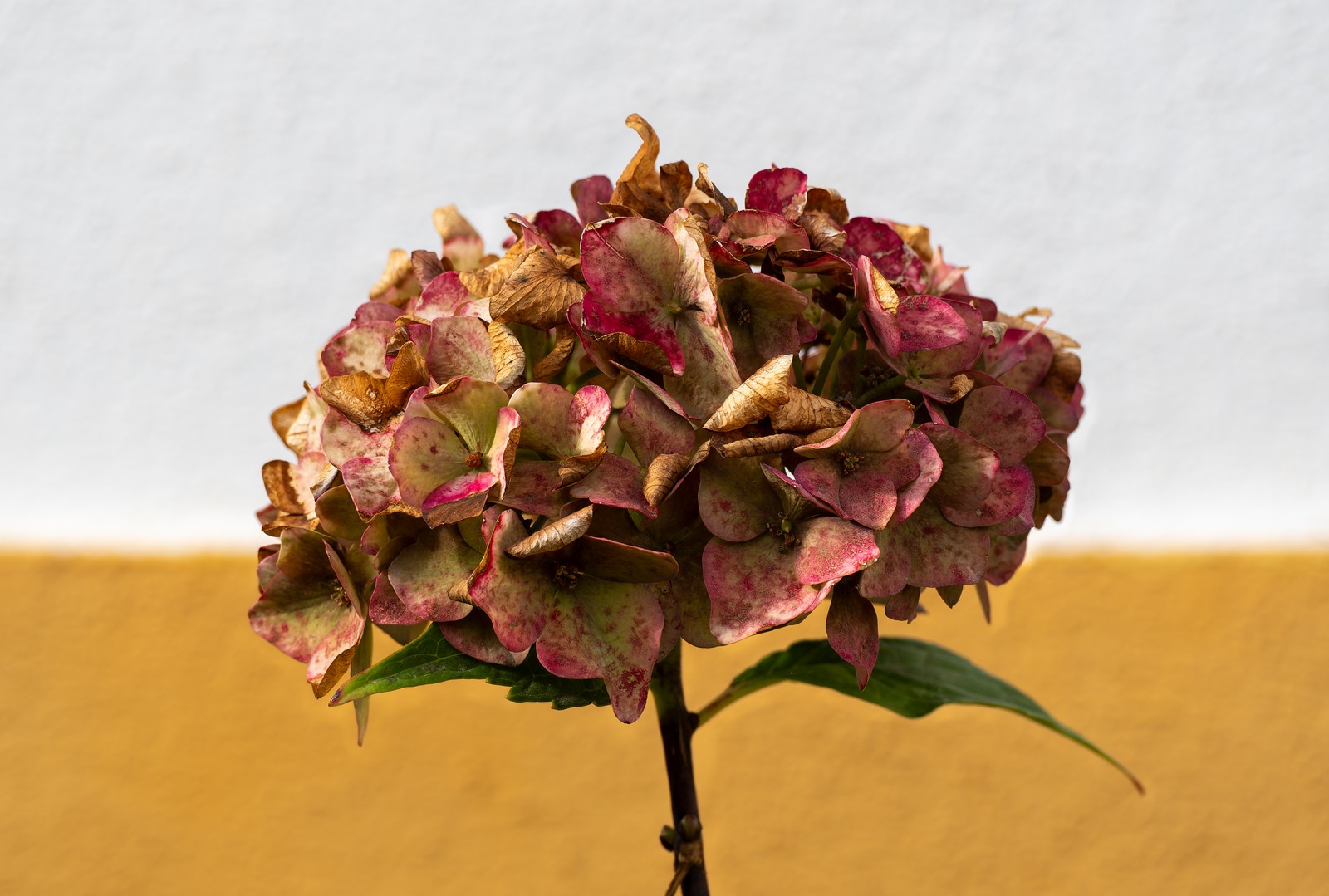
Read the flower-head pattern
| What you see | What it suggests |
|---|---|
| Older heads fade evenly and become papery | Normal flower aging is most likely. |
| Fresh petals or buds turn tan-gray with fuzzy gray spores | Botrytis gray mold becomes more likely. |
| Brown petal lesions develop dark concentric rings | Anthracnose is a possibility. |
| Flowers brown soon after frost, heat, or drought | Weather or water stress is more likely. |
| Browning occurs with leaf spots or stem decline | Investigate a broader plant-health problem. |
Aging, disease, or weather injury?
Normal aging
- Older flower heads gradually fade and dry.
- The plant's leaves and stems remain healthy.
More likely if
- The bloom has been open for weeks or the season is advancing.
Less likely if
- Fresh petals are rapidly rotting or developing fuzzy mold.
Leave spent heads for interest or deadhead according to pruning guidance; no disease treatment is needed for aging alone.
Botrytis gray mold
- Fresh buds, petals, or entire blossoms turn tan to gray.
- Fuzzy gray spores can cover affected tissue in wet weather.
More likely if
- Conditions are cool, wet, and humid.
Less likely if
- Heads are dry and papery without soft decay.
Remove infected flower tissue, improve drying and airflow, and use disease-specific treatment only if diagnosis and severity justify it.
Anthracnose
- Brown spots occur on flower petals as well as leaves.
- Lesions may develop dark ringed or bull's-eye patterns.
More likely if
- Matching lesions are present on leaves.
Less likely if
- Only old flower heads are fading.
Use local diagnosis if the pattern is uncertain because anthracnose is not managed as simple flower aging.
Weather or drought injury
- Browning follows frost, strong heat, intense sun, or dry soil.
- No fuzzy mold or repeating lesion pattern is present.
More likely if
- New blooms improve when weather and root-zone moisture normalize.
Less likely if
- Rot continues during mild conditions.
Correct the confirmed environmental stress and monitor the next flowers.
Checks before treatment
- Compare young and old flower heads.
- Feel whether brown petals are papery-dry or soft and decaying.
- Look for fuzzy gray growth after wet weather.
- Inspect leaves for ringed or spreading lesions.
- Check root-zone moisture and recent weather history.
Route overlapping symptoms
- Flower heads are bending rather than simply browning: Use the drooping-flower pathway.Why are my hydrangea flowers drooping?
- The shrub is producing few or no flower heads: Use the no-bloom pathway.Why is my hydrangea not blooming?
- Flower color is shifting while blooms remain healthy: Use the color-change pathway.Why is my hydrangea changing color?
What to do now
- Leave naturally aging heads alone or deadhead them according to the hydrangea's pruning needs.
- Remove clearly rotting or moldy flower heads from the canopy.
- Water at the soil line and avoid keeping flowers unnecessarily wet.
- Maintain even root-zone moisture during heat and drought.
- If disease is confirmed and severe, use only a product labeled for the specific disease and ornamental hydrangeas.
GardenSolved checkpoint
Do not do this yet
Avoid brown-flower shortcuts
- Do not diagnose disease from brown color alone.
- Do not spray naturally aging papery flower heads.
- Do not hard-prune an old-wood hydrangea just to remove spent blooms.
- Do not keep flowers wet in an attempt to cool heat-damaged blooms.
- Do not ignore fuzzy gray growth or spreading lesions on fresh flowers.
Confirm the likely cause first, then choose the treatment.
What recovery looks like
- Naturally aged heads remain brown but the shrub stays healthy.
- New blooms open without gray mold or spreading spots.
- Weather-damaged flowers are replaced by healthy later blooms when the plant is capable of reblooming.
- Continued decay on fresh flowers signals ongoing disease or site stress.
Reduce avoidable flower browning
- Maintain even soil moisture without saturating roots.
- Provide the light exposure appropriate to the cultivar and climate.
- Promote airflow and avoid prolonged wet flowers where practical.
- Remove infected flower debris when Botrytis pressure is present.
- Protect vulnerable flower tissue from forecast frost when practical.
When brown flowers need local help
Seek local extension or plant-clinic help when fresh flowers repeatedly rot, gray mold spreads into leaves or stems, or petal lesions and broader decline make normal aging unlikely.