Hydrangeas
Why is my hydrangea not blooming?
The short answer
Identify the hydrangea type first. Bigleaf and oakleaf hydrangeas commonly flower on older stems, so winter injury or pruning at the wrong time can remove the coming season's buds. Panicle and smooth hydrangeas flower on new growth. Check sun exposure, winter damage, and fertilizer history before trying to force blooms.
A hydrangea with healthy leaves but no flowers is often a pruning- or bud-survival problem rather than a fertilizer problem. Hydrangea type, old-wood versus new-wood flowering, winter or late-frost injury, light, and excessive nitrogen all matter.
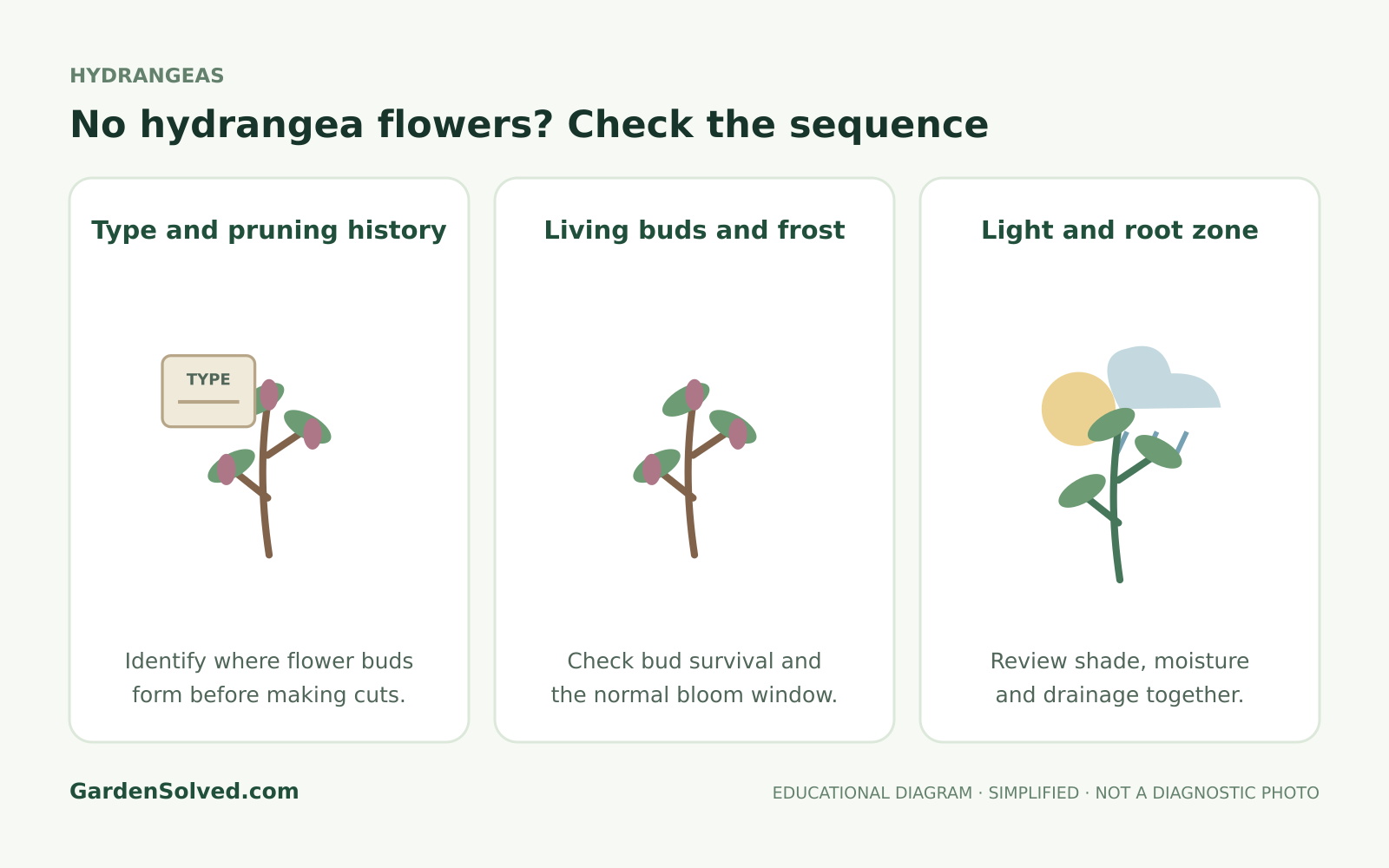
Why a hydrangea may have leaves but no flowers
| Clue | Best next check |
|---|---|
| Old-wood type pruned in fall, winter, or spring | Flower buds may have been removed. |
| Old stems died after a severe winter or late frost | Flower buds may have been killed even if roots survived. |
| Healthy leafy growth in deep shade | Light may be limiting flower production. |
| Very lush growth after heavy feeding | Excess nitrogen may be favoring foliage. |
| Unknown cultivar | Identify the hydrangea before making another major cut. |
Compare the main no-bloom branches
Wrong pruning timing
- Healthy stems were removed before bloom.
- The plant may flower on old wood.
More likely if
- Bigleaf, oakleaf, mountain, or climbing hydrangea was cut before flowering.
Less likely if
- The plant is a known panicle or smooth hydrangea pruned before spring growth.
Identify flowering wood and use the pruning guide before cutting again.
Cold or frost injury
- Canes or buds died after winter or a late freeze.
- Leaves regrow from lower stems or the crown.
More likely if
- The hydrangea flowers on old wood.
Less likely if
- All stems and buds remained healthy.
Wait for viable growth and avoid removing live stems until damage is clear.
Light or feeding imbalance
- The shrub is very leafy but shaded or heavily fed.
- Few flower buds form despite healthy foliage.
More likely if
- Direct sun is limited or high-nitrogen feeding was frequent.
Less likely if
- Site and feeding are moderate and buds are visibly present.
Correct the confirmed site or feeding issue gradually.
Checks before changing care
- Identify species or cultivar.
- Determine old-wood, new-wood, or reblooming habit.
- Review pruning timing.
- Inspect buds and canes for winter injury.
- Count direct-sun hours.
- Review feeding history and root-zone stress.
Route the strongest clue
- Pruning timing is uncertain: Use the hydrangea pruning guide before another major cut.When should I prune hydrangeas?
- The plant is healthy but flower color is changing: Use the color-change pathway instead of treating that as bloom failure.Why is my hydrangea changing color?
- The shrub is wilting or broadly stressed: Use the wilt and watering pathways first.Why are my hydrangea leaves wilting?
What to do now
- Identify the hydrangea before pruning.
- Protect and retain live old stems on old-wood bloomers.
- Correct excessive shade where practical without abruptly stressing an established shrub.
- Pause unnecessary high-nitrogen feeding.
- Maintain even root-zone moisture while the shrub rebuilds healthy growth.
GardenSolved checkpoint
Do not do this yet
Avoid no-bloom shortcuts
- Do not hard-prune an unidentified hydrangea.
- Do not add extra fertilizer simply because flowers are absent.
- Do not assume all hydrangeas flower on the same wood.
- Do not cut apparently bare stems until winter injury is clear.
- Do not expect a severely winter-damaged old-wood hydrangea to flower normally that season.
Confirm the likely cause first, then choose the treatment.
What improvement looks like
- Healthy buds are retained on the correct flowering wood.
- New flower heads form in the cultivar's normal season.
- A winter-damaged shrub may need another cycle before normal flowering returns.
- If light or feeding was limiting, the next season should show better balance between foliage and blooms.
Support reliable flowering
- Keep the cultivar label and flowering notes.
- Prune according to old-wood versus new-wood habit.
- Protect vulnerable flower buds from severe cold where practical.
- Provide suitable light and even moisture.
- Avoid excessive nitrogen feeding.
When no blooms need local help
Seek local guidance when flowering fails repeatedly despite correct pruning and adequate light, or when severe cane dieback, root decline, or unexplained bud loss accompanies the problem.