Roses
How often should I water roses?
The short answer
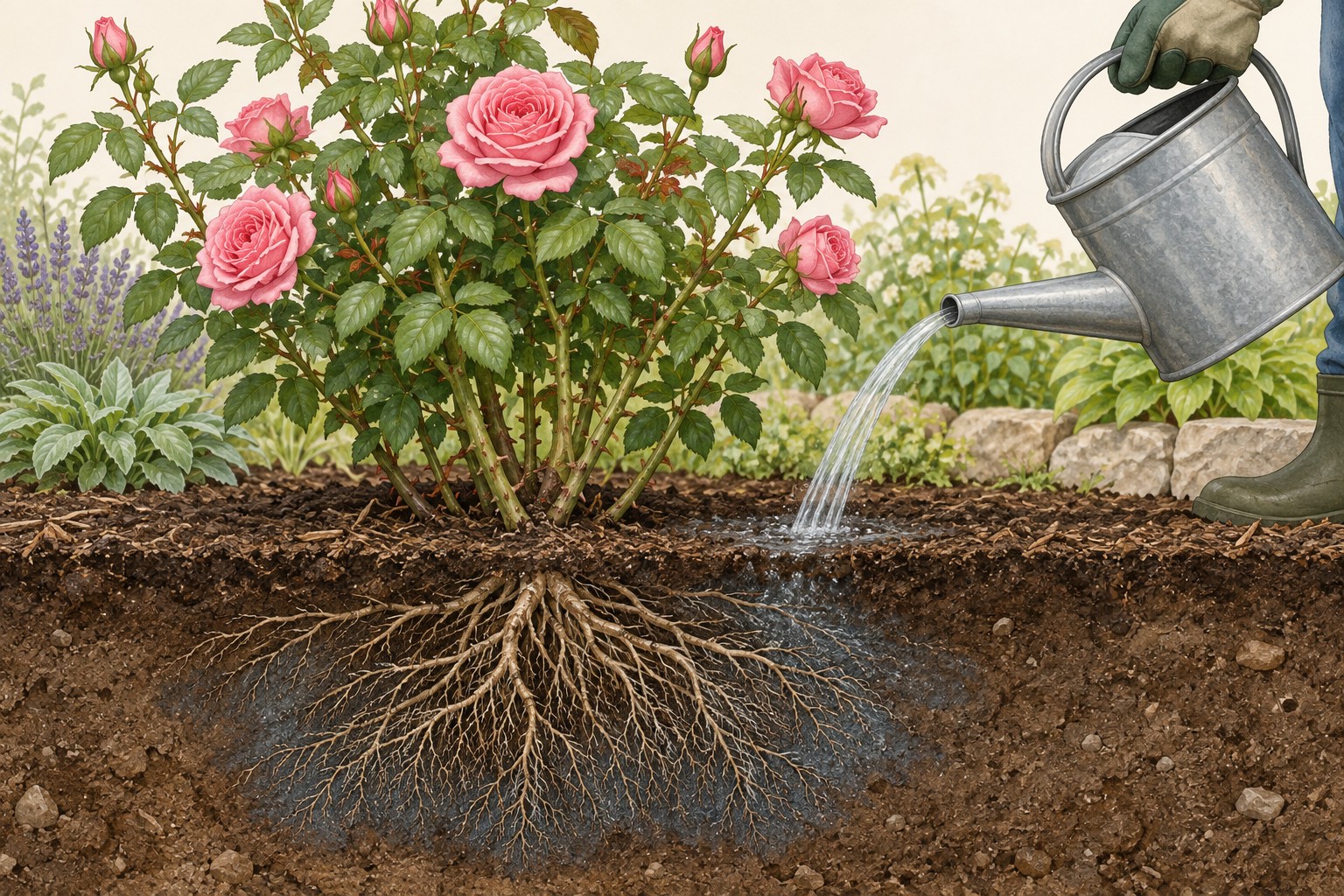
Check the soil below the surface and water deeply when the root zone is becoming dry, rather than giving shallow daily drinks. University of Maryland advises maintaining even soil moisture when weekly rainfall is below about one inch, while Illinois notes that soil type and heat change the needed frequency. Apply water to the roots, preferably early in the day, and avoid keeping poorly drained soil saturated.
Roses need even root-zone moisture, but a fixed calendar schedule is unreliable. Soil texture, rainfall, heat, wind, plant age, root establishment, and drainage determine how fast the root zone dries.
Let the root zone set the schedule
| Condition | Watering implication |
|---|---|
| Dry below the surface and little recent rain | A deep watering is appropriate. |
| Surface dry but soil beneath still moist | Wait and recheck rather than watering automatically. |
| Sandy soil, high heat, or wind | Check more frequently. |
| Heavy soil or poor drainage stays wet | Water less often and address drainage. |
| Newly planted rose | Monitor more often until roots establish. |
Thirst or too much water?
Root zone drying
- Soil is dry below the surface.
- Leaves lose firmness and recover after appropriate watering.
More likely if
- Weather is hot, windy, or rain has been limited.
Less likely if
- Soil remains cool and saturated.
Water slowly and deeply over the root area, then recheck how long the soil takes to dry.
Wet-root stress
- Soil stays wet for days.
- Leaves yellow or wilt despite moisture.
More likely if
- Drainage is poor or irrigation is frequent.
Less likely if
- The root zone is genuinely dry.
Stop automatic watering and improve drainage or root-zone aeration as appropriate.
Disease-related wilt or leaf loss
- Spots, stem lesions, or progressive decline accompany the apparent water symptom.
- Changing irrigation does not resolve the pattern.
More likely if
- The root zone moisture is suitable.
Less likely if
- The plant responds predictably to correcting dryness.
Use the symptom-specific disease pathway rather than adding water.
Checks before watering
- Feel soil below the surface instead of judging by crust color.
- Review rainfall from the past week.
- Check drainage after the last thorough irrigation.
- Consider plant age, container versus ground planting, and soil texture.
- Check whether wilt occurs only at midday heat or persists into cooler hours.
- Inspect for black spot, root stress, or stem problems if symptoms persist in moist soil.
Route overlapping symptoms
- Leaves are falling with dark spots: Use the leaf-drop and black-spot pathways.Why are my rose leaves falling off?
- Yellowing is widespread despite moist soil: Use the yellow-leaf diagnosis.Why are my rose leaves turning yellow?
- The rose is healthy but not flowering: Use the no-bloom pathway rather than increasing water automatically.Why is my rose bush not blooming?
How to water now
- When soil is becoming dry, apply water slowly to the root area until the soil is thoroughly moistened.
- Favor deep, less-frequent irrigation over shallow daily sprinkling.
- Water early in the day when practical and direct water to the soil rather than leaves.
- Use mulch to moderate soil moisture while keeping it away from the crown and canes.
- Adjust the next watering interval from actual drying rate, rainfall, soil texture, and weather.
GardenSolved checkpoint
Do not do this yet
Avoid watering shortcuts
- Do not water every day by calendar without checking soil.
- Do not add more water to a rose wilting in saturated soil.
- Do not rely on a dry soil surface alone to judge the whole root zone.
- Do not use frequent overhead irrigation when soil-level watering is practical.
- Do not assume one inch per week is an exact prescription for every soil and weather condition.
Confirm the likely cause first, then choose the treatment.
What balanced watering looks like
- New growth remains firm through normal weather cycles.
- The root zone dries gradually between thorough waterings without becoming bone dry.
- Yellowing or wilt from simple water stress stops progressing.
- Disease pressure from prolonged leaf wetness is reduced.
Build a reliable rose watering routine
- Learn how quickly the specific soil dries after rain or irrigation.
- Use mulch and organic matter appropriately to buffer moisture swings.
- Check newly planted roses more often while roots establish.
- Maintain good drainage and avoid planting roses where water stands.
- Use soil-level irrigation or soaker hoses where practical.
When watering is not the whole problem
Investigate roots, drainage, or disease when a rose remains wilted or yellow in moist soil, water pools for long periods, or repeated deep watering fails to restore normal growth.