Roses
Why are my rose leaves turning yellow?
The short answer
Yellow leaves are not a fertilizer diagnosis. Separate yellowing with dark spots from yellowing without lesions, compare older and younger leaves, and check moisture below the surface. Black spot, water stress, nutrient-related chlorosis and normal aging need different responses.
Yellow rose leaves can come from watering stress, poor light, nutrient issues, or natural aging. The pattern on the plant matters.
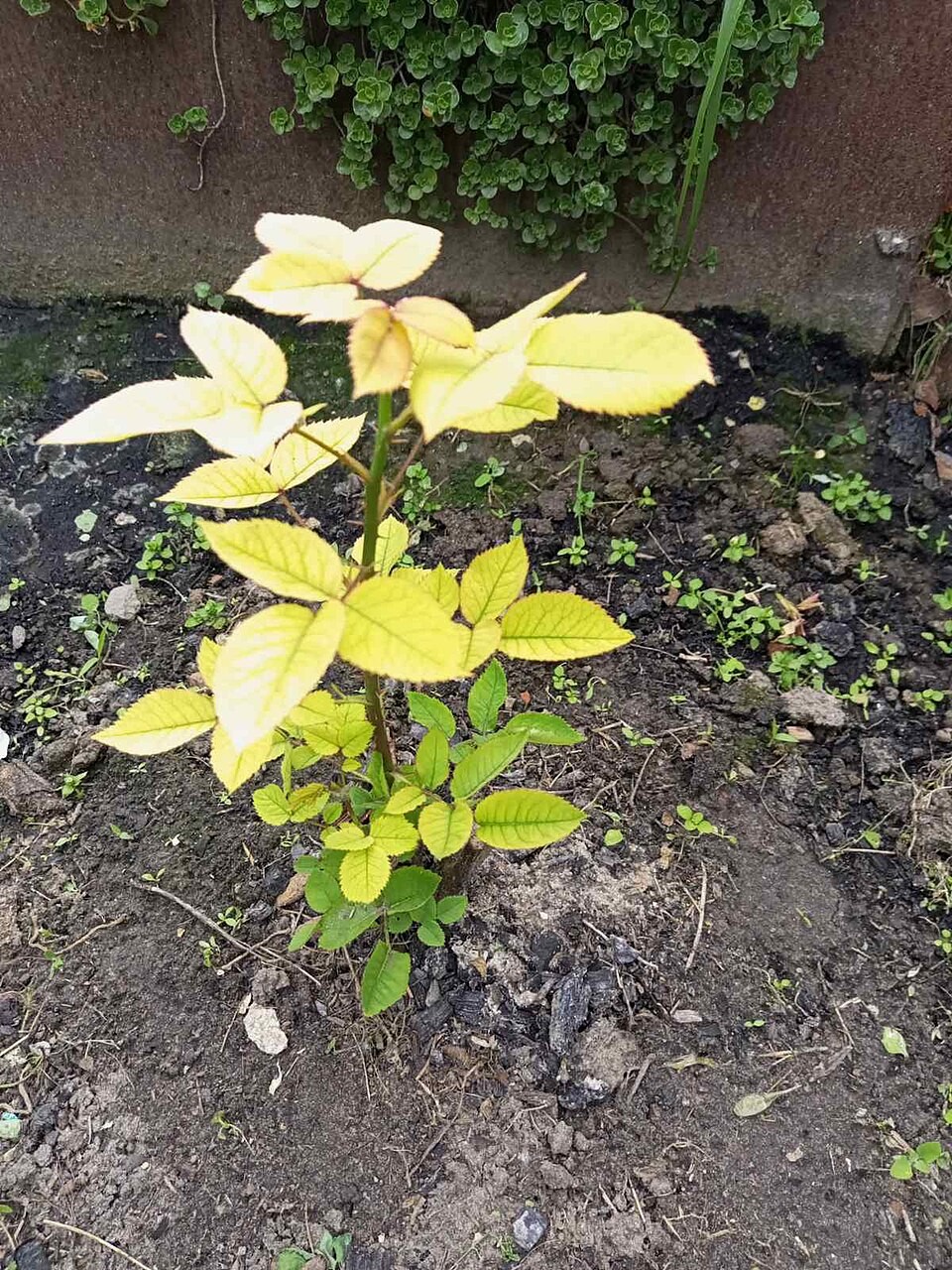

Match the pattern before acting
Yellowing with dark lesions
- Purple or black patches and early leaf drop
Use rose black-spot guidance; color alone does not establish disease.
Yellowing with moisture stress
- Dryness or prolonged saturation accompanies wilt
Correct the documented root-zone condition.
Pale tissue between greener veins
- Leaf age and vein pattern may support a nutrient-related branch
Check soil pH, nutrient history and roots before choosing an amendment.
Limited older-leaf loss
- New growth remains healthy
Monitor rather than treating an aging pattern.
Checks before choosing a response
- Inspect several older and younger leaves on both surfaces; photograph the pattern in natural light.
- Check below-surface moisture and recent rain, irrigation and drainage. Wilt alone does not distinguish dry from waterlogged roots.
- Look for expanding dark lesions, premature drop and vein patterns; obtain soil-test or local advice before naming a nutrient deficiency.
What to do now
- Water a documented dry root zone gradually; resolve trapped water or drainage before watering saturated soil again.
- For the spotted-leaf branch, collect fallen affected leaves and reduce splash; follow the dedicated diagnosis.
- Correct only a supported nutrient problem and track new growth and fresh lesions.
GardenSolved checkpoint
Do not do this yet
- Do not add iron, nitrogen or Epsom salts simply because leaves are yellow.
- Do not select a fungicide from color alone; diagnosis and an appropriate locally permitted label come first.
- Do not strip all yellow foliage from a stressed rose.
Confirm the likely cause first, then choose the treatment.
When to investigate further
Rapid defoliation, persistent wilt in moist soil, dieback or repeated damage on new leaves warrants local plant-diagnostic advice.