Roses
What does rose rosette disease look like?
The short answer
Look for several signs together: unusually congested or witches'-broom growth, narrow distorted leaves, persistent abnormal red shoots, many more pliable thorns than on normal canes, stunting, and malformed or aborted flowers. Normal red new growth by itself is not reliable. If the pattern strongly fits rose rosette, get local confirmation promptly; pruning symptomatic canes does not cure a systemically infected rose.
Rose rosette disease is a systemic viral disease spread primarily by microscopic eriophyid mites. Diagnosis should rely on a combination of abnormal growth traits—not red color alone—because healthy rose shoots often emerge red.
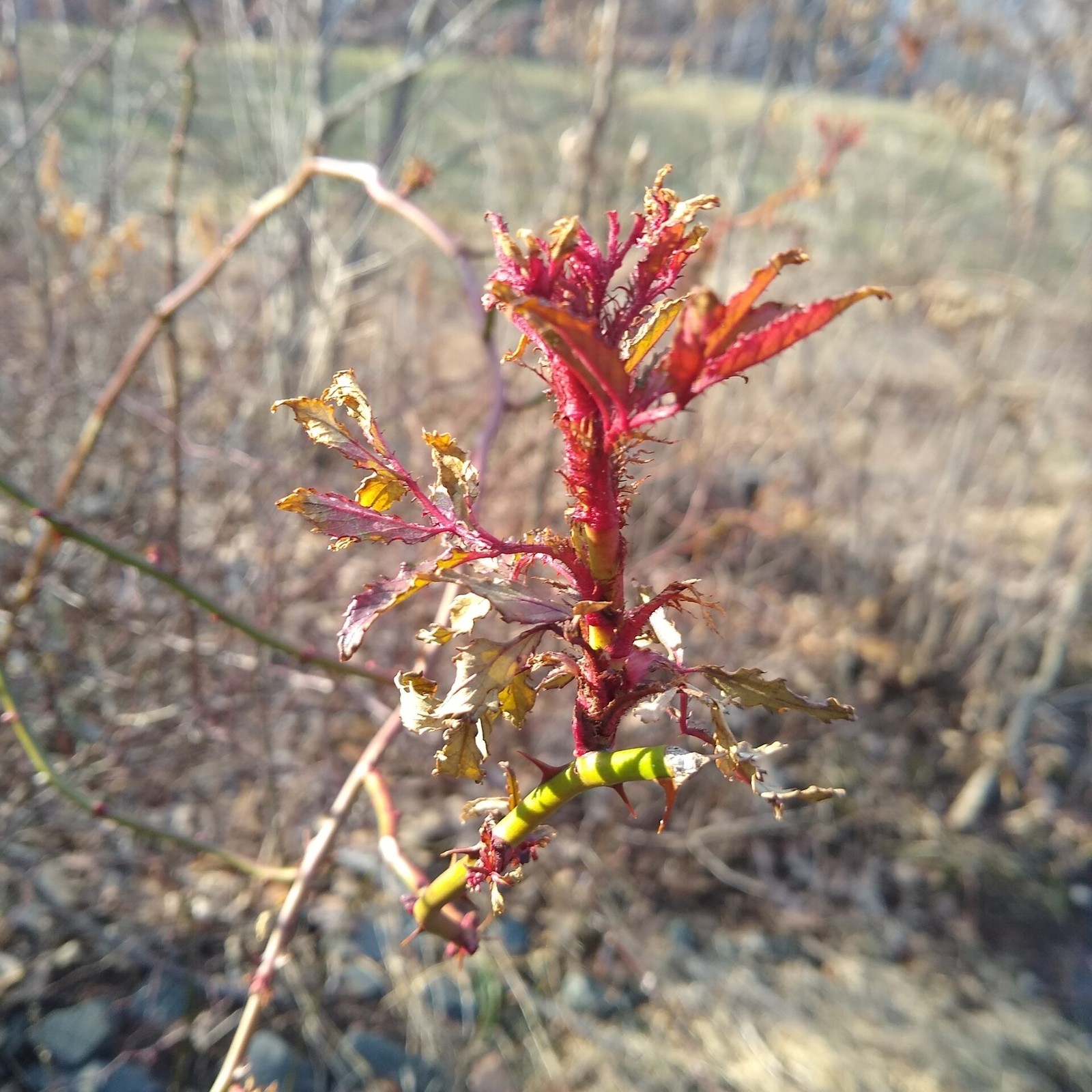

Which signs matter most together?
| Sign | Diagnostic weight |
|---|---|
| Red new growth only | Weak clue; many healthy roses emerge red. |
| Congested witches'-broom shoots | Important warning sign when abnormal for the cultivar. |
| Many more small pliable thorns on suspect canes | Strong companion clue. |
| Narrow distorted leaves and stunting | Supports systemic abnormal growth. |
| Malformed or aborted flowers plus the shoot symptoms above | Strengthens the rose-rosette pattern. |
Rose rosette or a lookalike?
Rose rosette disease
- Clustered distorted shoots, excess thorns, abnormal leaves, and flower problems occur together.
- Red color may persist with the abnormal growth.
More likely if
- Multiple traits differ clearly from normal canes on the same cultivar.
Less likely if
- Only normal red new foliage is present.
Seek prompt local confirmation and follow whole-plant removal guidance if confirmed.
Normal red new growth
- Young leaves or stems are red but shape and thorn density are normal.
- Color fades as tissue matures.
More likely if
- The rest of the plant grows and flowers normally.
Less likely if
- Witches'-broom growth and excessive thorns appear.
Monitor rather than remove the plant based on color alone.
Herbicide or environmental injury
- Leaves twist or narrow after a known exposure or weather event.
- Excessive thorn proliferation and persistent witches'-broom growth are absent.
More likely if
- Nearby non-rose plants also show exposure symptoms.
Less likely if
- Classic clustered thorny rose-rosette shoots progress.
Document exposure history and seek local diagnosis before removing the rose.
Checks before removing a rose
- Compare affected and normal canes on the same plant.
- Count and compare thorn density rather than judging from one thorny stem.
- Look for clustered shoots and narrow distorted leaves.
- Track whether red growth fades normally or remains abnormal.
- Inspect flowers for distortion or abortion.
- Photograph symptoms and contact local extension or a plant clinic.
Route lookalike symptoms
- The rose is simply not blooming but shoots look normal: Use the no-bloom pathway first.Why is my rose bush not blooming?
- Only pruning damage or cane dieback is present: Use pruning and local stem-disease guidance rather than diagnosing rose rosette.When should I prune roses?
- Buds are brown or failing but shoots and thorns look normal: Use the brown-bud pathway.Why are my rose buds turning brown?
What to do with a strong suspect
- Photograph the whole plant and the most abnormal shoots before cutting anything.
- Avoid propagating from the plant or moving living rose material elsewhere.
- Seek local extension or plant-clinic confirmation when possible.
- If rose rosette is confirmed, remove the entire infected plant according to local guidance because the virus is systemic.
- Monitor nearby roses for new symptoms and manage nearby multiflora rose where appropriate and permitted.
- Clean pruning tools used on diseased roses.
GardenSolved checkpoint
Do not do this yet
Avoid rose-rosette mistakes
- Do not diagnose rose rosette from red foliage alone.
- Do not expect pruning one symptomatic cane to cure a systemic infection.
- Do not rely on mite sprays to cure an already infected rose.
- Do not propagate from a suspect plant.
- Do not ignore nearby symptomatic roses or unmanaged multiflora rose reservoirs where locally relevant.
Confirm the likely cause first, then choose the treatment.
What happens after diagnosis
- A truly infected rose does not recover through pruning because infection is systemic.
- Healthy neighboring roses remain under observation for new abnormal shoots.
- After removal, sanitation and monitoring focus on limiting spread rather than restoring the infected plant.
- A lookalike injury may produce normal later growth once the actual stress ends.
Reduce rose-rosette spread
- Inspect new and established roses regularly for abnormal clustered growth.
- Remove confirmed infected plants promptly according to local guidance.
- Manage nearby multiflora rose where appropriate and permitted.
- Avoid propagating from symptomatic plants.
- Clean tools after working on diseased roses and monitor neighboring plants.
When to act quickly
Prompt local confirmation is important when witches'-broom growth, distorted narrow leaves, excessive thorniness, persistent abnormal red growth, and malformed flowers occur together. A confirmed infected rose requires whole-plant management rather than symptom pruning.