Roses
Why are my rose buds turning brown?
The short answer
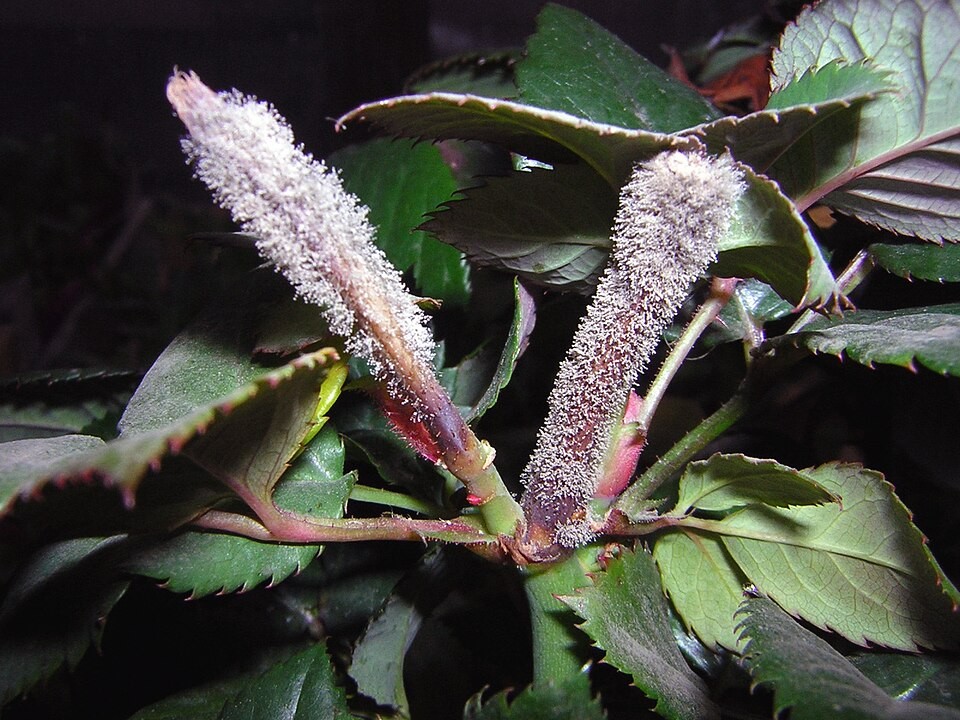
Inspect several buds before treating. Completely brown or rotting buds with gray fuzz in cool wet weather fit Botrytis gray mold. Brown streaks on petals can fit thrips, while buds that brown or blacken and wither without mold may need inspection for rose midge or other local pests. A single weather-damaged bud does not prove disease.
Brown rose buds can come from gray mold, flower pests, frost, heat, drought, or other injury. Gray fuzzy growth is a strong Botrytis clue, while streaked petals or tiny insects point toward pest damage; weather injury usually follows a clear event.

Read the brown-bud pattern
| Pattern | Best next check |
|---|---|
| Completely brown curled bud with gray fuzz | Botrytis gray mold is likely. |
| Brown irregular petal spots in cool wet weather | Check for early gray mold. |
| Brown or pale streaks with tiny insects | Check thrips. |
| Bud and shoot tip brown or black without gray fuzz | Consider rose midge or another local pest/injury. |
| Browning follows frost, heat, or drought | Environmental injury is more plausible if new buds recover. |
Compare the main brown-bud branches
Gray mold
- Buds and flowers rot or turn fully brown.
- Gray fuzzy spores may be visible.
More likely if
- Weather is cool, wet, and humid.
Less likely if
- Buds are dry-scorched after frost or heat.
Remove infected flowers, improve drying, and use targeted disease management if needed.
Thrips
- Petals have irregular brown or pale streaks.
- Tiny insects are found inside flowers.
More likely if
- Damage repeats on new blossoms through warm weather.
Less likely if
- Dense gray fuzz covers dead tissue.
Confirm the insect and use targeted management only if damage warrants it.
Other bud pest such as rose midge
- Buds or shoot tips brown, blacken, wither, or fall before full development.
- No Botrytis fuzz is present.
More likely if
- The same pattern repeats on multiple growing tips.
Less likely if
- Damage follows a one-time weather event.
Seek local identification because rose midge is uncommon in some regions and not managed like thrips.
Weather or water stress
- Damage follows frost, intense heat, drought, or prolonged wet weather.
- No persistent pest or pathogen sign is found.
More likely if
- Later buds recover in improved conditions.
Less likely if
- New buds repeatedly rot or blacken.
Correct the confirmed stress and monitor the next flush.
Checks before treatment
- Open a brown bud and inspect inner petals.
- Look closely for gray spores and stem lesions.
- Tap flowers over white paper for tiny thrips.
- Inspect shoot tips for repeated blackening or pest injury.
- Review frost, rain, heat, and drought timing.
- Compare newly forming buds with damaged older buds.
Route the strongest clue
- Buds stay closed rather than simply browning: Use the bud-opening pathway.Why are my rose buds not opening?
- White powder covers buds or young foliage: Use the powdery-mildew pathway.Why do my roses have white powder on the leaves?
- The bush is making almost no buds at all: Use the no-bloom pathway.Why is my rose bush not blooming?
What to do now
- Remove brown rotting buds and spent flowers from the canopy.
- Improve airflow and avoid unnecessary wetting of flowers.
- Maintain even root-zone moisture during heat and drought.
- If thrips or another pest is confirmed, use targeted management rather than blanket spraying.
- Use a fungicide only when Botrytis or another labeled disease is established and cultural control is insufficient.
GardenSolved checkpoint
Do not do this yet
Avoid brown-bud shortcuts
- Do not diagnose Botrytis from brown color alone.
- Do not spray for thrips without finding the insect or characteristic streaking.
- Do not assume every dead bud is caused by disease after a frost or heat event.
- Do not keep flowers constantly wet to cool the plant.
- Do not ignore shoot-tip blackening that repeats beyond individual buds.
Confirm the likely cause first, then choose the treatment.
What recovery looks like
- New buds remain green and open normally.
- Gray mold stops appearing on fresh flowers as conditions dry and sanitation improves.
- Later flowers show less streaking when pest pressure falls.
- Weather-damaged buds are replaced by healthy new growth.
Reduce future bud browning
- Space and prune roses for airflow.
- Remove spent and infected flowers promptly.
- Water the root zone rather than routinely wetting blossoms.
- Monitor buds during cool wet weather and for thrips during flowering.
- Maintain even soil moisture during heat without saturating roots.
When brown buds need local help
Seek local diagnosis when most new buds repeatedly die, shoot tips also blacken, stem lesions expand, or the cause remains unclear after checking gray mold, thrips, weather, and root-zone stress.