Roses
Why are my rose leaves falling off?
The short answer
Check fallen and attached leaves before changing care. Feathery black spots with yellowing fit black spot; angular purple-red lesions in cool wet weather fit downy mildew. Crispy leaves and dry soil point toward drought, while yellowing with persistently wet soil suggests root-zone stress. Correct the confirmed cause rather than fertilizing a defoliated rose automatically.
Rose leaf drop is a result, not a diagnosis. Black spot and downy mildew can trigger premature defoliation, while drought, waterlogged roots, transplant stress, weather, or normal seasonal slowdown can also shed leaves. The leaves that remain and the condition of the root zone are the best clues.
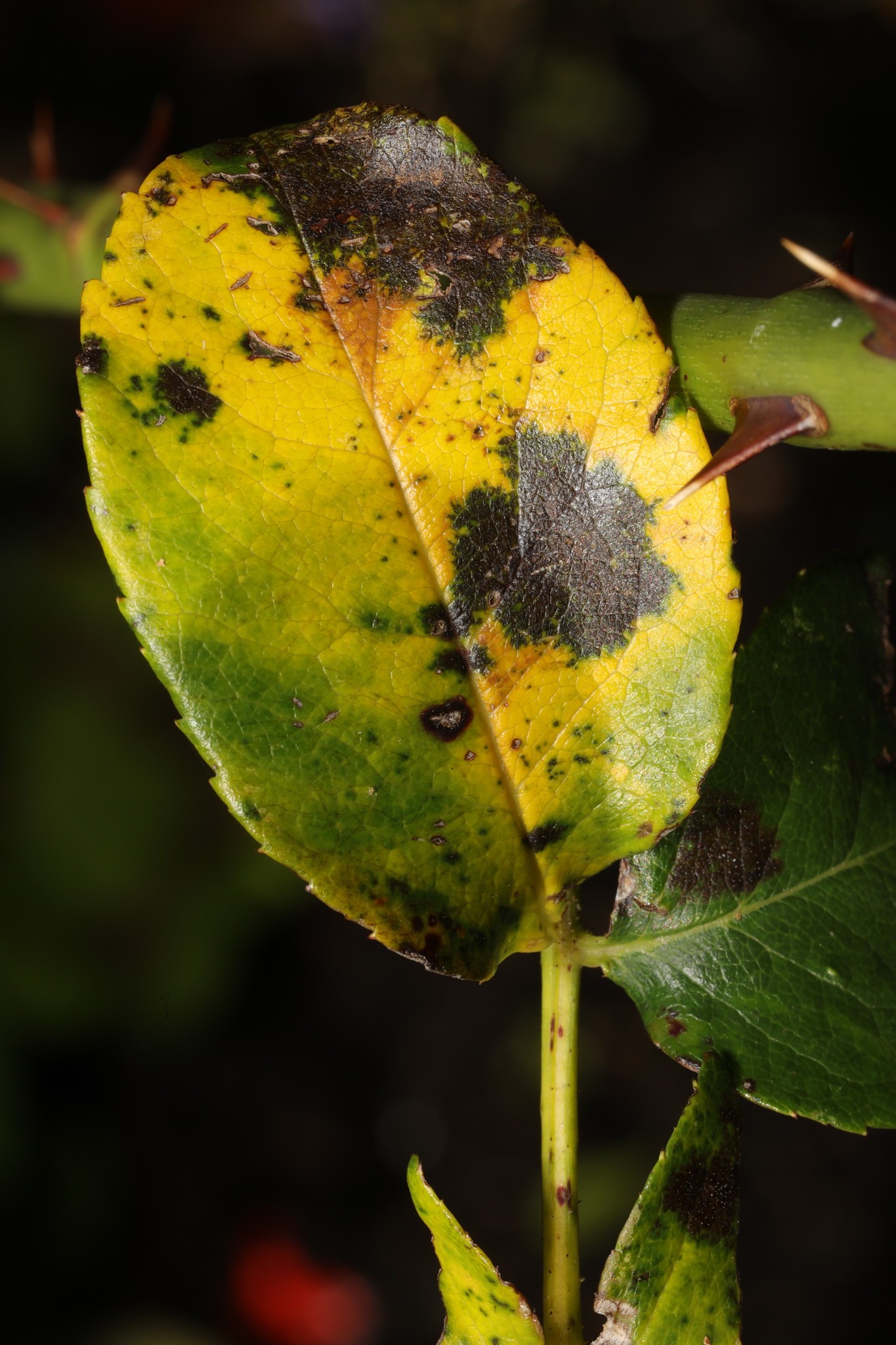

What fell off before the leaf dropped?
| Leaf pattern | Best next check |
|---|---|
| Black feathery lesions with yellow tissue | Black spot is a strong candidate. |
| Angular purple-red blotches, cool wet weather, possible gray underside growth | Check downy mildew. |
| Crispy dry leaves and dry root zone after heat | Drought or heat stress is more plausible. |
| Soft yellow leaves with persistently wet soil | Check drainage and root health before watering again. |
| Healthy-looking older leaves drop as cold season begins | Seasonal slowdown may be contributing. |
Compare the main leaf-drop branches
Black spot defoliation
- Dark feathery spots precede yellowing and drop.
- Symptoms often begin on lower leaves.
More likely if
- Wet foliage and repeated lesions are present.
Less likely if
- Leaves are spotless and simply crisp from drought.
Use the black-spot diagnosis and sanitation/leaf-wetness management.
Downy mildew
- Purple-red angular lesions may be vein-limited.
- Cool wet humid conditions fit.
More likely if
- Gray underside growth or matching stem lesions appear.
Less likely if
- Warm dry weather and crisp leaves dominate.
Seek local identification and manage as a distinct disease.
Water or root stress
- Soil is extremely dry or persistently wet.
- Leaf drop follows heat, drought, flooding, or poor drainage.
More likely if
- New foliage improves after root-zone conditions normalize.
Less likely if
- New disease lesions continue forming.
Correct the confirmed moisture or drainage problem gradually.
Seasonal or other stress
- Drop coincides with cold-season slowdown or a recent environmental change.
- No progressive lesion pattern is present.
More likely if
- The plant otherwise remains healthy and stems are viable.
Less likely if
- Defoliation is rapid during active growth.
Monitor normal seasonal response while checking for hidden disease or pests.
Checks before changing care
- Photograph attached and fallen leaves.
- Check upper and lower leaf surfaces for lesions, fuzz, mites, or chewing.
- Check soil moisture several inches down and whether water drains.
- Review the last two weeks of weather and irrigation.
- Inspect canes for lesions or dieback.
- Note whether new growth is healthy or also declining.
Route the strongest clue
- Black feathery spots and yellowing appear before leaf drop: Use the black-spot pathway.Why do my rose leaves have black spots?
- Yellowing occurs without a clear lesion pattern: Use the yellow-leaf diagnosis.Why are my rose leaves turning yellow?
- Root-zone moisture is uncertain: Use the rose-watering guide before increasing irrigation.How often should I water roses?
What to do now
- Collect and inspect recently fallen leaves before discarding diseased material.
- Correct drought or drainage stress based on actual root-zone moisture.
- Water at soil level and maintain even moisture rather than alternating saturation and drought.
- Remove clearly diseased debris and improve airflow if disease is present.
- Avoid heavy fertilizer until the cause of defoliation is understood and active healthy growth has resumed.
GardenSolved checkpoint
Do not do this yet
Avoid leaf-drop shortcuts
- Do not assume leaf drop means the rose needs more water.
- Do not fertilize a badly stressed or waterlogged plant to force leaves back.
- Do not call every defoliation black spot without looking at fallen leaves.
- Do not remove all remaining healthy foliage for cosmetic reasons.
- Do not ignore stem dieback or abnormal new growth accompanying defoliation.
Confirm the likely cause first, then choose the treatment.
What recovery looks like
- New foliage remains attached longer and appears healthy.
- New disease lesions slow after disease management.
- A drought-stressed rose resumes growth after even moisture returns.
- A waterlogged rose improves only after drainage and root function recover, which may take longer than surface drying.
Reduce future premature leaf drop
- Monitor leaves weekly for spots and pests.
- Maintain even soil moisture and well-drained soil.
- Water early at the base and avoid unnecessary leaf wetness.
- Choose disease-resistant cultivars and provide good airflow.
- Clean up diseased foliage and monitor canes after severe defoliation.
When leaf drop needs local help
Seek a local diagnosis when most foliage is lost rapidly during active growth, stems die back, the root zone stays saturated, or repeated defoliation occurs without a clear disease or moisture pattern.