Roses
Why do my rose leaves have black spots?
The short answer
Look first at lesion shape and leaf position. Rose black spot typically starts on older lower leaves with dark irregular or feathery-edged spots, followed by yellowing and premature leaf drop. Angular purple-red lesions restricted by veins, pale-centered spots, or unusual underside growth point toward other diseases. Remove diseased debris, reduce leaf wetness, improve airflow, and use fungicides only when the diagnosis and label fit.
Black spots on rose leaves strongly suggest black spot disease when the lesions are dark with irregular or feathery margins and nearby tissue yellows, but not every dark rose leaf spot is black spot. Cercospora, anthracnose, downy mildew, and other damage can overlap, so pattern and weather matter.
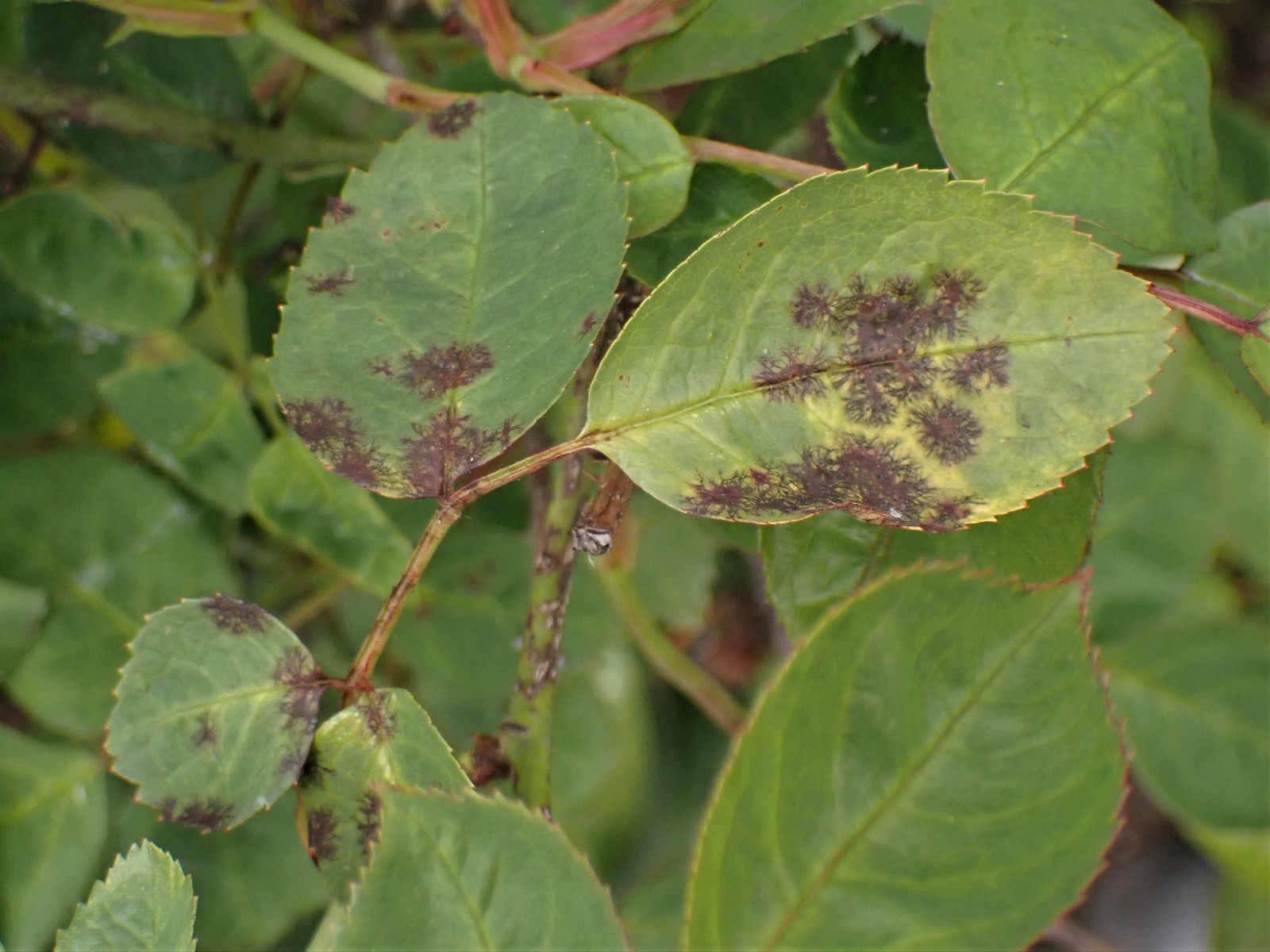

Read the spot pattern
| Pattern | What it suggests |
|---|---|
| Dark spots with uneven or feathery margins plus yellowing | Classic rose black spot becomes more likely. |
| Older lower leaves affected first, then upward spread | Fits the common black-spot progression. |
| Small maroon-purple spots with tan centers and smooth margins | Consider Cercospora or another leaf spot instead. |
| Angular purple-red blotches restricted by veins, sometimes with gray underside growth | Consider downy mildew, especially in cool wet weather. |
| No spreading lesions; only isolated physical injury | Disease treatment may not be needed. |
Black spot or a lookalike?
Black spot
- Feathery or fringed dark lesions.
- Yellowing and premature leaf drop often follow.
More likely if
- Symptoms begin low on the plant and wet foliage is common.
Less likely if
- Lesions are sharply angular between veins.
Remove diseased foliage and debris, reduce splash and leaf wetness, and use disease-specific control only if needed.
Cercospora or other leaf spot
- Spots may be smaller with smooth purple margins and tan centers.
- Defoliation can still occur.
More likely if
- A black-spot-resistant rose develops warm-season spotting.
Less likely if
- Lesions have classic feathery black edges.
Use local identification because management overlap does not make the diseases identical.
Downy mildew
- Purple-red or brown lesions can be angular and vein-limited.
- Gray growth may appear beneath leaves in humid conditions.
More likely if
- Weather is cool, wet, and humid.
Less likely if
- Spots are round and feathery-edged during warm wet conditions.
Seek local diagnosis and manage leaf wetness; downy mildew is a different disease.
Checks before treating
- Photograph fresh spots before removing leaves.
- Inspect lower and upper foliage and note where symptoms began.
- Look for yellow halos and premature leaf drop.
- Inspect canes for purple-black lesions.
- Check whether lesions cross veins or are sharply limited by them.
- Review rainfall and overhead irrigation history.
Route the overlapping symptom
- Leaves are dropping heavily: Use the leaf-drop pathway to compare black spot, downy mildew, water stress, and seasonal causes.Why are my rose leaves falling off?
- Yellowing dominates without clear black lesions: Use the yellow-leaf pathway before treating disease.Why are my rose leaves turning yellow?
- White powder is the dominant surface symptom: Use the powdery-mildew pathway.Why do my roses have white powder on the leaves?
What to do now
- Remove clearly infected fallen leaves and badly diseased foliage where practical.
- Water at the soil line and reduce overhead irrigation and soil splash.
- Improve spacing and airflow so foliage dries more quickly.
- Prune infected cane tissue according to rose-pruning guidance and clean tools after diseased material.
- If fungicide protection is warranted for a susceptible rose, use a product labeled for rose black spot and follow its preventive timing and label directions.
GardenSolved checkpoint
Do not do this yet
Avoid black-spot shortcuts
- Do not diagnose black spot from dark color alone.
- Do not leave heavily infected fallen foliage as the only sanitation plan for a susceptible planting.
- Do not water the foliage routinely when soil-level watering is practical.
- Do not assume a resistant cultivar can never develop black spot or another leaf spot.
- Do not apply a fungicide that is not labeled for the disease and rose.
Confirm the likely cause first, then choose the treatment.
What improvement looks like
- Existing lesions do not disappear; recovery is measured by healthier new foliage.
- New spots and premature leaf drop slow after effective management.
- A badly defoliated rose may need time to rebuild foliage even after disease pressure falls.
- Continued rapid defoliation or cane dieback means the diagnosis or management needs reassessment.
Reduce future black spot
- Choose cultivars with documented disease resistance appropriate to the region.
- Site roses for good light and air movement.
- Water at the base and avoid keeping foliage wet unnecessarily.
- Remove infected debris and prune diseased cane tissue before new growth when appropriate.
When to seek local diagnosis
Get local extension or plant-clinic help when the spot pattern is atypical, resistant roses defoliate heavily, cane lesions progress, or repeated disease management does not slow new symptoms.