Strawberries
Why Are My Strawberries So Small?
The short answer
First compare the berries with the cultivar and harvest sequence: the earliest primary berries are often largest and later berries smaller. If the whole crop is undersized, check pollination, root-zone moisture, plant vigor, crowding, and pest or root-disease clues.
Berry size changes naturally through the harvest season, but persistently small strawberries can also reflect incomplete pollination, water stress, weak roots, crowding, pests, disease, or cultivar characteristics.
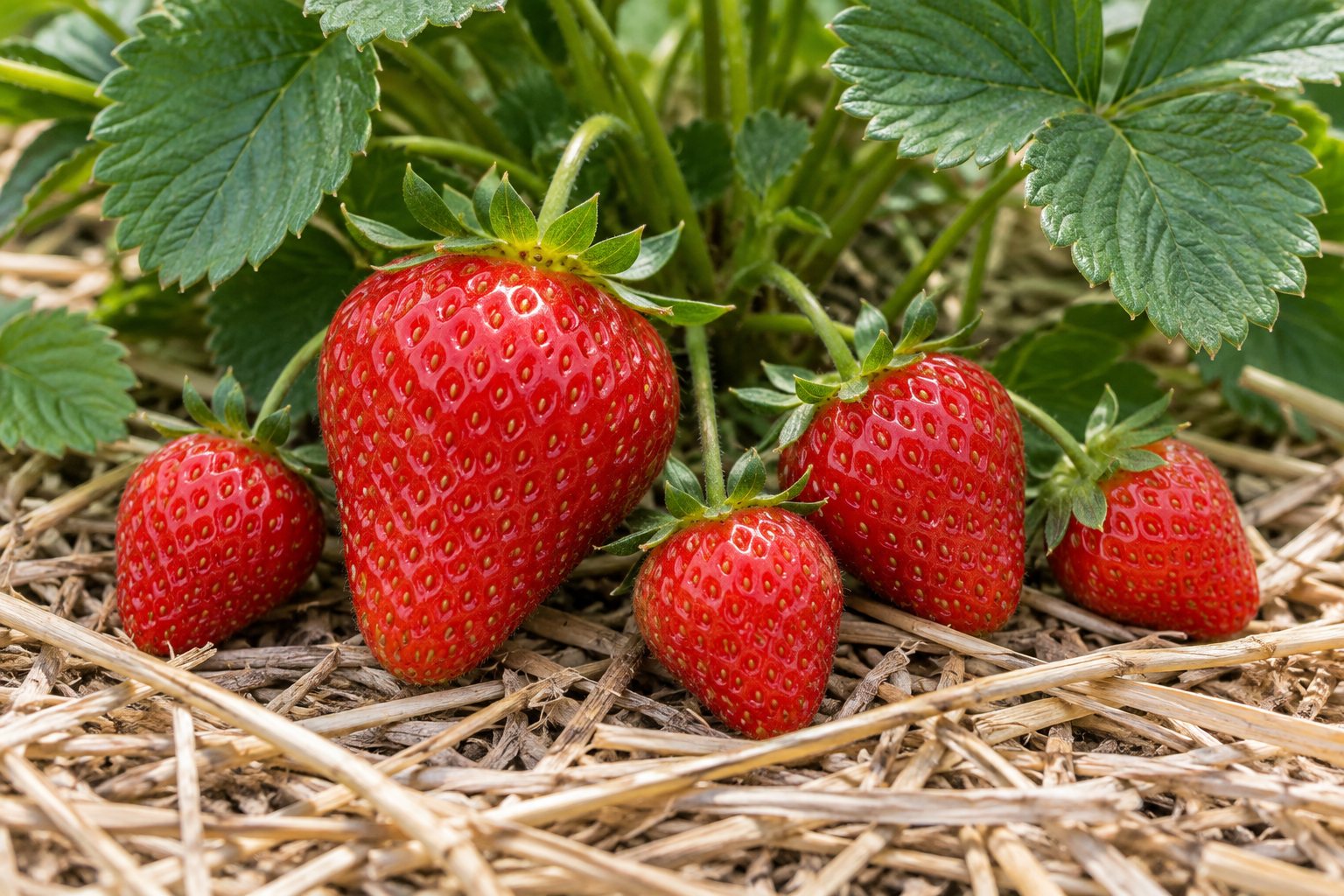
Separate normal size variation from a growth problem
Normal harvest sequence or cultivar
- Primary berries are largest and later berries are smaller.
- The plant is otherwise healthy and fruit is well shaped.
Use cultivar expectations rather than treating normal size variation.
Incomplete pollination
- Small fruit is also uneven or misshapen.
- Some areas of the receptacle fail to expand normally.
Use the misshapen-fruit pathway and review pollinator access.
Water or root limitation
- Plants wilt, grow slowly, or have a weak root system.
- Fruit size is reduced across many berries.
Check the root zone and correct the confirmed limitation.
Pest or disease pressure
- Fruit or foliage has feeding injury, powdery signs, spots, or wider decline.
Identify the pest or disease before treatment.
How to confirm the problem
- Compare fruit position and timing within the cluster and across the harvest season.
- Check whether small berries are normally shaped or also misshapen.
- Inspect moisture, roots, runner density, weeds, and plant vigor.
- Look for tarnished plant bug injury, mildew, and root-disease clues before treating.
Improve the next berries
- Keep moisture steady through flowering and fruit development without saturating the bed.
- Maintain weed control so shallow strawberry roots are not competing strongly for water and nutrients.
- Avoid overly crowded beds and follow the renovation or runner-management system for the strawberry type.
- Protect pollinator access and diagnose pest or disease damage early.
GardenSolved checkpoint
Do not do this yet
Do not chase berry size with one input
- Do not add extra nitrogen just because fruit is small.
- Do not assume every small berry is poorly pollinated if shape is normal and later-season fruit is naturally smaller.
- Do not overwater in an attempt to swell fruit.
Confirm the likely cause first, then choose the treatment.
What improvement to look for
- Compare later berries with the same cultivar and fruit position.
- Naturally smaller later fruit does not require a size treatment.
How to reduce repeat problems
- Manage weeds and crowding before fruit development.
- Maintain pollinator access and dependable root-zone moisture.
Which check comes next?
- Small berries are also misshapen: Check uneven development and flower history.Why Are My Strawberries Misshapen?
- Small fruit accompanies wilt: Investigate water and roots first.Why Are My Strawberry Plants Wilting?
When to investigate further
Seek diagnosis when plants remain stunted, roots are dark, berries are consistently small across the bed, or pest/disease signs are clear.