Strawberries
Why Are My Strawberry Plants Flowering but Not Fruiting?
The short answer
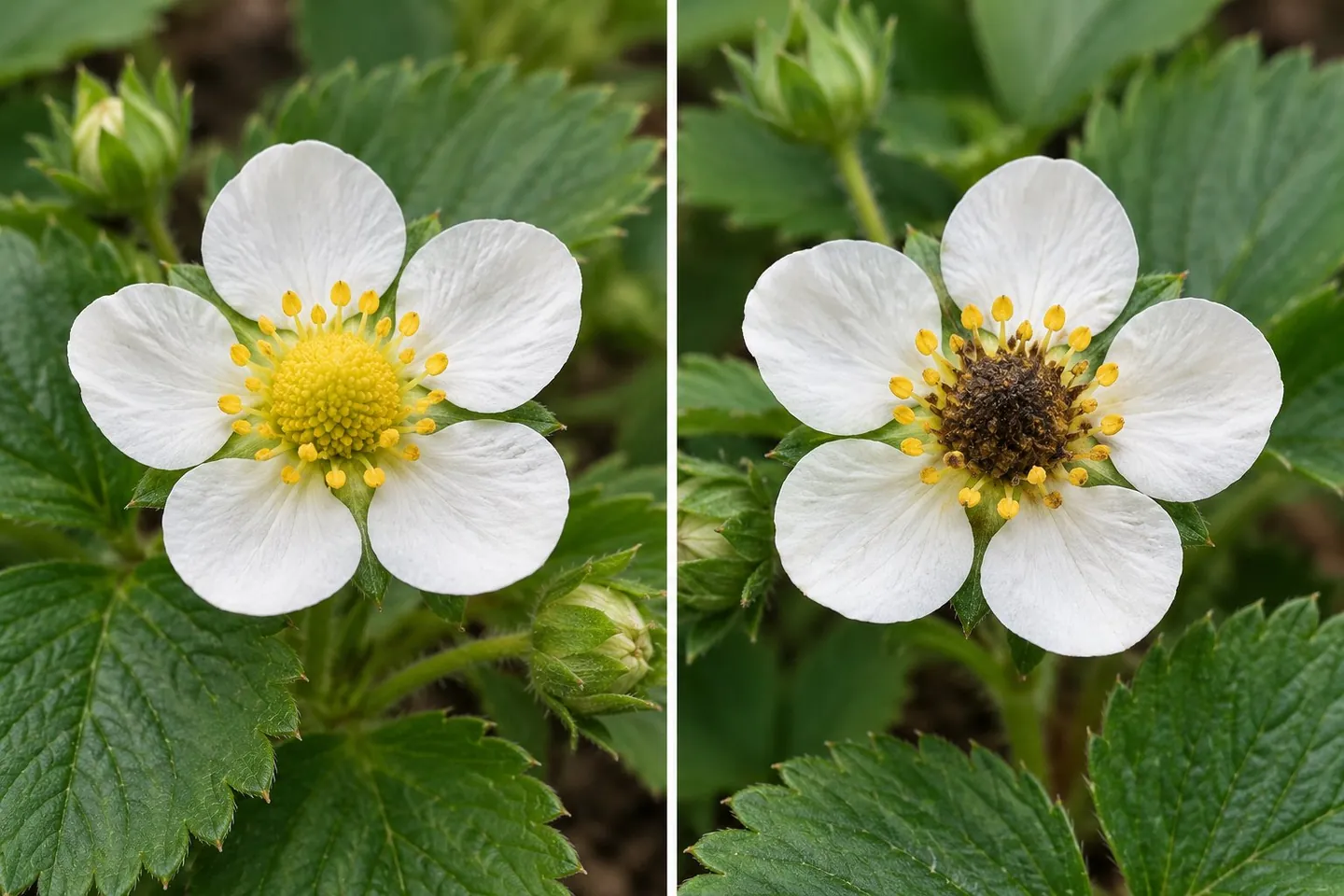
Start with the flowers. Blackened or damaged centers suggest frost injury; healthy flowers with poor fruit set raise pollination and plant-stress questions. Most strawberry varieties are self-fruitful, but insect visits still improve complete pollination and berry development.
Strawberry flowers need successful pollination and favorable conditions to develop into well-formed berries. Frost-damaged flowers, poor pollinator activity, cultivar and plant age, severe stress, pests, and disease can all reduce fruit set.
Diagnostic snapshot
What to check before you act
What you are seeing
- Flowers open but no young berries begin enlarging
- Flower centers are dark or damaged after frost
Check first
Inspect the center of several flowers for frost injury or dead tissue.
Compare first
- Frost-damaged flowers
- Incomplete pollination
- Establishment or cultivar timing
Hold off for now
Do not assume most garden strawberries need a second variety for cross-pollination.
Investigate further if
Escalate when flowers repeatedly fail across the planting despite healthy plants and suitable pollinator access, or disease signs are present.
Photograph this before you act
- Photograph the whole plant and its growing area so the overall pattern is visible.
- Photograph affected flowers or buds together with nearby leaves and stems.
- Photograph the affected fruit from more than one side, including the nearby stem and leaves.
Recommended diagnostic check
Environmental Stress Checker
Does the timing or exposure fit environmental stress?
Compare the symptom pattern with recent growing conditions before treating a lookalike as disease, pests, nutrient deficiency, or a watering problem.
First check
Inspect the center of several flowers for frost injury or dead tissue.
Timing / exposure boundary
Blossoms were exposed to a late freeze.
Timing and exposure can support an environmental branch, but they do not rule out other causes. Use the factor labels and boundary above as clues, not as a diagnosis.
Find where fruit set is failing
Frost-damaged flowers
- Blossoms were exposed to a late freeze.
- Flower centers are dark, dead, or obviously injured.
Protect future bloom according to local frost guidance; damaged flowers will not recover.
Incomplete pollination
- Flowers are healthy but insect activity is poor.
- Later berries may also be small or misshapen.
Keep bloom accessible to pollinators and avoid insecticide exposure during bloom.
Establishment or cultivar timing
- Plants are newly planted or the type has a defined bearing season.
- Flowers may be removed deliberately during establishment.
Match expectations to June-bearing or day-neutral management.
Plant stress
- Wilt, root decline, disease, or weak growth accompanies poor fruit set.
Diagnose the dominant plant-health problem first.
How to confirm the problem
- Inspect the center of several flowers for frost injury or dead tissue.
- Watch open flowers during suitable weather for bee and fly visits.
- Confirm the strawberry type and whether first-year flowers are being intentionally removed for establishment.
- Check the plant for wilt, root problems, pests, or severe nutrient and water stress.
Support better fruit set
- Keep flowers accessible to bees once bloom begins.
- Protect flowers from damaging frost when local guidance recommends it.
- Maintain even root-zone moisture and avoid severe plant stress during flowering.
- Follow the establishment recommendations for the strawberry type you are growing.
GardenSolved checkpoint
Do not do this yet
Avoid pollination myths
- Do not assume most garden strawberries need a second variety for cross-pollination.
- Do not spray insecticides on open flowers without considering pollinator risk and the product label.
- Do not expect frost-killed flower centers to recover into normal fruit.
Confirm the likely cause first, then choose the treatment.
What improvement to look for
- Monitor later healthy flowers for enlargement of young berries.
- Dead flower centers cannot be restored by extra feeding.
How to reduce repeat problems
- Plan frost protection before exposed flowers are damaged.
- Keep open blooms accessible to pollinators.
Which check comes next?
- Fruit sets but develops unevenly: Compare pollination, weather and pest clues.Why Are My Strawberries Misshapen?
- Plants wilt while flowering: Diagnose the plant stress first.Why Are My Strawberry Plants Wilting?
When to investigate further
Escalate when flowers repeatedly fail across the planting despite healthy plants and suitable pollinator access, or disease signs are present.
Sources
Save & recheck
Compare what changes before changing course.
Save this diagnosis only in this browser, then come back and compare the same clues. No account, reminder subscription, or server-stored diagnostic record is created.
Your baseline
- Flowers open but no young berries begin enlarging
- Flower centers are dark or damaged after frost
Check again when you return
- Inspect the center of several flowers for frost injury or dead tissue.
- Watch open flowers during suitable weather for bee and fly visits.
Tip: photograph the same area from a similar angle so the visible pattern is easier to compare.
Related questions
Diagnostic Finder
Still not sure this answer fits?
Open the Diagnostic Finder with the relevant growing subject or care context preselected and compare other published GardenSolved diagnoses.
Compare other possibilities