Strawberries
Why Are Slugs Eating My Strawberries?
The short answer
Check after dark or during cool damp weather for slugs and slime trails. Reduce hiding places and excess surface moisture, water in the morning, keep fruit off damp soil where practical, and use a labeled slug bait only if nonchemical steps are not enough.
Slugs feed on ripening strawberries and leaves, especially in cool, moist, shaded conditions. Irregular rasped holes and dried slime trails are stronger evidence than fruit damage alone.
Diagnostic snapshot
What to check before you act
What you are seeing
- Fruit or leaves have irregular rasped holes
- Shiny or dried slime trails are present
Check first
Inspect the bed with a flashlight after dark or early in damp weather.
Compare first
- Slug evidence is strong
- Damage is present but slugs are not confirmed
- The pattern does not fit slug feeding well
Hold off for now
Do not keep the bed constantly wet in the evening.
Investigate further if
If nonchemical steps do not reduce damaging populations, use only a bait labeled for the crop and site and follow the product directions.
Photograph this before you act
- Photograph the whole plant and its growing area so the overall pattern is visible.
- Photograph the affected fruit from more than one side, including the nearby stem and leaves.
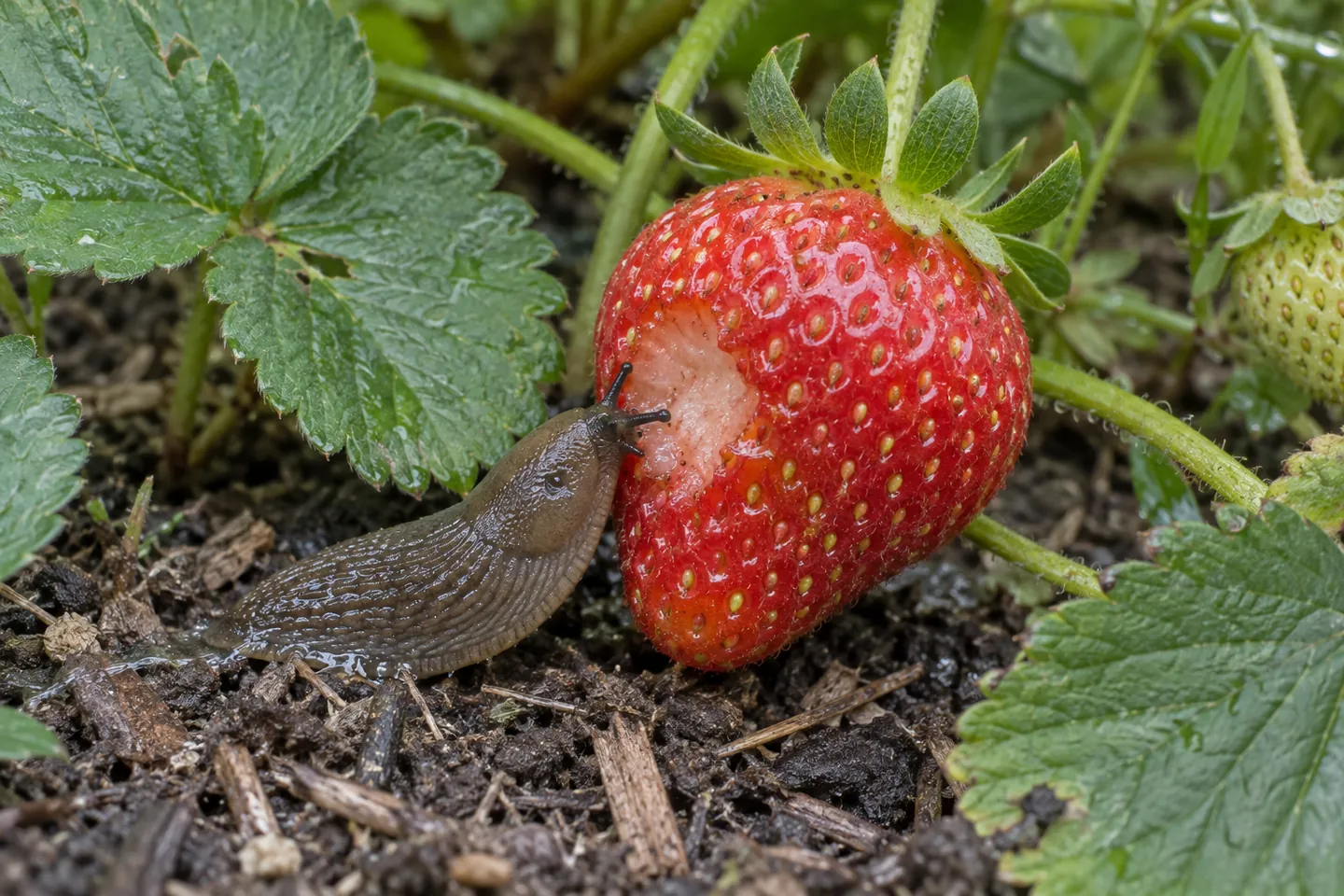
Recommended diagnostic check
Pest Evidence Checker
What pest evidence can you actually confirm?
Match insects, eggs, webbing, residue, frass, feeding marks, or another physical sign before treating. This checker is generated from this answer’s canonical diagnostic comparison.
First evidence check
Inspect the bed with a flashlight after dark or early in damp weather.
Do not choose a pesticide from symptoms alone. Confirm the pest or a pest-specific physical pattern first.
Does the evidence actually fit slugs?
Slug evidence is strong
- Fresh or dried slime trails occur beside irregular rasped feeding damage.
- Active slugs are found after dark, in damp weather, or in nearby cool hiding places.
More likely if
- Damage increases under damp conditions and direct slug evidence is present.
Reduce damp shelter and excess surface moisture, then keep monitoring before escalating control.
Damage is present but slugs are not confirmed
- Fruit or leaves are damaged, but no slime trail or active slug is found on the first inspection.
More likely if
- The damage pattern could still be old or another feeder may be responsible.
Repeat the inspection after dark or in damp conditions and do not treat for slugs until physical evidence improves the match.
The pattern does not fit slug feeding well
- Damage is not irregular and rasped, or repeated night checks remain negative for slugs and slime.
More likely if
- Rot, another feeder, or another strawberry problem better explains the damaged tissue.
Stop treating the damage as proof of slugs and compare the relevant strawberry damage or rot diagnosis instead.
Confirm slugs before controlling them
- Look for fresh slime trails near damaged berries.
- Check in the evening or at night when slugs are active.
- Inspect cool damp hiding places near the strawberry bed.
- Look for irregular rasped holes rather than assuming every damaged berry was eaten by a slug.
Make the bed less attractive to slugs
- Water in the morning so the soil surface and foliage are drier by night.
- Remove boards, excess debris, and dense hiding places near the plants.
- Improve drainage in persistently wet areas and keep rows open enough for airflow.
- Harvest ripe fruit promptly and keep berries from sitting on wet surfaces where practical.
- If needed, use a labeled slug bait exactly as directed.
GardenSolved checkpoint
Do not do this yet
Avoid unreliable slug fixes
- Do not keep the bed constantly wet in the evening.
- Do not treat without confirming that slugs are active.
- Do not assume home remedies are safer or more effective than label-directed controls.
Confirm the likely cause first, then choose the treatment.
What improvement to look for
- Damaged berries cannot heal; compare fresh damage on newly ripening fruit.
- Continue night checks after reducing shelter and surface moisture.
How to reduce repeat problems
- Remove nearby damp hiding places and harvest ripe berries promptly.
- Water roots in the morning rather than wetting fruit overnight.
Which check comes next?
- Damaged fruit also decays: Compare feeding injury with fruit-rot patterns.Why Are My Strawberries Rotting Before They Ripen?
- The bed stays damp overnight: Review irrigation timing and drainage.How Often Should I Water Strawberry Plants?
When to investigate further
If nonchemical steps do not reduce damaging populations, use only a bait labeled for the crop and site and follow the product directions.
Sources
Save & recheck
Compare what changes before changing course.
Save this diagnosis only in this browser, then come back and compare the same clues. No account, reminder subscription, or server-stored diagnostic record is created.
Your baseline
- Fruit or leaves have irregular rasped holes
- Shiny or dried slime trails are present
Check again when you return
- Inspect the bed with a flashlight after dark or early in damp weather.
- Look under mulch edges and nearby hiding places for active slugs.
Tip: photograph the same area from a similar angle so the visible pattern is easier to compare.
Related questions
Diagnostic Finder
Still not sure this answer fits?
Open the Diagnostic Finder with the relevant growing subject or care context preselected and compare other published GardenSolved diagnoses.
Compare other possibilities