Strawberries
Why Are My Strawberries Rotting Before They Ripen?
The short answer
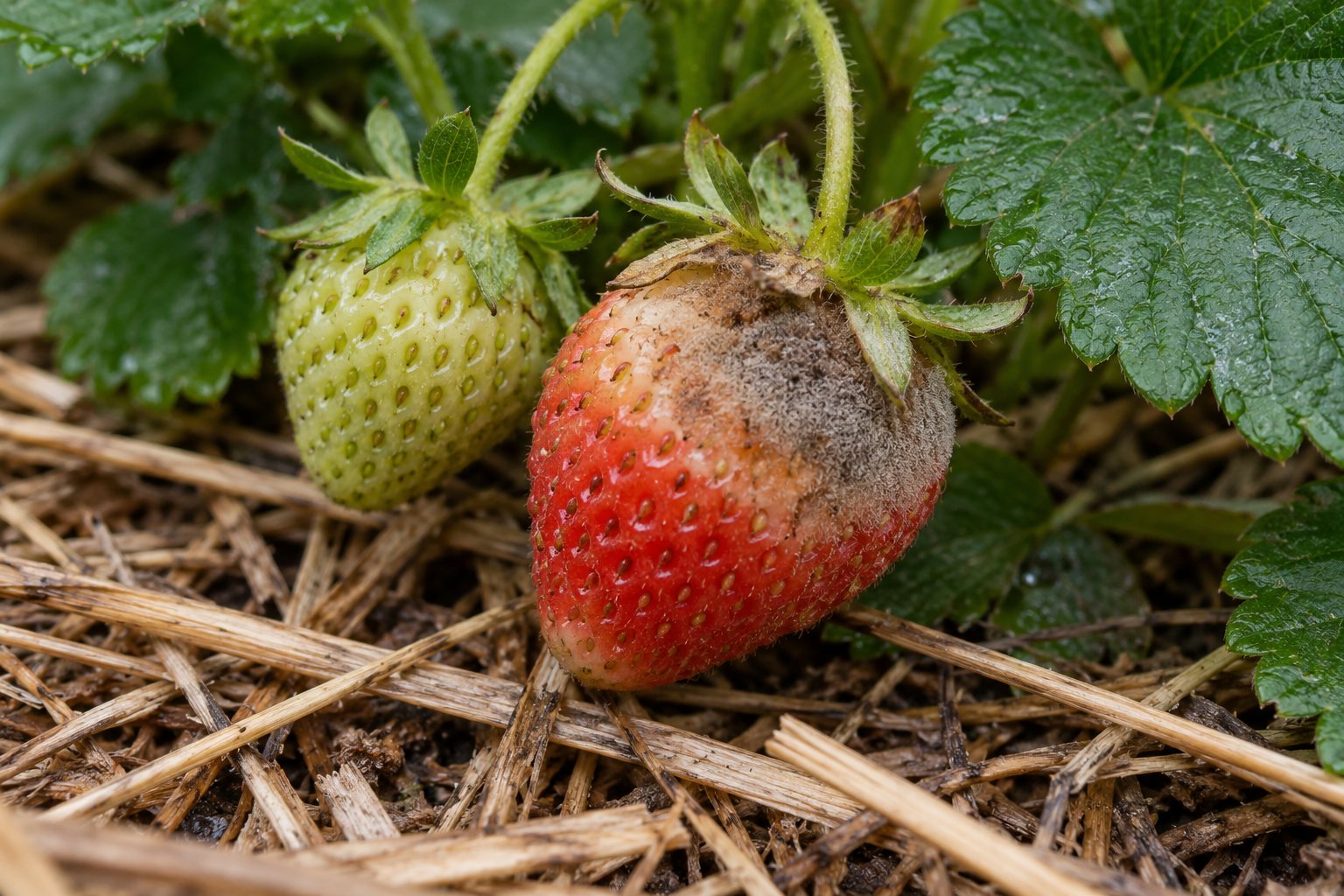
Remove rotten fruit promptly and look closely at the rot. Gray fuzzy growth, especially after damp cool weather or where fruit touches wet surfaces, supports Botrytis gray mold. Sunken dark lesions or other patterns need a separate disease diagnosis.
Strawberry fruit rot can begin in flowers or developing fruit and then become obvious as berries ripen. Gray mold is common in cool, humid conditions, while anthracnose and other rots have different lesion patterns and weather associations.
Compare the main fruit-rot clues
Gray mold (Botrytis)
- Fruit becomes soft and develops gray fuzzy growth.
- Disease is favored by high humidity and cool conditions and often begins from infected blossoms.
Remove diseased fruit and reduce canopy and fruit wetness.
Anthracnose or another rot
- Fruit develops distinct sunken brown to black lesions or wet pink-orange spore masses.
- Warm humid weather may fit anthracnose better than classic gray mold.
Use disease-specific identification before treatment.
Contact and moisture problem
- Fruit rests on wet soil or remains in a dense damp canopy.
- Rot repeatedly starts where berries contact moist surfaces.
Keep fruit cleaner and drier with suitable mulch, spacing, weed control, and careful irrigation.
How to confirm the problem
- Inspect fresh and newly affected fruit before advanced decay obscures the original pattern.
- Check whether berries contact wet soil, dense mulch, or other rotting berries.
- Review recent humidity, rain, overhead watering, and canopy crowding.
What to do now
- Pick and discard rotten berries promptly so they do not remain as a source of inoculum.
- Harvest ripe fruit frequently and handle it gently.
- Improve airflow with weed control and appropriate plant spacing.
- Water the root zone when practical rather than keeping fruit and flowers wet.
GardenSolved checkpoint
Do not do this yet
Avoid spreading decay
- Do not leave moldy fruit touching healthy berries.
- Do not increase overhead watering when humidity and fruit wetness are already high.
- Do not assume all strawberry rot is Botrytis from a late-stage moldy berry alone.
Confirm the likely cause first, then choose the treatment.
What improvement to look for
- Rotten berries will not recover; remove them from the bed.
- Monitor new fruit for fresh lesions while keeping affected harvest separate.
How to reduce repeat problems
- Reduce fruit wetness and contact with infected berries.
- Harvest often and remove diseased fruit throughout the season.
Which check comes next?
- Soil remains saturated: Investigate the drainage problem alongside the rot.Can Strawberries Be Overwatered?
- Damage includes rasped holes and slime: Check for active slugs as well as decay.Why Are Slugs Eating My Strawberries?
When to investigate further
Use local plant-disease diagnosis when lesions are atypical, rot spreads rapidly, or anthracnose or another serious fruit disease is suspected.