Strawberries
Why Are My Strawberry Leaves Turning Yellow?
The short answer
Check whether yellowing starts on older or younger leaves, then inspect moisture and drainage before fertilizing. Older-leaf yellowing with weak growth can fit nitrogen shortage, while young pale leaves with greener veins can fit iron chlorosis; wet, compacted, drought-stressed, pest-damaged, or diseased plants can also yellow.
Yellow strawberry leaves are a symptom, not a diagnosis. Leaf age, which leaves yellow first, root-zone moisture, growth rate, soil conditions, pests, and the presence of spots or distortion help separate ordinary aging from water, nutrient, root, or disease problems.
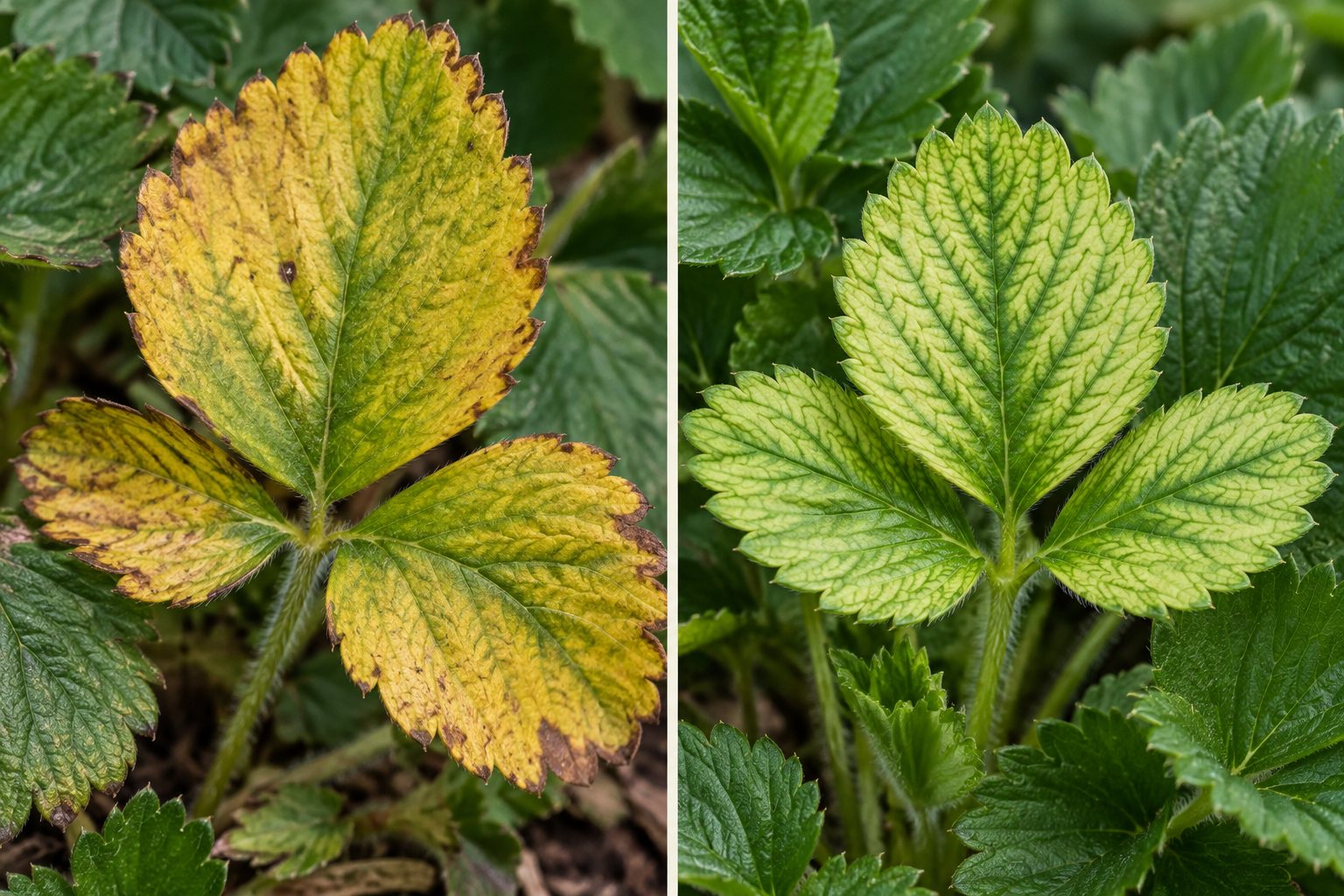
Compare the main yellowing patterns
Older leaves yellow first
- Lower, older leaves fade before the center growth.
- Plant growth may also be slow.
More likely if
- A soil test or broader plant pattern supports limited nitrogen rather than one isolated yellow leaf.
Check soil, growth, and feeding history before adding fertilizer.
Young leaves are pale with greener veins
- The newest leaves lose color while veins remain comparatively green.
- High-pH or clay soil can limit iron availability.
Confirm soil pH and site conditions before using an iron product.
Yellowing with wet or dry roots
- The bed stays saturated or dries hard between waterings.
- Wilt or stalled growth accompanies the color change.
Correct the confirmed moisture or drainage problem first.
Yellowing with spots or pests
- Leaves also show purple spots, scorch, distortion, webbing, or feeding injury.
Use the visible pattern to identify the pest or disease before treating.
How to confirm the problem
- Compare old and young leaves instead of judging the plant from one leaf.
- Check moisture below the surface and confirm excess water can drain away.
- Inspect both leaf surfaces for mites, spots, scorch, mildew, or distorted growth.
- Use a soil test or species-specific guidance before correcting a suspected nutrient problem.
What to do now
- Remove only badly damaged leaves that are no longer contributing to the plant.
- Keep the root zone evenly moist but not saturated and improve drainage where water stands.
- If nutrition remains plausible, use a soil test and strawberry fertilizer guidance instead of guessing from color alone.
- If pests or lesions are present, diagnose those signs before applying insecticide or fungicide.
GardenSolved checkpoint
Do not do this yet
Avoid common shortcuts
- Do not call every yellow leaf a nitrogen deficiency.
- Do not water again just because yellow leaves look weak if the root zone is already wet.
- Do not apply iron, nitrogen, fungicide, and insecticide together as a diagnostic test.
Confirm the likely cause first, then choose the treatment.
What improvement to look for
- Compare newly opening leaves with the original yellowing pattern.
- Continued yellowing with stalled growth warrants root or soil investigation.
How to reduce repeat problems
- Check nutrition from soil evidence, not leaf color alone.
- Avoid repeated drought and persistent saturation.
Which check comes next?
- Yellowing accompanies drooping: Check moisture and root health first.Why Are My Strawberry Plants Wilting?
- Moisture fluctuates between extremes: Review the watering routine.How Often Should I Water Strawberry Plants?
When to investigate further
Seek a local diagnosis when yellowing spreads rapidly, plants remain stunted despite suitable moisture, roots are dark or weak, or distinctive disease lesions are present.