Strawberries
Why Are My Strawberry Leaves Curling?
The short answer
Inspect the undersides and the newest leaves. Upward curl with red undersides and gray-white powder strongly supports powdery mildew; wrinkled compact new growth can fit cyclamen mites, while tied or folded leaflets can indicate leafroller larvae.
Curling strawberry leaves can reflect powdery mildew, mites, leafroller feeding, or environmental stress. Curl direction, growth distortion, webbing, folded leaves, and white growth underneath are more useful than curl alone.
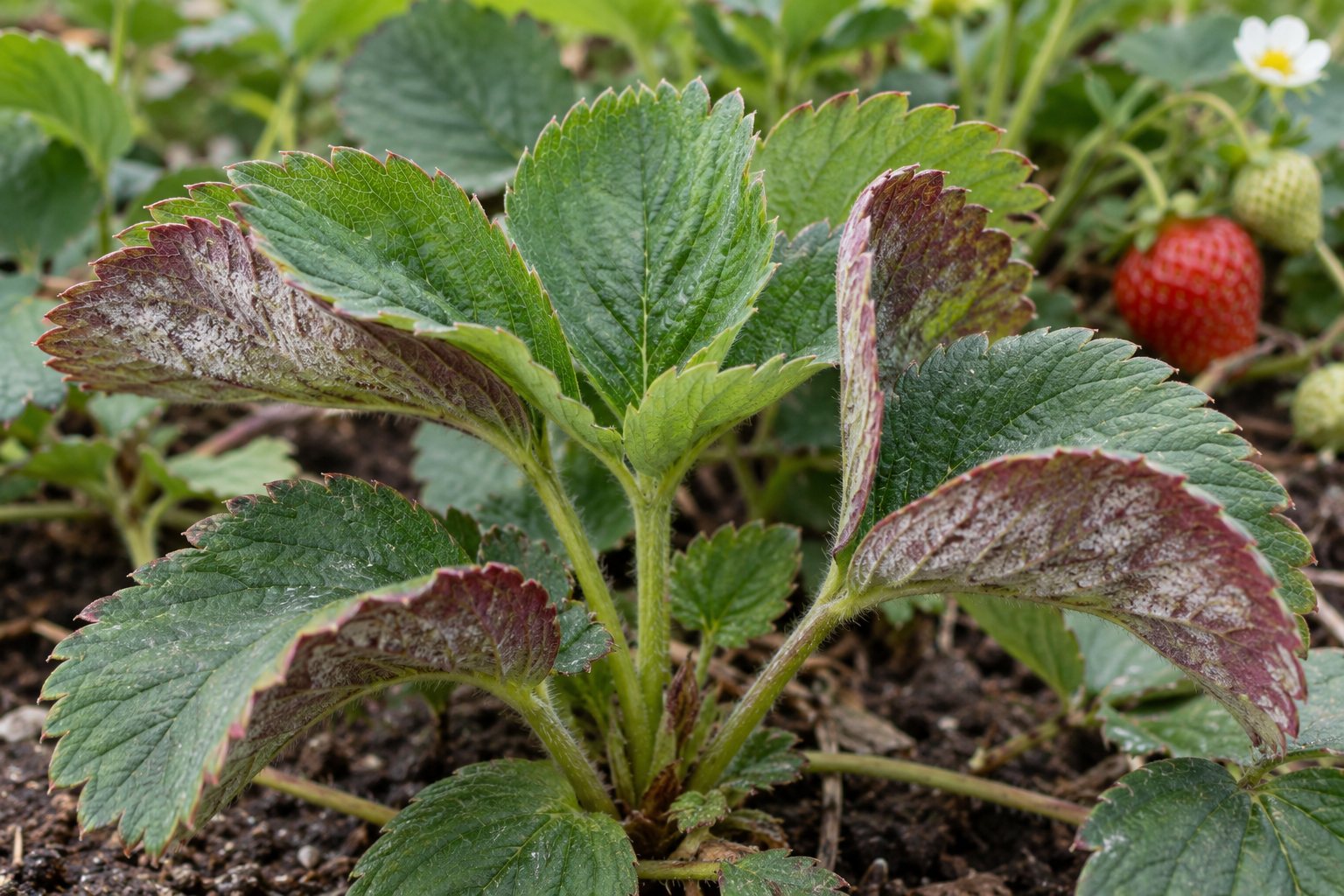
Separate the main curling patterns
Powdery mildew
- Leaflets curl upward.
- Undersides may redden and show gray-white fungal growth.
Confirm the lower-surface signs and use mildew management.
Cyclamen or spider mites
- New leaves are wrinkled or distorted.
- Spider mites may leave stippling or webbing; cyclamen mites are too small to confirm without magnification.
Inspect carefully and obtain pest identification before treatment.
Leafroller
- A leaflet is folded or tied with silk.
- A small larva may be feeding inside.
Open a representative folded leaf and identify active feeding.
Environmental stress
- Curl follows heat or moisture stress but leaves lack powder, pests, or tied folds.
Stabilize the root zone and reassess new growth.
How to confirm the problem
- Turn over several curled leaves and inspect for white growth, webbing, mites, or larvae.
- Compare older leaves with new center growth to see where distortion begins.
- Check soil moisture and weather history without assuming curl automatically means drought.
What to do
- Confirm which branch fits before pruning or spraying.
- Improve airflow and weed control if mildew pressure is likely.
- Remove isolated badly folded or infested leaves when practical.
- Keep roots evenly moist and avoid creating persistently wet soil.
GardenSolved checkpoint
Do not do this yet
Do not treat curl as one disease
- Do not diagnose powdery mildew from curling without checking the underside.
- Do not apply miticide without identifying a mite problem.
- Do not overwater a plant whose leaves curl during hot weather.
Confirm the likely cause first, then choose the treatment.
What improvement to look for
- Watch newly emerging foliage after addressing the confirmed cause.
- Persistent distortion needs pest identification or disease diagnosis.
How to reduce repeat problems
- Inspect undersides and center growth regularly.
- Start with clean plants and avoid propagating infested stock.
Which check comes next?
- Curling includes red or purple tissue: Compare discoloration and mildew clues.Why Are My Strawberry Leaves Turning Red?
- The whole plant droops: Check moisture before watering again.Why Are My Strawberry Plants Wilting?
When to investigate further
Escalate when new growth is severely stunted, mites are suspected but too small to identify, or disease spreads through the planting.