Christmas cactus
How do I care for my Christmas cactus after flowering?
The short answer
After flowering, keep your Christmas cactus in bright indirect light and reduce watering frequency as growth slows, using the mix rather than a fixed timetable. Do not let it collapse from prolonged drought. Once new growth begins, adjust watering and consider suitable feeding. Pruning or routine repotting belongs to a healthy plant at the right stage; softness or root decline needs a separate assessment.
A finished display is not a dying plant. First check whether flowers have simply faded while the stem segments and base remain firm.
Diagnostic snapshot
What to check before you act
What you are seeing
- Flowers fade; segments and base stay firm
- Fresh segments develop and the pot dries faster
Check first
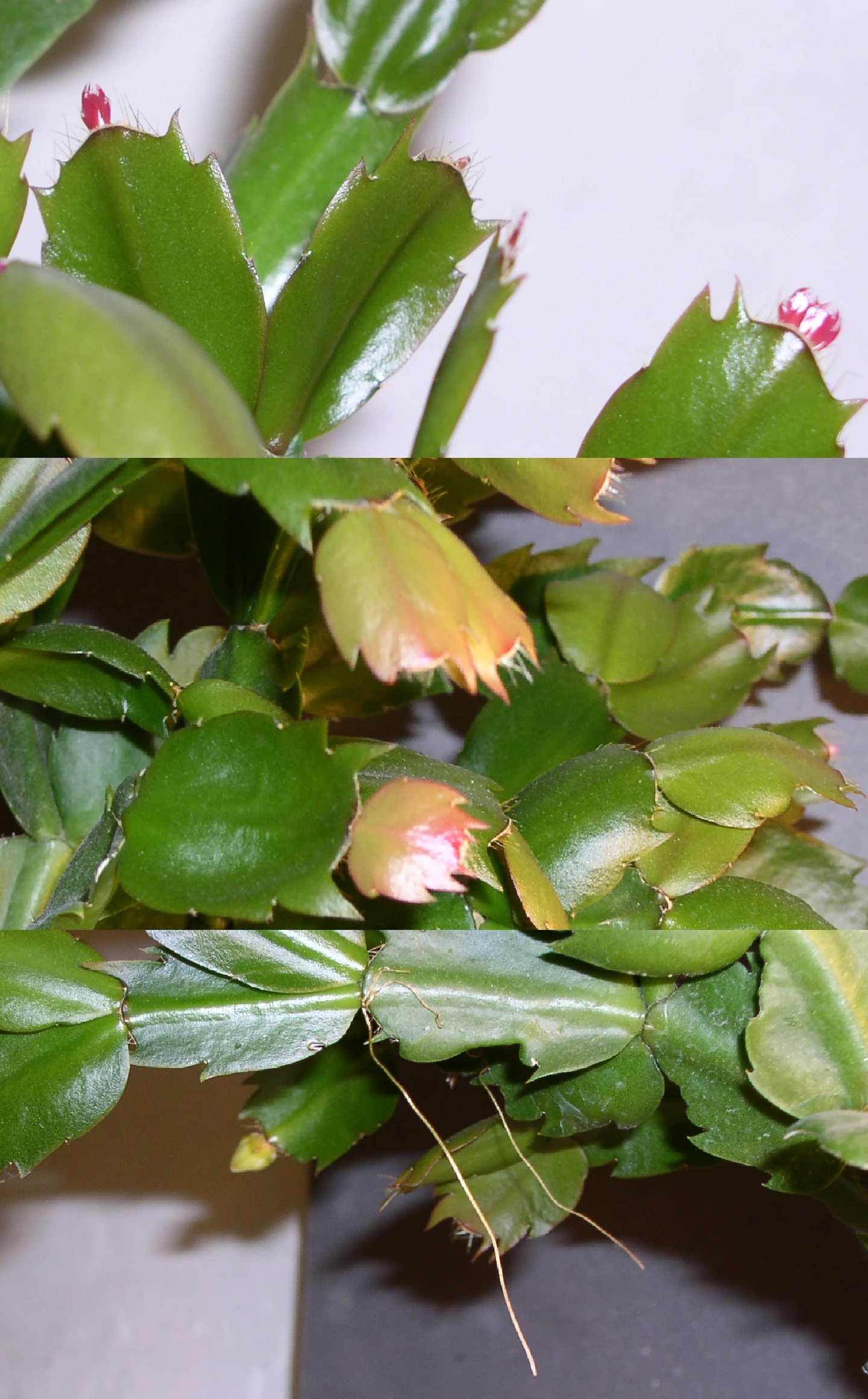
Compare a finished flower with the attached stem. Note whether new segments are starting, whether stems remain firm and whether any buds are still developing before pruning.
Compare first
- Normal end of flowering
- Growth resumes
- Actual decline
Hold off for now
Do not discard a firm plant because flowering finished or force another bloom by extreme drought.
Investigate further if
Use a diagnostic pathway for continuing wilt, a soft discoloured base, repeated segment loss or pests. If a firm plant remains inactive outside its normal rhythm, review light and temperatures with a local adviser. New sound growth and stable stems are better recovery signs than an arbitrary date.
Photograph this before you act
- Photograph the whole plant and its growing area so the overall pattern is visible.
- Take one close-up of the clearest symptom and one wider view that shows the surrounding area for comparison.

Next best check
Check two visible clues before you act.
This mini-check narrows the match using the same canonical diagnostic clues as this answer. It does not confirm a diagnosis from one or two clicks, and it does not make a photo-only diagnosis.
Two quick observations can tell you whether to keep reading this diagnosis closely or compare other possibilities first.
Finished flowers, new growth or actual decline?
Normal end of flowering
- Flowers fade; segments and base stay firm
Less likely if
- The base softens, stems progressively wilt or green segments repeatedly fall.
Remove fallen debris and allow a slower care rhythm.
Growth resumes
- Fresh segments develop and the pot dries faster
Less likely if
- Only flowers have faded; no new flat segments are developing yet.
Adjust watering and resume suitable growth-stage feeding.
Actual decline
- Soft base, sustained wilt or repeated segment loss
Less likely if
- Stems and base remain firm and the change is limited to spent flowers.
Investigate the symptom instead of calling it rest.
Safe confirmation checks
- Compare a finished flower with the attached stem. Note whether new segments are starting, whether stems remain firm and whether any buds are still developing before pruning.
- Check moisture and drainage and compare pot drying with the flowering period. A resting plant can use less water, but persistent saturation or a soft base is not explained by normal rest.
Adjust care after the last flowers
- Remove loose spent flowers and debris without tearing healthy joints. Keep bright indirect daylight and a stable, frost-free position.
- As growth slows, check before watering and allow longer intervals when the mix stays damp. Reduce frequency rather than imposing a drought regardless of stem condition.
- When healthy new growth starts, increase watering only as the pot needs it. If feeding is appropriate, follow a suitable houseplant product's directions; fertilizer is not a rescue for damaged roots.
- Consider light shaping after flowering if a healthy plant needs it. Repot only for a genuine need such as exhausted mix, failed drainage or overcrowding that affects care, using a modest draining pot; investigate acute root decline separately.
GardenSolved checkpoint
Do not do this yet
- Do not discard a firm plant because flowering finished or force another bloom by extreme drought.
- Do not combine hard pruning, a much larger pot and heavy feeding as an automatic January routine; first assess stage and health.
Confirm the likely cause first, then choose the treatment.
Follow the plant's next stage
- A firm plant with no new growth can remain in a quieter phase after flowering. When fresh segments appear and the pot dries faster, let those observations guide watering and suitable feeding instead of a fixed January schedule.
- Rest does not explain a soft base, progressive wilt or repeated green-segment loss. Switch to that symptom's diagnostic pathway rather than increasing fertilizer or carrying out routine pruning.
Context and follow-up
RHS and Illinois describe a quieter interval after flowering followed by resumed growth. Advice expressed in spring months refers to local seasonal conditions; January care is not universal for readers in another hemisphere.
A healthy slightly pot-bound plant does not need repotting every time its flowers fade. Emergency work for deteriorating roots is a different decision from routine maintenance after a successful display.
When to seek more help
Use a diagnostic pathway for continuing wilt, a soft discoloured base, repeated segment loss or pests. If a firm plant remains inactive outside its normal rhythm, review light and temperatures with a local adviser. New sound growth and stable stems are better recovery signs than an arbitrary date.
Follow the next useful clue
- You need to decide when to water: Use pot condition rather than calendar dates.How often should I water my Christmas cactus?
- Stems are losing firmness: Separate normal rest from a moisture problem.Why is my Christmas cactus limp and wrinkled?
- You are preparing for the next flowering cycle: Review light, nights and plant identity.Why is my Christmas cactus not blooming?
Consulted horticultural sources
Save & recheck
Compare what changes before changing course.
Save this diagnosis only in this browser, then come back and compare the same clues. No account, reminder subscription, or server-stored diagnostic record is created.
Your baseline
- Flowers fade; segments and base stay firm
- Fresh segments develop and the pot dries faster
Check again when you return
- Compare a finished flower with the attached stem. Note whether new segments are starting, whether stems remain firm and whether any buds are still developing before pruning.
- Check moisture and drainage and compare pot drying with the flowering period. A resting plant can use less water, but persistent saturation or a soft base is not explained by normal rest.
Tip: photograph the same area from a similar angle so the visible pattern is easier to compare.