Christmas cactus
How often should I water my Christmas cactus?
The short answer
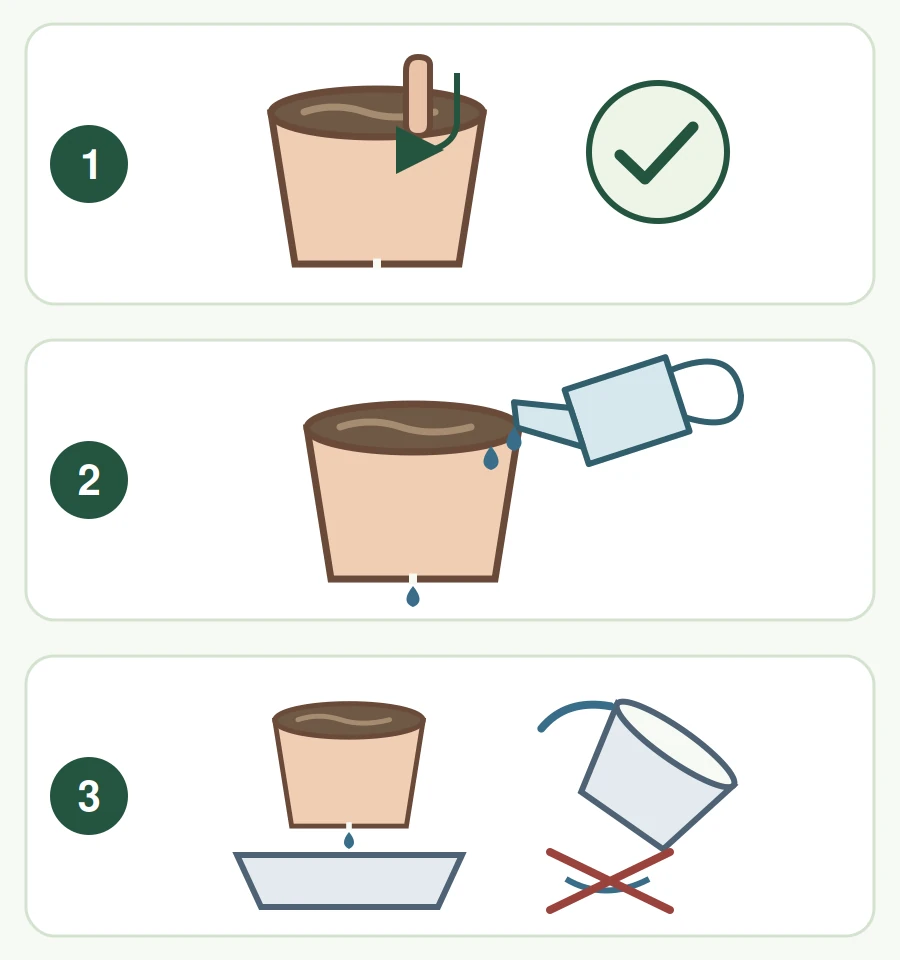
Water when the upper mix has dried and the root zone needs moisture, rather than on one fixed weekly interval. Check below the surface and the pot's weight; a dry crust can cover wet mix. Water evenly, let excess drain and empty the outer pot. Avoid both prolonged waterlogging and severe drying, especially while buds and flowers develop. After flowering, slower growth commonly means longer gaps.
Use a reminder to check the pot, not a calendar instruction to pour water. Pot size, roots, mix, room conditions and growth stage all change the drying rate.
Diagnostic snapshot
What to check before you act
What you are seeing
- Upper mix dry, pot lighter, root zone no longer wet; base firm
- Mix below the surface still damp or pot heavy
Check first
Feel the accessible upper mix and a little below it without damaging roots. Lift the pot to learn the difference between wet and drying weights; do not rely only on a surface crust or an uncalibrated meter.
Compare first
- Ready for water
- Not ready
- Slow drying with wilt
Hold off for now
Do not prescribe a universal number of days or leave the pot sitting in water to make watering easier.
Investigate further if
Investigate mix that repeatedly fails to wet, prolonged saturation, blocked drainage or wilt despite a reasonable moisture balance. A soft base or roots breaking down needs the root-health pathway. You do not need to repeatedly unpot an otherwise firm plant just to measure moisture.
Photograph this before you act
- Photograph the soil surface and root-zone or container context; do not disturb roots just to take a photo.
- Take one close-up of the clearest symptom and one wider view that shows the surrounding area for comparison.
Next best check
Check two visible clues before you act.
This mini-check narrows the match using the same canonical diagnostic clues as this answer. It does not confirm a diagnosis from one or two clicks, and it does not make a photo-only diagnosis.
Two quick observations can tell you whether to keep reading this diagnosis closely or compare other possibilities first.
Water now, wait or investigate wet-root wilt?
Ready for water
- Upper mix dry, pot lighter, root zone no longer wet; base firm
Less likely if
- A dry surface hides damp mix below, or water remains in the outer pot.
Water evenly and drain fully.
Not ready
- Mix below the surface still damp or pot heavy
Less likely if
- The root ball has dried, the pot is lighter and the base is firm.
Wait and recheck rather than watering by the calendar.
Slow drying with wilt
- Mix remains wet while stems soften or the base declines
Less likely if
- The pot is drying normally and the individual segments remain firm.
Assess drainage and roots before normal watering continues.
Safe confirmation checks
- Feel the accessible upper mix and a little below it without damaging roots. Lift the pot to learn the difference between wet and drying weights; do not rely only on a surface crust or an uncalibrated meter.
- Check that the inner pot has open holes and is not standing in water. Record whether the plant is budding, flowering, resting after flowering or actively making new segments, and whether the room has become warmer or darker.
Wet the root ball evenly, then let it drain
- When checks support watering and the base is sound, apply water slowly across the mix until excess leaves the drainage holes. Allow the pot to finish draining before putting it back in its cover pot.
- Empty collected water. If water immediately channels down the side while the centre remains dry, moisten in controlled stages and check uptake instead of assuming that runoff means the root ball is wet.
- Check more often when warmth and active growth accelerate drying. When growth slows after flowering or light decreases, let the observed drying rate lengthen the interval.
GardenSolved checkpoint
Do not do this yet
- Do not prescribe a universal number of days or leave the pot sitting in water to make watering easier.
- Do not treat every limp segment as thirst or use daily misting as a replacement for suitable root-zone watering.
Confirm the likely cause first, then choose the treatment.
Learn this pot's drying pattern
- Record the pot's weight and mix moisture after draining, then compare them before the next watering. A reminder should trigger another check, not an automatic dose; the interval can change as light, temperature and growth change.
- If water runs out but the centre remains dry, check wetting rather than counting the runoff as success. If the mix stays wet while firmness declines, stop adjusting the calendar and assess drainage and roots.
Context and follow-up
UF/IFAS gives a top-layer dryness check, while other guides describe allowing some drying between waterings. These instructions should be interpreted with the pot's deeper moisture and growth stage, not turned into competing universal timetables.
Schlumbergera grows naturally as a forest epiphyte. Air around roots matters as well as water supply. A decorative cover pot can hide standing water even when the visible surface looks dry.
When to seek more help
Investigate mix that repeatedly fails to wet, prolonged saturation, blocked drainage or wilt despite a reasonable moisture balance. A soft base or roots breaking down needs the root-health pathway. You do not need to repeatedly unpot an otherwise firm plant just to measure moisture.
Follow the next useful clue
- Stems remain limp or wrinkled: Compare dry roots with persistent wetness.Why is my Christmas cactus limp and wrinkled?
- Flowering has just finished: Adapt care to the post-flowering stage.How do I care for my Christmas cactus after flowering?
Consulted horticultural sources
Save & recheck
Compare what changes before changing course.
Save this diagnosis only in this browser, then come back and compare the same clues. No account, reminder subscription, or server-stored diagnostic record is created.
Your baseline
- Upper mix dry, pot lighter, root zone no longer wet; base firm
- Mix below the surface still damp or pot heavy
Check again when you return
- Feel the accessible upper mix and a little below it without damaging roots. Lift the pot to learn the difference between wet and drying weights; do not rely only on a surface crust or an uncalibrated meter.
- Check that the inner pot has open holes and is not standing in water. Record whether the plant is budding, flowering, resting after flowering or actively making new segments, and whether the room has become warmer or darker.
Tip: photograph the same area from a similar angle so the visible pattern is easier to compare.