Christmas cactus
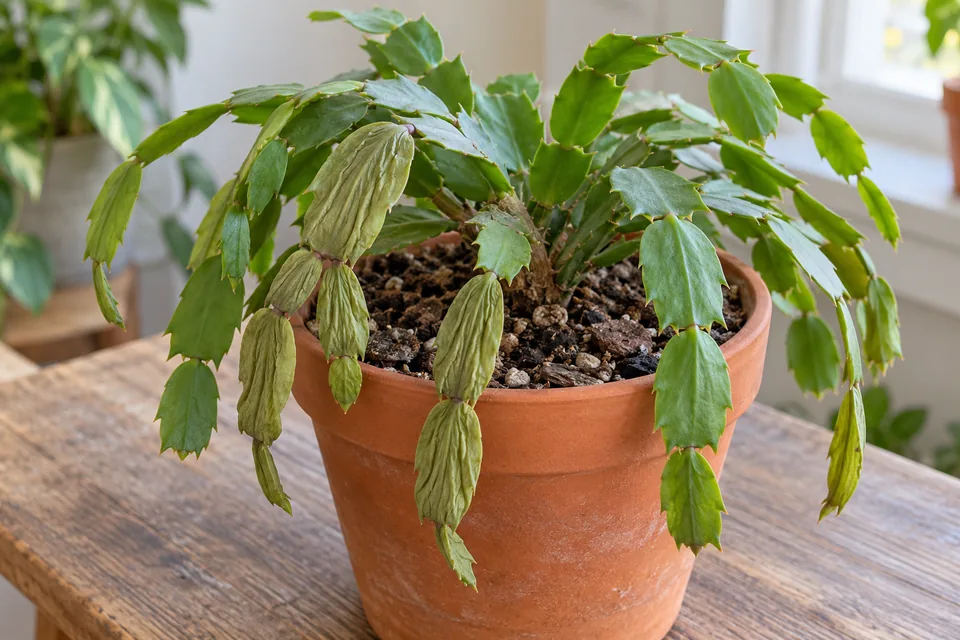
Why is my Christmas cactus limp and wrinkled?
The short answer
Check the mix below the surface and the plant's base before watering. Dry mix, a light pot and a firm base support a water-shortage branch. Wet mix with continued limpness calls for drainage and root-health checks, not another drink. Both situations can produce wrinkled segments. A photograph cannot establish the moisture inside your pot or diagnose root rot.
Drooping, shrivelling and wrinkling describe lost firmness, not the amount of water the pot needs. Normal arching branches also look different from individual segments losing their thickness.
Diagnostic snapshot
What to check before you act
What you are seeing
- Mix dry below the surface, pot light, base still firm
- Mix stays heavy and damp while stems lose firmness
Check first
Feel an accessible area of mix below the dry-looking surface without stabbing into roots. Compare pot weight with your usual just-watered pot, and check the inner pot for drainage and pooled water.
Compare first
- Dry root zone
- Wet root zone
- Normal trailing habit
Hold off for now
Do not prescribe extra water from wrinkling alone or soak a plant that already stands in wet mix.
Investigate further if
Get further help for rapid collapse, a soft discoloured base, roots that break down, or continuing limpness after the documented moisture problem has been corrected. Persistent wilt can have overlapping causes; retain pot and care history rather than naming a pathogen from appearance.
Photograph this before you act
- Photograph the soil surface and root-zone or container context; do not disturb roots just to take a photo.
- Take one close-up of the clearest symptom and one wider view that shows the surrounding area for comparison.
Next best check
Check two visible clues before you act.
This mini-check narrows the match using the same canonical diagnostic clues as this answer. It does not confirm a diagnosis from one or two clicks, and it does not make a photo-only diagnosis.
Two quick observations can tell you whether to keep reading this diagnosis closely or compare other possibilities first.
Dry roots, wet roots or normal hanging growth?
Dry root zone
- Mix dry below the surface, pot light, base still firm
Less likely if
- The mix remains damp below its surface and the pot is heavy.
Water evenly, drain and reassess firmness before repeating.
Wet root zone
- Mix stays heavy and damp while stems lose firmness
Less likely if
- The root zone is dry and the base is firm; appearance alone cannot establish failing roots.
Stop unnecessary watering and inspect drainage and root-health warning signs.
Normal trailing habit
- Branches arch but individual segments remain thick and firm
Less likely if
- Individual segments have become thinner, wrinkled or soft compared with earlier photos.
Compare with older photos; hanging growth alone is not wilt.
Safe confirmation checks
- Feel an accessible area of mix below the dry-looking surface without stabbing into roots. Compare pot weight with your usual just-watered pot, and check the inner pot for drainage and pooled water.
- Gently assess an accessible lower stem without squeezing hard. Look for spreading soft or translucent tissue, and compare several segments with older photos. Record recent heat, strong sun or prolonged wetness.
Choose the action from the pot's condition
- When the root zone is dry and the base is firm, water slowly across the mix until excess drains. Empty the saucer; check that the mix actually became moist rather than water running only down the pot edge.
- When the root zone is wet, pause irrigation and remove standing water. Provide bright indirect light and normal ventilation; do not bake the plant in sun to dry the pot faster.
- If wet-root wilt persists or basal tissue becomes soft, move to the root-rot assessment. Root inspection is justified by continuing decline, not by the natural curve of a healthy branch.
GardenSolved checkpoint
Do not do this yet
- Do not prescribe extra water from wrinkling alone or soak a plant that already stands in wet mix.
- Do not feed stressed roots, prune every drooping branch or repot a firm healthy plant merely because its stems hang down.
Confirm the likely cause first, then choose the treatment.
Reassess firmness before watering again
- After watering a genuinely dry root ball, reassess the same segments and the mix before adding more. Look for improved firmness or at least no further decline; badly shrivelled old tissue may remain marked.
- If the root ball is now moist but limpness persists, more water is not the next test. Check drainage and basal tissue; spreading softness, collapse or persistent wet-root wilt warrants the root-health pathway.
Context and follow-up
These are tropical forest cacti, not plants to keep permanently desert-dry. Nevertheless, waterlogged mix deprives roots of suitable conditions. The decision depends on the root zone and tissue, not the common name cactus.
A whole-plant portrait cannot establish wilt or root moisture. Compare real thickness and firmness on your plant; posture and lighting alone can mislead.
When to seek more help
Get further help for rapid collapse, a soft discoloured base, roots that break down, or continuing limpness after the documented moisture problem has been corrected. Persistent wilt can have overlapping causes; retain pot and care history rather than naming a pathogen from appearance.
Follow the next useful clue
- Wetness accompanies basal softness: Assess root deterioration and rescue limits.Does my Christmas cactus have root rot, and can it be saved?
- You need a routine after firmness stabilizes: Use condition-based watering.How often should I water my Christmas cactus?
Consulted horticultural sources
Save & recheck
Compare what changes before changing course.
Save this diagnosis only in this browser, then come back and compare the same clues. No account, reminder subscription, or server-stored diagnostic record is created.
Your baseline
- Mix dry below the surface, pot light, base still firm
- Mix stays heavy and damp while stems lose firmness
Check again when you return
- Feel an accessible area of mix below the dry-looking surface without stabbing into roots. Compare pot weight with your usual just-watered pot, and check the inner pot for drainage and pooled water.
- Gently assess an accessible lower stem without squeezing hard. Look for spreading soft or translucent tissue, and compare several segments with older photos. Record recent heat, strong sun or prolonged wetness.
Tip: photograph the same area from a similar angle so the visible pattern is easier to compare.
Related questions
Diagnostic Finder
Still not sure this answer fits?
Open the Diagnostic Finder with the relevant growing subject or care context preselected and compare other published GardenSolved diagnoses.
Compare other possibilities