Christmas cactus
Does my Christmas cactus have root rot, and can it be saved?
The short answer
Persistent wilt in wet mix, a soft collapsing base or roots that break down support concern about root or lower-stem deterioration. Brown colour alone does not confirm rot. Check drainage and tissue firmness first; inspect roots only when ongoing decline justifies removing the plant from its pot. Rescue depends on how much sound tissue remains. A photo cannot distinguish the several organisms that can cause similar collapse.
Root rot is a condition to investigate when root function or basal tissue is failing, not a synonym for every brown old stem. A firm corky base can be normal aging.
Diagnostic snapshot
What to check before you act
What you are seeing
- Brown corky surface remains hard and stable; upper growth sound
- Persistent wilt in wet mix; fine roots soft or breaking down when inspection is justified
Check first
First inspect accessible basal tissue gently and check for pooled water or blocked drainage. Distinguish stable firm corking from tissue that is soft, water-soaked or spreading; smell and colour alone are insufficient.
Compare first
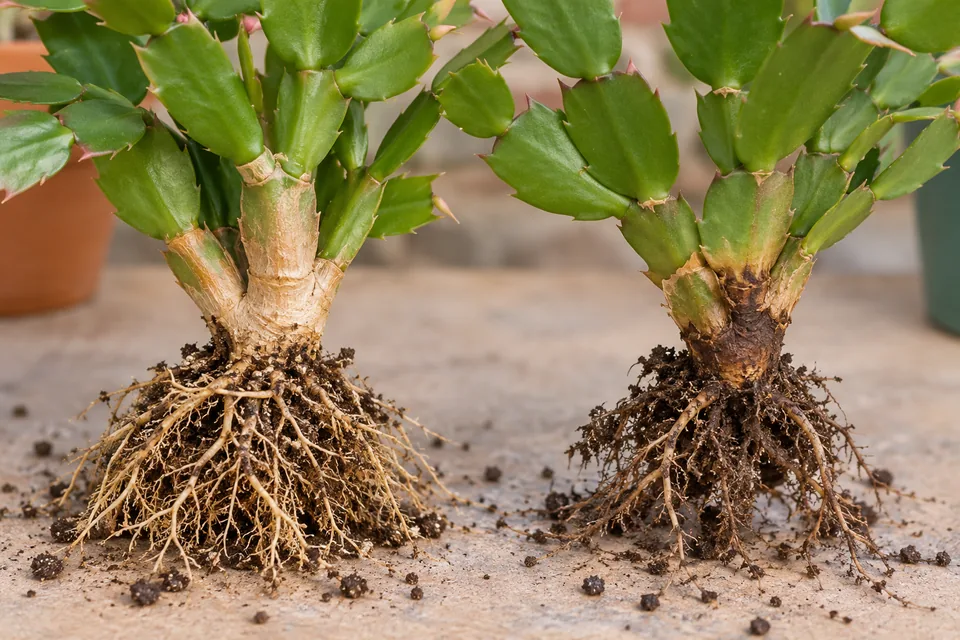
- Firm aged base
- Possible failing roots
- Extensive basal collapse
Hold off for now
Do not diagnose Fusarium, Pythium or Phytophthora from a photograph, or buy a fungicide before a supported diagnosis and appropriate local guidance.
Investigate further if
Obtain local diagnostic advice for fast-spreading basal lesions, several affected plants or continued loss after drainage correction. Ask how to submit a sample before moving suspect material. If little sound tissue remains, disposal and protection of healthy plants may be more useful than repeated cutting or watering.
Photograph this before you act
- Photograph the soil surface and root-zone or container context; do not disturb roots just to take a photo.
- Take one close-up of the clearest symptom and one wider view that shows the surrounding area for comparison.
Recommended diagnostic check
Drainage / Root-Zone Checker
What does the root zone actually show?
Separate drainage, moisture, root crowding, and actual root damage before changing care or treatment. This checker is generated from this answer’s canonical diagnostic comparison.
First check
First inspect accessible basal tissue gently and check for pooled water or blocked drainage. Distinguish stable firm corking from tissue that is soft, water-soaked or spreading; smell and colour alone are insufficient.
Do not diagnose root rot, overwatering, or poor drainage from one surface symptom alone. Inspect the actual root-zone evidence first.
Firm corking, root deterioration or basal collapse?
Firm aged base
- Brown corky surface remains hard and stable; upper growth sound
Less likely if
- The area becomes soft, wet-looking, enlarges or supports collapsing branches.
Observe and check for separate scale insects rather than cutting the base.
Possible failing roots
- Persistent wilt in wet mix; fine roots soft or breaking down when inspection is justified
Less likely if
- The base and segments are firm and any justified root inspection shows intact roots; brown colour alone is insufficient.
Correct drainage and assess remaining sound roots.
Extensive basal collapse
- Soft deteriorating tissue reaches the base and several branches fail
Less likely if
- The discolouration is stable and firm, without progressive collapse.
Protect healthy plants; a whole-plant rescue may not be realistic.
Safe confirmation checks
- First inspect accessible basal tissue gently and check for pooled water or blocked drainage. Distinguish stable firm corking from tissue that is soft, water-soaked or spreading; smell and colour alone are insufficient.
- If continued wilt or basal decline justifies root inspection, ease the root ball out without pulling the stems. Compare firm intact roots with those that are soft and disintegrate; photograph before cutting and avoid opening healthy roots for curiosity.
Match the rescue attempt to remaining sound tissue
- Stop unnecessary irrigation, empty standing water and keep suspect debris away from other plants. Use clean tools and avoid carrying contaminated mix between pots.
- If damage is limited and substantial sound tissue remains, remove clearly deteriorated material carefully with clean tools and place the plant in clean, airy mix in a draining pot sized for the surviving roots. Repotting cannot guarantee elimination of infection.
- If the base is extensively collapsing, seek advice before a prolonged rescue attempt. Do not reuse suspect potting mix. A cutting from genuinely sound, separate tissue may be a fallback, but can still carry an unresolved disease risk.
- After intervention, provide bright indirect light and moisture appropriate to the reduced roots. Monitor fresh firmness and whether decline stops; avoid fertilizer until stable growth resumes.
GardenSolved checkpoint
Do not do this yet
- Do not diagnose Fusarium, Pythium or Phytophthora from a photograph, or buy a fungicide before a supported diagnosis and appropriate local guidance.
- Do not scrape off a firm corky base, keep soaking a wilted wet plant or promise that repotting will cure advanced collapse.
Confirm the likely cause first, then choose the treatment.
Assess stabilization without promising a cure
- Photograph the margin of the affected area and watch remaining sound growth for firmness, further collapse and eventual new growth. Stopped deterioration is encouraging, but it does not identify the original organism or prove infection has been eliminated.
- If damage spreads or too little sound tissue remains, seek diagnostic advice and reconsider whole-plant rescue. Repeated unpotting, cutting and watering can further disturb the surviving roots.
Context and follow-up
PNW describes several organisms with overlapping wilt, root breakdown and basal-collapse signs. Its commercial chemical list is not a home-use prescription for another country; environmental correction and diagnosis come first.
Yellowing with a soft base belongs in this assessment, while yellowing alone has many alternatives. A healthy or recovered plant cannot demonstrate active root rot; inspect the actual tissue on your own plant.
When to seek more help
Obtain local diagnostic advice for fast-spreading basal lesions, several affected plants or continued loss after drainage correction. Ask how to submit a sample before moving suspect material. If little sound tissue remains, disposal and protection of healthy plants may be more useful than repeated cutting or watering.
Follow the next useful clue
- The base is firm and the root zone is dry: Return to the moisture comparison.Why is my Christmas cactus limp and wrinkled?
- The plant is stable after assessment: Build a condition-based watering routine.How often should I water my Christmas cactus?
Consulted horticultural sources
Save & recheck
Compare what changes before changing course.
Save this diagnosis only in this browser, then come back and compare the same clues. No account, reminder subscription, or server-stored diagnostic record is created.
Your baseline
- Brown corky surface remains hard and stable; upper growth sound
- Persistent wilt in wet mix; fine roots soft or breaking down when inspection is justified
Check again when you return
- First inspect accessible basal tissue gently and check for pooled water or blocked drainage. Distinguish stable firm corking from tissue that is soft, water-soaked or spreading; smell and colour alone are insufficient.
- If continued wilt or basal decline justifies root inspection, ease the root ball out without pulling the stems. Compare firm intact roots with those that are soft and disintegrate; photograph before cutting and avoid opening healthy roots for curiosity.
Tip: photograph the same area from a similar angle so the visible pattern is easier to compare.
Related questions
Diagnostic Finder
Still not sure this answer fits?
Open the Diagnostic Finder with the relevant growing subject or care context preselected and compare other published GardenSolved diagnoses.
Compare other possibilities