English
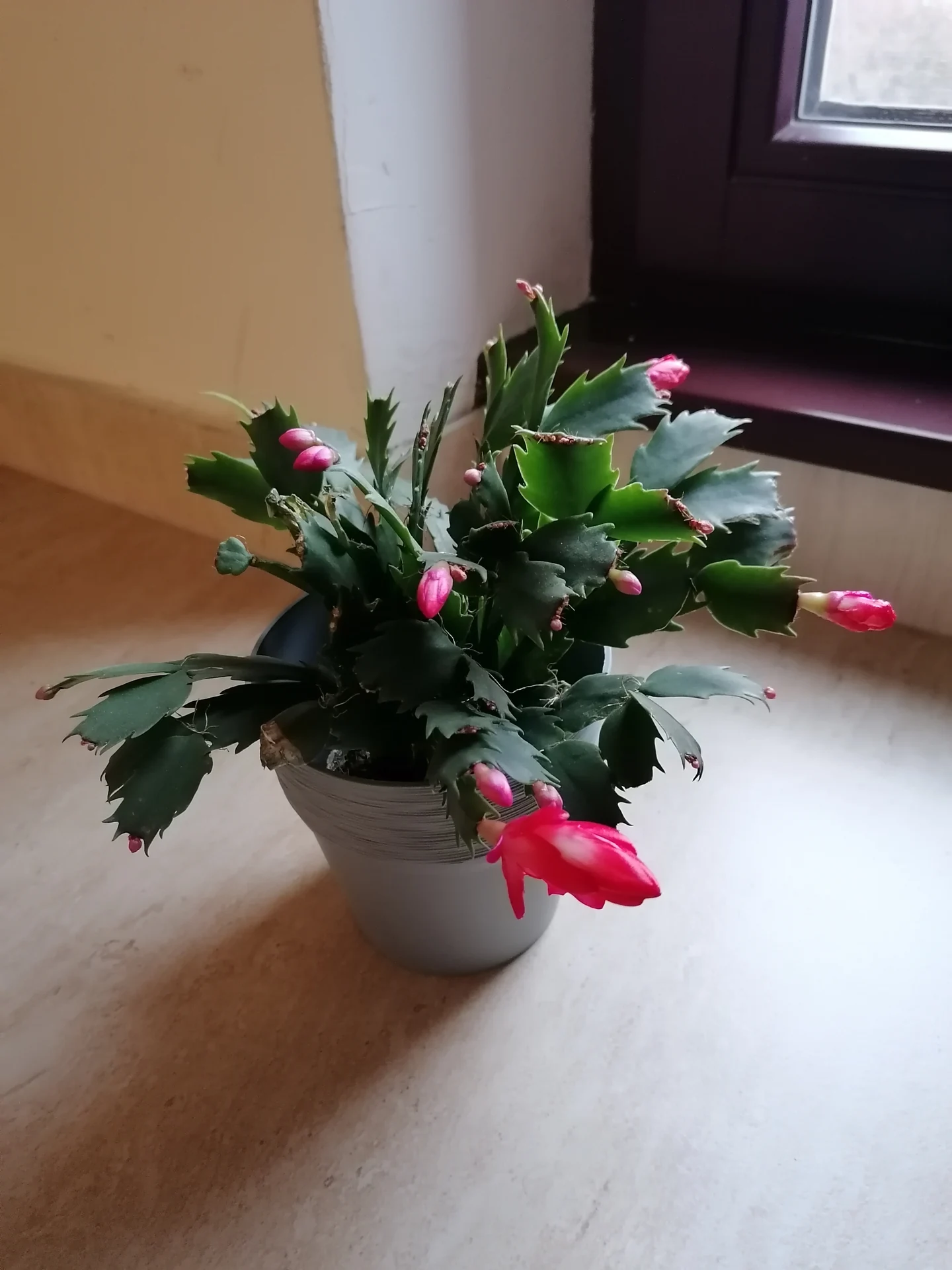
Schlumbergera care
Christmas cactus problems: start with one useful check.
Choose what changed first: no flower buds, fallen buds, limp segments or a soft base. These guides cover S. truncata, S. × buckleyi and common hybrids sold as Christmas cactus. The leaf-like green parts are stem segments; buds and detached segments need different next steps.
Find my Christmas cactus questionPhoto: Abraham, via Wikimedia Commons (https://commons.wikimedia.org/wiki/File:20251115_Christmas_cactus_szlumbergera_grudnik_Panewnik.jpg). CC0 1.0; full-frame responsive derivatives. Context illustration/photo, not confirmation of a plant problem.
Before you change care
Identify the part, then check the root zone
1. Choose the part in the Diagnostic Finder
Start with flowers or buds, stems, or roots. A dropped unopened bud is different from a finished flower or a green segment. The Finder helps compare those observations without naming a disease from one sign.
Open the Diagnostic Finder2. Check firmness and moisture together
Limp or wrinkled segments can accompany both dry and persistently wet roots. Feel below the surface and check drainage before watering. Normal trailing branches remain firm; posture alone is not wilt.
Compare dry and wet conditions3. Separate normal appearances from decline
Reddish young growth, aerial roots and a firm old corky base can be normal. Yellowing with soft basal tissue needs a root-health assessment. Easter cactus is a different spring-flowering lookalike; hybrids do not follow one exact holiday date.
Check roots and a soft baseBrowse problems by symptom
Start with what you can see.
Questions & answers
Browse christmas cactus
8 published answers
Flowers and buds
No buds and buds that formed then fell are separate decisions. Identify the plant and stage before applying a winter flowering calendar. November–January is northern-hemisphere context; local season and actual growth stage come first.
Why is my Christmas cactus not blooming?
Look at the stem tips for buds before trying to force flowers. If there are none, check evening lighting, night temperatures and plant health. Long uninterrupted nights and suitable cooler conditions help initiate buds over several weeks. If buds already fell, use the bud-drop pathway instead. A different holiday-cactus type may flower later; fertilizer cannot replace the missing environmental cue.
Open answerWhy is my Christmas cactus dropping buds?
Check whether the fallen parts are unopened buds, finished flowers or green stem segments. For true bud drop, review recent transport, heating, drafts, light changes and root-zone moisture. Both drying too far and persistently wet mix can be involved. Stabilize the plant in bright indirect light and correct the observed moisture problem; one fallen bud cannot identify the cause.
Open answerStem changes and root health
Compare tissue age, firmness and moisture. Red new growth is not proof of sun damage, and a brown base is not automatically rotten. Repeated segment loss or wet-root wilt needs more evidence than one photograph.
Why is my Christmas cactus limp and wrinkled?
Check the mix below the surface and the plant's base before watering. Dry mix, a light pot and a firm base support a water-shortage branch. Wet mix with continued limpness calls for drainage and root-health checks, not another drink. Both situations can produce wrinkled segments. A photograph cannot establish the moisture inside your pot or diagnose root rot.
Open answerWhy is my Christmas cactus turning red or purple?
New Christmas cactus segments can appear reddish without being diseased. If older segments change colour, compare recent strong light, temperature changes, watering and root condition. Stress can accompany reddening, but red or purple alone does not prove sunburn or a nutrient deficiency. Check firmness and the pattern before moving the plant or adding fertilizer.
Open answerWhy are my Christmas cactus segments falling off?
Identify the fallen part and inspect its point of separation. A firm green segment after a knock suggests a different problem from repeated shedding with soft tissue or wet-root wilt. Large old branches can also break under their weight. Check the remaining base and pot before watering, pruning or trying to propagate every fallen piece.
Open answerDoes my Christmas cactus have root rot, and can it be saved?
Persistent wilt in wet mix, a soft collapsing base or roots that break down support concern about root or lower-stem deterioration. Brown colour alone does not confirm rot. Check drainage and tissue firmness first; inspect roots only when ongoing decline justifies removing the plant from its pot. Rescue depends on how much sound tissue remains. A photo cannot distinguish the several organisms that can cause similar collapse.
Open answerWatering and life after flowering
Use the pot and growth stage to set care. Let water drain, avoid a fixed weekly schedule and adapt as growth slows or resumes. A finished display is not a reason to discard a firm healthy plant.
How often should I water my Christmas cactus?
Water when the upper mix has dried and the root zone needs moisture, rather than on one fixed weekly interval. Check below the surface and the pot's weight; a dry crust can cover wet mix. Water evenly, let excess drain and empty the outer pot. Avoid both prolonged waterlogging and severe drying, especially while buds and flowers develop. After flowering, slower growth commonly means longer gaps.
Open answerHow do I care for my Christmas cactus after flowering?
After flowering, keep your Christmas cactus in bright indirect light and reduce watering frequency as growth slows, using the mix rather than a fixed timetable. Do not let it collapse from prolonged drought. Once new growth begins, adjust watering and consider suitable feeding. Pruning or routine repotting belongs to a healthy plant at the right stage; softness or root decline needs a separate assessment.
Open answer